- Open Source CEO by Bill Kerr
- Posts
- Strategism: Mastering The Founder Letter
Strategism: Mastering The Founder Letter
Standing out made easy. How founder letters are shaping company narratives today. 📝

Bill Kerr
November 09, 2025

👋 Howdy to the 1,993 new legends who joined this week! You are now part of a 199,357 strong tribe outperforming the competition together.
LATEST POSTS 📚
If you’re new, not yet a subscriber, or just plain missed it, here are some of our recent editions.
🏴☠️ THE DREAD PIRATE ROBERTS. The wild story of the founder of the Silk Road, Ross Ulbricht.
🌐 Deel, EOR & The Future Of Global Teams. How to win the ZIRP vintage and what the future of work looks like today.
🧶 Helping Companies Become AI-First. An interview with Mark Laurence, Founder at Ten Past Tomorrow.

PARTNERS 💫
From prototype to production, faster.

The hardest part of delivering production-ready AI? Assembling a team that can actually do it. Athyna helps you staff fast, sourcing AI/ML talent across LatAm, Africa, and Southeast Asia—all vetted by experts, aligned to your stack, and ready to deploy.
From idea to implementation, we support you end-to-end: briefing, shortlisting, onboarding, and even payroll.
No upfront fees, no sourcing delays, just speed and quality where it counts most.
Interested in sponsoring these emails? See our partnership options here.

HOUSEKEEPING 📨
One month into my brief jaunt back to South America today, and man, do I miss my dog. There is something about these furry-like bark machines that just makes life all the more palatable. Not that life isn’t great. But I’d rather be yelling at Ziggy to stop barking than sitting quietly in the piece and quiet without him.

Sometimes, I honestly think that dogs are quite literally the meaning of life. I’m not entirely sure what I mean by that statement, but something inside me tells me it’s true. Meaning of life = dogs. There, I sorted it for all of us. Anyway, enjoy today’s piece!

STRATEGISM 🔮
Strategism: Mastering The Founder Letter
Marketing is hard. And cutting through the noise in today’s business environment is harder than ever before. Hundreds of thousands, if not millions, of brands are vying for the same thing. That tiny sliver of attention from your ideal customer that might open up that new opportunity, or close that big-ticket deal. But they are all battling for reach when they really fight for resonance. One way to resonate with your customers is through a founder letter.
A long-form, well-written narrative from the leader of your organisation. The founder letter is a rare sight in today's business circles. It's as uncommon as finding a white lion or an albino alligator in the wild. Most companies default to feature lists, case studies, and social proof. Safe, forgettable, invisible communications.

Foundering.
But founder letters? They cut through because they're different. They're personal. They make readers feel something. And they're coming for your market share. Today, we will take a walk down Founder Letter Lane to see who is using the strategy, how they are using it, and what we can learn from them. Let's get started.
Letters → Words → Emotion
The power of words well written really is something else. Take Ernest Hemingway’s famous six-word story, “For sale: baby shoes. Never worn.” Powerful right? Let’s read it one more time together: “For sale: baby shoes. Never worn.” Six short words that pull you out of whatever it was that was on your mind and broke your heart a tiny little bit. Again, words are powerful.
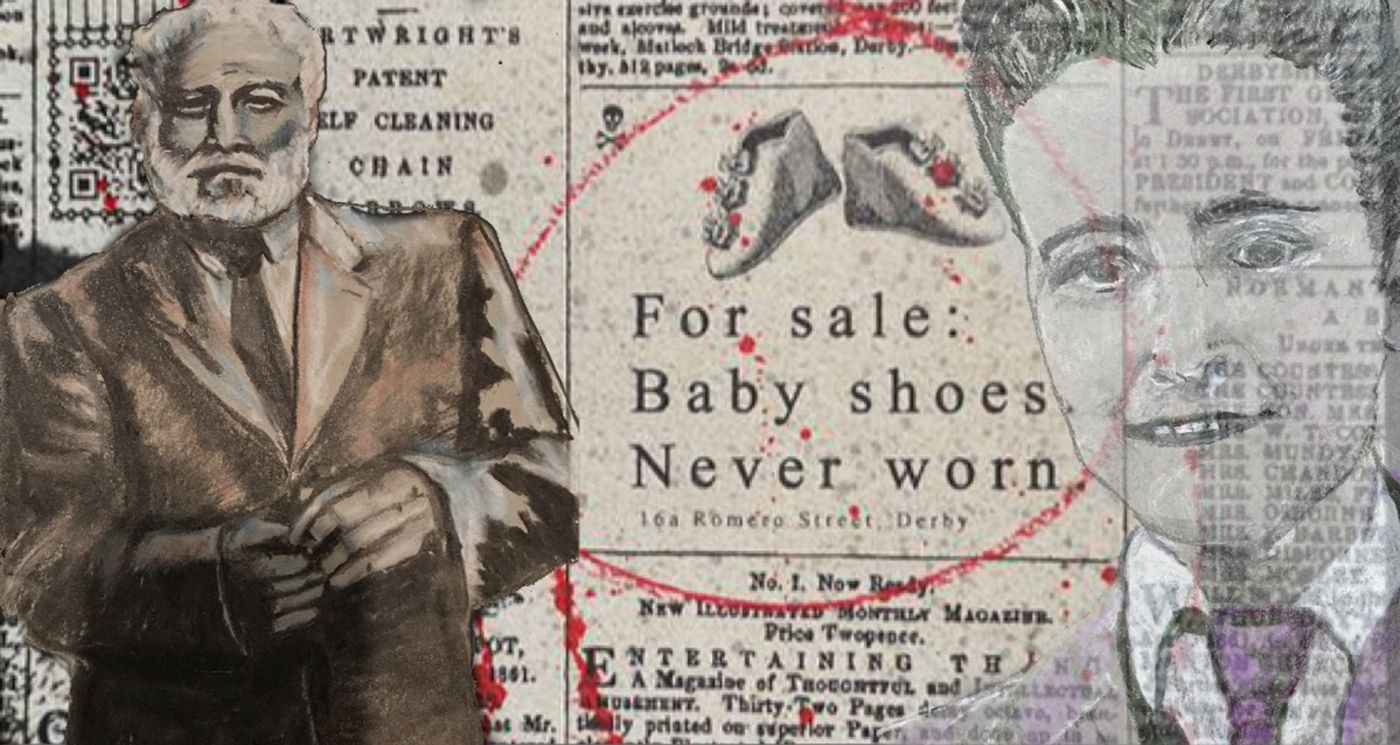
Source: J. Edward Kruft.
But Hemingway wasn't selling anything. What about when words need to do something? When they need to change minds, open wallets, or build movements? Take another example…
The Constitution of the United States isn't a founder letter in the marketing sense, but it might be the most successful piece of founder communication ever written. The founding fathers had to convince skeptical colonists—people who'd just fought a war—to trust a new, untested system of government.
They didn't lead with government structure, checks and balances, or legal theory. Instead, they led with three words that changed everything: We the People.

Why does he look angry?
Just We. You're not being governed; you're governing. You're not a subject; you're an owner. That simple choice of words transformed readers from passive recipients of rules into active participants in something historic.
And that brings us to today, where founder letters are doing something remarkably similar. They're not building nations, sure. They are building movements around products, around ideas, and around better ways of working. Let's look at how the modern masters approach it, starting with someone who made founder letters his signature move.
Founder letter, Godfather, Jason Fried
Some of you may know Jason Fried, co-founder and CEO of 37 Signals. The name 37 Signals might not ring a bell, but they are the makers of Basecamp, HEY, and most recently, ONCE. Jason is also the author of Rework, Remote, It Doesn’t Have to Be Crazy at Work, and other incredible books. I have read every one of Jason’s books, which he penned alongside his partner, DHH, and highly recommend them. They are unique. Not the typical Silicon Valley thinking. Business done from first principles.
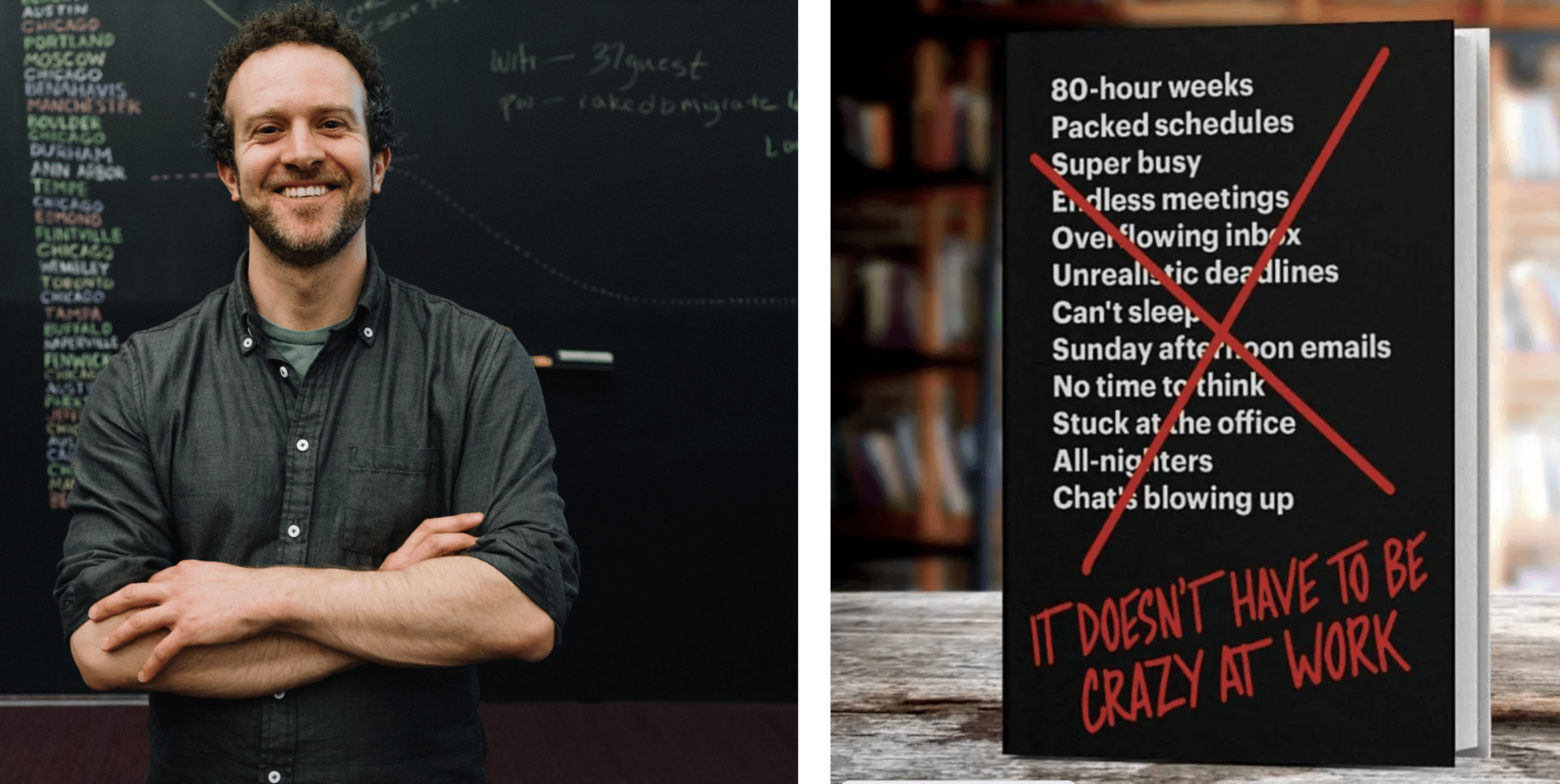
Jason is also the Godfather of the founder letter. One example is his HEY landing page, which starts with the line, “Hey everyone—It’s 2020, we need to talk about email.”
*Note: The landing page of HEY has changed since the original founder letter, but you can still see a founder letter section towards the end.

Source: Hey.
In a sea of sameness, the founder letter stands out because it’s different, but also because it allows the reader to go on a narrative journey. Sam Parr refers to this as the ‘slippery slope.’ The idea that each sentence builds on the next, and before you know it, you are totally bought in.
Most landing pages ask for attention without earning it. They front-load the ask like a slap to the face—SIGN UP NOW—before you've been given a reason to care. A founder letter does the opposite. It earns trust first by acknowledging your pain, validating your frustration, and only then, once you care, introducing a solution. By the time you reach the call to action, it doesn't feel like a sales pitch. It feels like the natural next step. Take a look at my favorite example below with the ONCE landing page.

Source: ONCE.
It really is wonderful marketing. A little snippet of CEO storytelling. Both the HEY and ONCE letters follow a similar structure, leaning on the anatomy of persuasion. Here's what's happening at each stage and why it works.
Identifying the problem: Both letters start by highlighting issues with the current solutions. The first discusses how email has become overwhelming and lost its joy. The second, how business software has shifted from ownership to rental models.
Call on nostalgia: They both evoke memories of a simpler time. Email was once a treasured form of communication, and software was something you bought once and owned forever.
Establishing the enemy: The use of emotive language resonates with readers' frustrations and establishes an enemy. It describes email as a "chore" and SaaS as a "perpetual landlord-tenant agreement."
Introducing the solution: Each presents a product as the answer to these issues. HEY is introduced as a "renovation" of email, while ONCE is presented as a return to software ownership.
Unique selling proposition: The letters outline what makes their offerings different. HEY is described as a "simplified, potent reintroduction of email," while ONCE emphasizes one-time payment and full ownership.
Call to action: Both end with clear next steps for interested readers, either to see how the product works or to stay tuned for more information.
Jason's letters work because they evoke an emotional response before presenting the ask. And in a world where everyone is competing on features and pricing, emotion is the last sustainable moat.
*If you’d like to hear Jason discuss his strategy for the founder letter and business writing more broadly, he recently appeared on two great podcasts: My First Million and How I Write. I highly recommend them both.
The Bezos and Buffet communications masterclass
Another famous form of business writing is the annual shareholder letter. This is something made famous by Jeff Bezos during his tenure at Amazon and by Warren Buffett, the Oracle of Omaha, of Berkshire Hathaway.
These two leaders were not in the business of optimizing conversion rates on landing pages. They had a different job: convincing deep-pocketed, high-net-worth investors that their name should be the one on the front of those cheques. And in many ways, that's a harder sell. A customer buying your product risks a few hundred dollars and some time. An investor is betting millions on your judgment and vision.
Bezos, for example, began with his much-exalted 1997 letter. The letter included some framing that Amazon would still be known for to this day: long-term focus, customer obsession, risk-taking, and the general marketing opportunity.

Download all the letters here.
It also highlighted one thing that became his signature: "It's Day 1 for the internet," a line he would echo in every annual shareholder letter until he stepped away from the role of CEO in 2021. This wasn't just a clever tagline. It was strategic positioning that did something brilliant—it reframed Amazon's valuation.

Download his letters here.
Warren Buffett took a different approach. His annual letters to Berkshire Hathaway shareholders read less like corporate documents and more like conversations with a wise old uncle. He openly admits to mistakes, explains complex financial concepts in plain English, and uses humor effectively. And he's been doing this since 1965, creating a 60-year masterclass in clear business communication.

What makes Buffett's letters work is that they treat readers like intelligent adults, not children who need to be protected from bad news or complexity. When Berkshire makes a mistake, he explains exactly what went wrong and what he learned. That vulnerability builds trust in a way that polished PR never could.
In a recent post, I wrote about the importance of communication—both internal and external—in the role of a leader. This is a key element that Bezos and Buffett have mastered over their long careers.
And one we launched recently
After studying Jason's approach, I wanted to test whether the founder letter strategy could be applied outside of SaaS software. Could it work for services? For hiring? For B2B? We launched a founder letter version of our landing page at Athyna. It incorporates many of the same elements from Jason's letters, adapted for the remote hiring and global talent space.

Source: Athyna.
Let’s take a quick look at what we are trying to do with the copy here. And after, we can take a look at some of the early results.
Push against the broken status quo: Our letter starts by highlighting how traditional recruitment sucks. Hiring takes weeks or months to find less-than-ideal candidates, and the process locks you into endless screening cycles.
Find the real villain: The enemy is the process itself, the never-ending cycle that makes hiring a gamble. "Most talent acquisition is a gamble. Not owned, but managed." We are attacking the friction, not specific competitors.
Reframing the opportunity: Instead of immediately pitching Athyna, we shift perspective first: "the world is smaller than ever before." This changes how the reader thinks about hiring before introducing our service as the way to access that global talent pool.
The Athyna difference: The letter emphasizes speed, cost, and quality. "Incredible talent, matched with AI-precision, at lightning speed." Backed by specifics: 70% savings, no upfront fees, team experience at Amazon, Meta, and Uber.
And finally, the invitation: Simple and direct. No corporate ‘book a demo’ language—just an invitation that matches the conversational tone of the letter.
We've been testing this approach for a few months now, and so far, our demo booking rate has increased by 33% compared to our control page. Qualitative feedback also suggests that the founder's voice creates more trust upfront.
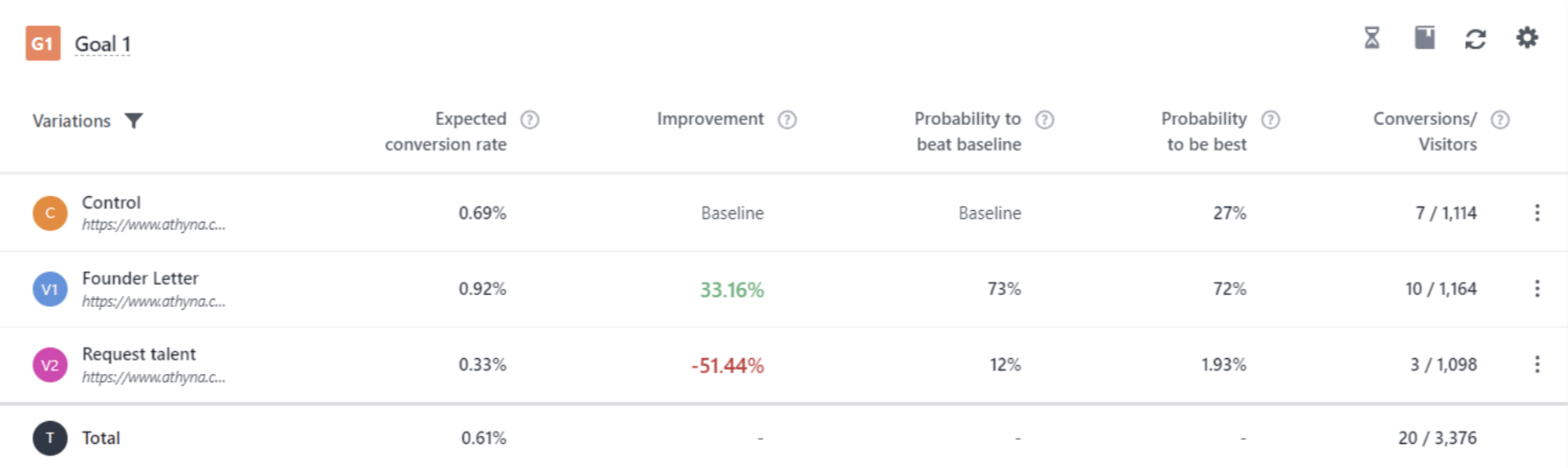
It's early, but this suggests that founder letters are effective. The key is adapting the format to your specific audience and pain points—not just copying Jason's approach verbatim. The founder letter isn't a magic formula. It won't save a bad product or fix a broken value proposition. But if you have something genuine to say, and a real problem to solve, it might be the most effective way to cut through the noise.
Future
As AI-generated content continues to flood our internet, founder letters will become more valuable, not less. Every day, thousands of companies publish blog posts written by ChatGPT, landing pages optimized by algorithms, and social media captions that sound like they came straight out of creative hell. The writing is grammatically perfect, SEO-optimized, utterly forgettable garbage.

This creates an opening for us. In a world drowning in machine-generated mediocrity, an authentic human voice becomes the ultimate differentiator. A founder letter—written in your voice, reflecting your actual thinking—can't be replicated by AI. Not because the technology isn't capable of mimicking the format, but because it can't replicate genuine conviction. Readers can still tell the difference.
Founder letters aren't just a marketing strategy. They're a bet that authenticity still matters. And in an age of AI slop, that might be the only bet worth making.
Further study
Mark Zuckerberg, the Hacker Way and the Art of the Founder's Letter, WIRED - February, 2012
A letter from Larry and Sergey, Google - December, 2019
The 7 Things that Should Be in Every Founder Letter - September, 2021
And that’s it! If you enjoy this and would like to learn more about Athyna, you can see what we do here.
BRAIN FOOD 🧠
TWEETS OF THE WEEK 🐣


TOOLS WE RECOMMEND 🛠️
Every week, we highlight tools we like and those we actually use inside our business and give them an honest review. Today, we are highlighting Superpower*—a tool used by founders, leaders, athletes, and more to optimise their health using AI.
 |
See the full set of tools we use inside of Athyna & Open Source CEO here.
HOW I CAN HELP 🥳
P.S. Want to work together?
Hiring global talent: If you’re hiring tech, business or ops talent and want to do it 80% less, check out my startup, Athyna. 🌏
See my tech stack: Find our suite of tools & resources for both this newsletter and Athyna here. 🧰
Reach an audience of tech leaders: Advertise with us if you want to get in front of founders, investors and leaders in tech. 👀
 |
Reply