- Open Source CEO by Bill Kerr
- Posts
- Filling The Gaps In Dental AI
Filling The Gaps In Dental AI
An interview with Wardah Inam, Founder & CEO at Overjet. 🦷

Bill Kerr
May 03, 2026

👋 Howdy to the 5,834 new legends who joined since our last edition! You are now part of a 410,419 strong tribe outperforming the competition together.
LATEST POSTS 📚
If you’re new, not yet a subscriber, or just plain missed it, here are some of our recent editions.
❤️🩹 Automating Clinical Trials With AI. An interview with Scott Chetham, Co-Founder & CEO at Faro Health.
🪐 What Changes After Your Exit (Nothing?). An interview with Ronan Berder, exited-Founder & CEO at Wiredcraft.
💆🏻 The Ultimate Founder Mental Health Stack. Psychedelics, depression drugs, dog walks, training, meditation, Whoop and loads more.

PARTNERS 💫

Investors don’t just listen to what you say. They look at how your company operates. The Fundraise-Ready Startup Kit equips founders with the materials investors expect to see, before the pressure is on.
A scalable cap table template
A pitch deck template with a real example
A diligence checklist so nothing catches you off guard
Because confidence in the room doesn’t come from slides. It comes from preparation.

Sell like a team of 10, as a team of 1. You don't have someone to keep your CRM clean, build reports, or tell you why deals are stalling. Lightfield gives you all three.
Every email, call, and meeting is captured automatically. Follow-ups surface before you forget. And when you need work done—"build a pipeline report" or "draft follow-ups for every deal that went quiet"—it delivers.
Interested in sponsoring these emails? See our partnership options here.

HOUSEKEEPING 📨
beehiiv reached out a few weeks ago to document some of the things we have done here with Open Source CEO. We covered a bunch of stuff: growth strategies, monetization, negative CAC, and growth for my company, Athyna, and my general thoughts on what makes the newsletter unique.

It was super fun to go through it all and reflect. I think by any metric we are doing well, and being able to share some of that makes me happy. If you’re interested in checking it out, great. I might actually turn it into a similar piece inside the newsletter itself soon. Thanks!

INTERVIEW 🎙️
Wardah Inam, Founder & CEO at Overjet
Wardah Inam is the Co-Founder & CEO of Overjet, the industry leader in dental AI. Born in Pakistan, she earned her PhD in electrical engineering from MIT and launched Overjet in 2018. Before that, she completed a postdoc at MIT CSAIL and served as Lead Product Manager at Q Bio, where she focused on simulation and quantification of human physiology. The idea for Overjet came from a deeply personal place, as a dental patient who kept receiving different diagnoses from different dentists, she saw an opportunity to bring precision, consistency, and clarity to an industry that had long relied on gut instinct over data.
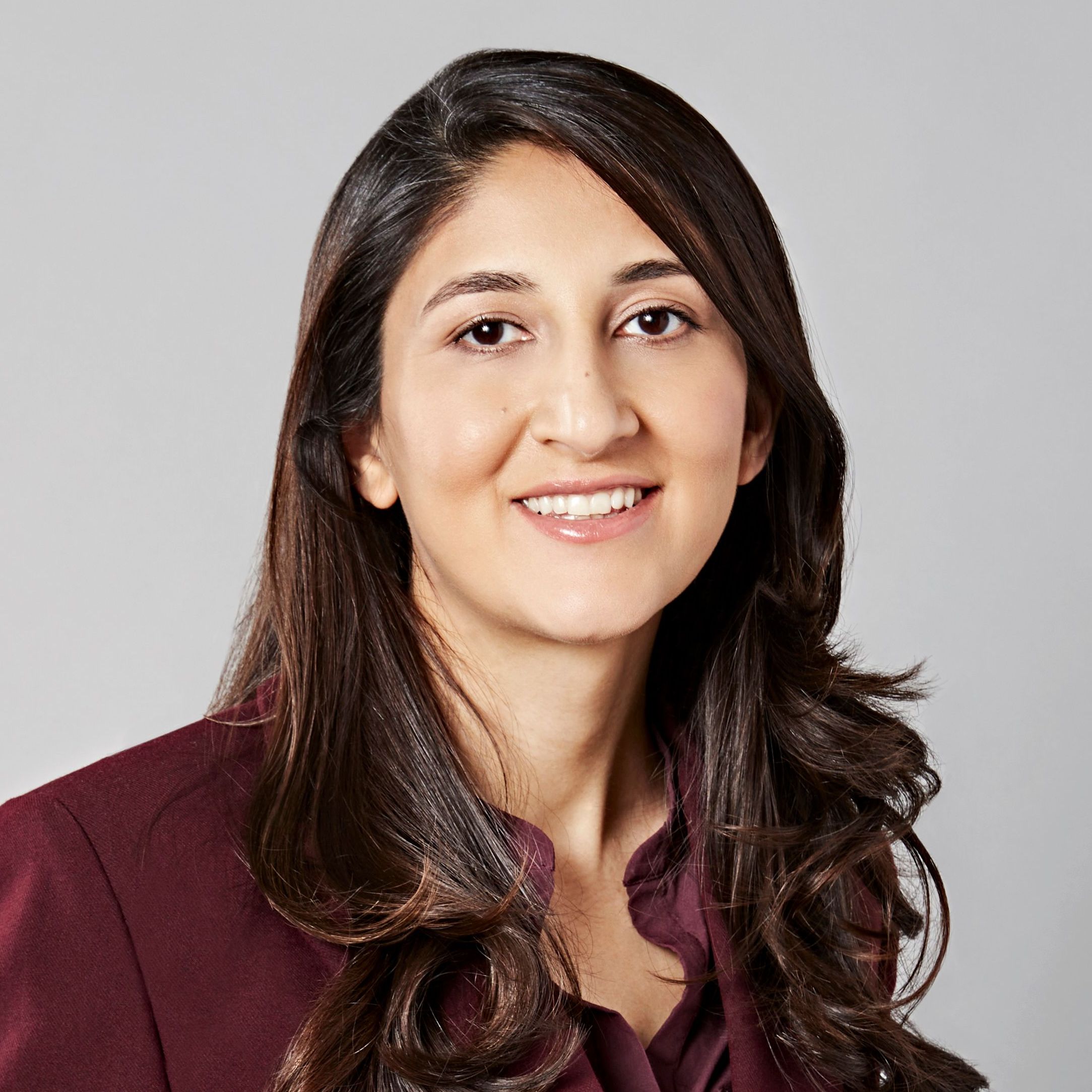
Today, Overjet's AI platform, trained on millions of dental X-rays, is used by thousands of dentists across North America, with FDA-cleared tools that can detect, outline, and quantify oral diseases. Dentists using Overjet's technology identify 32% more cavities, and the company's reach collectively spans 100 million people in the United States. Wardah led Overjet's $53.2 million Series C funding round, one of the largest investments in dental AI, bringing the company's valuation to $550 million. Her work has earned her recognition as EY Entrepreneur of the Year 2025, a spot on the Boston Globe's Tech Power Players 50, and a feature in Fast Company’s Most Innovative Companies 2026.
What problem are you trying to solve at Overjet, and why?
The problem I started Overjet to solve was the fact that a lot of dental data was being collected, but it was unstructured, meaning computers couldn't really analyze it. That led to many things being handled manually and subjectively. By using AI, we could structure the data so that computers can process it, allowing us to automate and augment workflows, make better decisions, and reduce inefficiencies across the system. As for why dentistry, it impacts almost every person in the world, so even a small change can have a huge impact. Being impact-driven really resonated with me.

Source: Overjet.
I also experienced the problem myself: I had gone to two different dentists and received different treatment recommendations, which I tried to understand on my own. Those two reasons, the personal experience and the potential for broad impact, are why I ended up starting Overjet.
In terms of why now, we actually started seven years ago, so it's been a while. At the time, it was the early days of AI, and it wasn't yet known whether it could actually be valuable or do what we needed it to do. We had to build a lot of capabilities just to prove that it was possible, that AI could look at data the way a dentist could, provide recommendations the way another dentist could, and encode a dentist's understanding of disease and treatments into these models. It was an interesting moment to start.
Can you explain what the processes are that you do, as if I had no idea about AI and dentistry?
If you remember the last time you went to the dentist, they probably took X-rays, charted your teeth, and noted down numbers while probing you. All of that data is then stored in their systems, and they write down what the treatment plan would be, what needs to happen. Before you even walked into the practice, they likely checked whether you had insurance or not, and confirmed it again while you were there. That's essentially the workflow.
We help with all of these pieces. We automate the insurance checks, whether you're covered and how much you're covered, so that the practice can bill you correctly. We also help dentists provide a much more comprehensive diagnosis and communicate with patients more effectively. If you've ever sat in a dentist's chair and been shown gray, white, and black X-rays, you probably had no idea what they were talking about. By adding annotations, visualizations, and quantifications, patients can now understand things like ‘my bone loss has increased’ or ’his cavity has grown and needs to be treated’, and why the recommended treatments are being implemented. We also help dentists document more effectively through ambient AI, which listens to what is being said during the appointment, transcribes it, and captures the notes in real time.
What was the hardest part of going from zero to one?
Early on, the hardest part was building models capable of matching dentist-level accuracy. This was pre-ChatGPT, so you couldn't just call an API and get answers; you had to build all the infrastructure yourself. We were connecting systems, building out models from scratch, and learning how to train them. There were a lot of firsts.

The second major challenge was FDA clearance. Our products are software-as-medical-devices, which means they need to be FDA-cleared. At the time, there weren't many cleared products like ours, so there weren't established guidelines we could simply follow. Drafts were circulating, but they were still being worked out. That uncertainty significantly increased the time it took us to get to market, both because of the regulatory process itself and because we had to build the product to a high enough standard to meet those requirements. During that same period, the device classification also changed. Our products were previously classified as Class III devices and were reclassified as Class II, which made it somewhat easier to clear regulatory barriers going forward.
What surprised you the most about stepping into the CEO role?
I would say two things surprised me the most. The first was how important engineering a company's culture and values is in shaping how it behaves day to day. The second was learning how to align very senior leaders—people who are fully capable of executing within their own functions—toward one shared goal, whether that's every week, month, or quarter, and keeping them focused on fewer, higher-impact priorities rather than all the noise that comes with running a business.
 |  |
What does your main day-to-day job as CEO look like?
It varies significantly week over week and month over month, but I'm usually focused on whatever the major bottleneck is, or the one thing that will really make a difference that week. Everything else kind of revolves around that, while other things continue happening in the background. For example, this week I'm very focused on customer activations across our multiple products. We've gone from being a single-product company to a multi-product company, so the question right now is: how do you activate customers across multiple products, and what does that look like? This morning, I was working through dashboards with the team, figuring out how to bring all the information together in a way that isn't overwhelming and what that needs to look like. That was the focus today, but it could be something completely different tomorrow.

Source: Overjet.
We serve dental practices, dental groups, insurance companies, and schools. So there isn't really one single ICP—we have multiple customer segments that we sell to. Our North Star comes down to the AI being utilized and providing real value, specifically the number of patients whose care is being meaningfully impacted by our AI.
How do you build culture?
I think the first and most important thing is having a meaningful mission and a clear articulation of that mission, so that you're hiring people who are aligned with it from the start; people who are inherently motivated to solve the problems the company is facing. The second piece is how you keep reinforcing that mission over time. How do you ensure it stays top of mind for everyone, whether through all-hands meetings, regular team meetings, or other touchpoints?
It also needs to be embedded in performance review cycles, scoring people on the values and behaviors that matter, so that the company's values and expectations are continuously reiterated. It really becomes a cycle: hire the right people, make sure those values and behaviors show up in their day-to-day work, provide feedback and scoring on those behaviors, and then use that to reinforce the right culture going forward.
How do you hire the best people? Do you have any internal processes?
Recruiters are very important to us because they're the ones sourcing candidates. If your pipeline isn't strong, you're probably not going to hire the right people. There's a lot of art to it, not just science, because finding the right fit isn't always about making a generic hire for a given role.
Our recruiters are pretty good at navigating that. From there, it's about looking for the right combination of skills and values, and assessing whether the candidate is aligned on both. Personally, I always try to look for something special about the person, something that stands out, and then ask whether that's something we actually need. I think having people who are experts in a few things is really valuable when you're building a company, because you want to bring in the best in the world at something while also having a broad range of competencies across the team. |  |
How are you infusing AI operationally into your day-to-day?
This is something that continues to evolve as tools improve over time. We are a very R&D-heavy company, so our tech teams are using AI not only in writing code but also across the entire development process, from design and product requirements documents all the way through to building the features. The technology on the R&D side has gotten really good, especially in the last six months or so, and it makes a significant difference.
But it's not just the technical teams. Our marketing team, for example, has also started using the same tools—things like Claude, Make, and others—to unblock themselves, better understand our customers, and bring more standardization to what they build. Internally, we try to be AI-first and use tools that are going to make us better. And sometimes it's not just about saving costs; it's more about increasing productivity.
How do you get the best out of yourself personally and professionally?
I think keeping your energy high is very important, and managing it consistently, day after day. It really comes back to the most basic things; the things your parents always told you, and it turns out they were right: eat healthy, exercise, and sleep well, being the most important. |  |
For me, if I'm doing those three things, everything else tends to fall into place. It probably starts with sleep. Not sleeping well leads to not working out, which leads to not eating well, and before you know it, you're in a negative cycle. So the question becomes: how do I get back on the right cycle when I notice myself drifting from it? That's something I actively pay attention to and try to course-correct whenever I see it happening.
Extra reading / learning
The Wisdom (Tooth) of AI - April, 2025
Redesigning Healthcare: Abundance, Trust, and Outcomes Through AI - May, 2025
Building The Most Advanced AI Platform for Dentistry - January, 2026
BRAIN FOOD 🧠


TOOLS WE RECOMMEND 🛠️
Every week, we highlight tools we like and those we actually use inside our business and give them an honest review. Today, we are highlighting Vanta*—the security and compliance platform companies rely on to stay audit-ready without losing their sanity.
See the full set of tools we use inside of Athyna & Open Source CEO here.
HOW I CAN HELP 🥳
P.S. Want to work together?
Hiring global talent: If you’re hiring tech, business or ops talent and want to do it 80% less, check out my startup, Athyna. 🌏
See my tech stack: Find our suite of tools & resources for both this newsletter and Athyna here. 🧰
Reach an audience of tech leaders: Advertise with us if you want to get in front of founders, investors and leaders in tech. 👀
 |
Reply