- Open Source CEO by Bill Kerr
- Posts
- Battle Royale: ChatGPT vs Claude
Battle Royale: ChatGPT vs Claude
A closer look into the biggest rumble of our time. 🥊

Bill Kerr & Isaac Peiris
February 26, 2026

👋 Howdy to the 2,325 new legends who joined this week! You are now part of a 268,989 strong tribe outperforming the competition together.
LATEST POSTS 📚
If you’re new, not yet a subscriber, or just plain missed it, here are some of our recent editions.
🎊 Unfiltered: Tracksuit Put Brand Back On The Map. The unpolished conversations, early chaos, and brand decisions that shaped the company.
🧠 Inference Engineering, Open Models & Shipping AI At Scale. An interview with Philip Kiely, Head of Developer Relations at Baseten.
🧱 LinkedIn Just Voluntarily Tanked Their Algorithm (+ How To Win). We get down and dirty on the tactics to build your brand.

PARTNERS 💫

Tracksuit helps marketers and agencies track brand health continuously, without the heavyweight price tag.
Teams get an up-to-date view of funnel performance, clear benchmarks, and evidence of impact after campaigns launch—turning brand building into something leadership can trust.
The result? Smarter spend, stronger data-confidence, and brand work that translates into commercial goals.

As payment flows grew more complex, Europe’s leading second-hand marketplace turned to Temporal to simplify orchestration at scale.
By replacing brittle background jobs with durable Workflows, Vinted runs 10M+ executions daily with higher reliability, clearer logic, and lower infrastructure costs, proving that resilient systems can also move fast.
Interested in sponsoring these emails? See our partnership options here.

HOUSEKEEPING 📨
I’m thinking of doing a rebrand of the newsletter, with Aerolab, a close partner or ours, and the firm who recently did Athyna's rebrand. They are the best branding and UI agency in South America. Below is the first moodboard I liked the most.

The thing is though, I am really sad to say goodbye to the current brand. I have this really strange feeling. Something I’m not super familiar with. I think I need to keep as much of today’s brand as possible. I am incredibly attached to it. The stupid memes, cultural references, terribly loud color scheme. What do you think?
What do you think of the brand of Open Source today? |
Either way, there will be some level of improvement to the branding. But I definitely do have a very strong emotional pull to what I’ve created to this point. Such is life I guess. Here’s to you enjoying today’s post dear reader.

GUEST POST 💄
Battle Royale: ChatGPT vs Claude
Ali versus Foreman, Coke or Pepsi, Lannisters and House Stark. What do they all have in common? War. Whether in the ring, on the S&P 500, or in the fields of Westeros, these famous names went head to head against one another in all-time blood feuds, while we all sat back and watched with popcorn in hand.
Today, a new struggle is waging in the silicon streets. This time between AI giants OpenAI and Anthropic. They’ll tell you it’s to create one almighty omnipotent God-like, super AGI. It’s not. This is an all-out market cap war. And just like all good bust-ups, this one has a surprise around just about every corner.

The animus is palpable.
Dario Amodei, prodigal son of OpenAI, left the company in 2020 due to its direction to found rival Anthropic a year later. Shortly after the Sam Altman saga hit fever pitch with Sama’s firing, hiring, re-firing, and rehiring. Now the two are stuck in a duel to be the most exciting company in the world. Two years ago, OpenAI had what looked to be an insurmountable lead; today, most are betting on Anthropic.
Today, we are going to look at the narrative between the two firms. And to do this best, I have enlisted my buddy, Isaac, who runs Pistachio and also writes the Brand Chemistry newsletter. He’s a much wiser man than I, so this should be a fun one. Over to you, Isaac.
The Battlefield
Hey, Isaac here. You might’ve seen that both ChatGPT and Claude launched their first-ever brand campaigns recently. Way more than the product demos or feature announcements we’re used to, these were actual brand campaigns with cinematic footage, music, and emotional storytelling.
After years of competing on benchmarks like who has the longest context window or the best reasoning capabilities, they've both suddenly pivoted to selling feelings instead of features. The timing is anything but coincidental. AI is crossing a significant threshold. It's moved beyond tech-y early adopters and entered the messy territory of mass-market adoption, where emotional connection matters more than capability.

One brand positioned AI as your everyday assistant, making mundane tasks easier. The other positioned it as your thinking partner for meaningful challenges. Very different approaches. Which raises the obvious question… which one will win the AI brand war? Time to choose your fighter.
ChatGPT: making AI feel normal
ChatGPT's campaign opens with a young bloke doing pull-ups at sunset. The camera pulls back. Text floats up like movie credits, saying, "I want to feel stronger, help me do some pull-ups by autumn". ChatGPT's response scrolls up the screen with a workout plan.
The whole thing is shot on 35mm film. It looks more like an indie film festival entry than a tech commercial.
Their Head of Marketing said they wanted to show how ChatGPT can make your life easier and help you do more of what matters. Better search. Better answers. Everyday utility. The emotion they're selling is accessible productivity*,* AI as Google 2.0, useful for the mundane tasks anyone might encounter. It's a logical pivot. ChatGPT processes 2.5 billion prompts daily.
They have 700 million weekly users. They're valued at $300 billion. When you've already achieved that kind of ubiquity, you don't need to convince people that AI is transformative. You need to convince them to use your AI for everything.
The strategy is the Google model. Be so ubiquitous you become the verb. When people say ‘just ChatGPT it,’ you've won. But here's where it falls apart: When research firm System1 tested the ads with consumers, only 59% of viewers could identify what was actually being advertised. The logo appears too late. The distinctive assets are barely there. The ad is so generic that it could be selling any AI tool; swap the logo at the end, and it works just as well for Gemini, Copilot, or whatever new option launches next week. |  |
That's the fundamental problem. Most people already can't tell AI providers apart. When distinctiveness matters most, ChatGPT created ads that disappear into the background.
Claude: celebrating your problems
Claude's campaign opens with a voiceover: "There's never been a worse time." Images of problems flash across the screen. Then it flips. "There's never been a better time to have a problem."
The timing was deliberate. Just months earlier, OpenAI had launched Sora, its text-to-video tool. Suddenly, anyone could generate video content at scale. The result was a flood of low-effort, algorithm-chasing slop. Anthropic saw its opening. While everyone else celebrated automation, they positioned hard against it. Their "Keep Thinking" campaign became explicitly anti-slop, against AI-generated garbage, and for actual human thinking.
The emotion they're selling is transformative ambition. AI as a thinking partner for your most meaningful challenges, not a shortcut past them. And then they took it off the screen and into the real world.
Claude ran a café pop-up in New York. Over 5,000 people visited across a single weekend. One founder drove ten hours from Ohio just to experience it. The main draw was the Baseball caps embroidered with a single word. Thinking.
They sold out immediately. |  |
They're thinking the wearer is someone who cares about depth over speed. Someone who builds real things instead of churning out clop. Someone solving bigger problems.
That's why people drove ten hours and waited in lines around the block. The cap is a badge that says, ‘I'm one of you.’
Two completely different bets
Both companies needed to address the same mass-market anxiety of AI replacing humans. They took opposite approaches. ChatGPT's bet is to win the everyday productivity category. Be the AI everyone uses for routine tasks. Build a moat through ubiquity and habit.
It's the Google model, be so omnipresent that you become the default. Show regular people achieving small wins like cooking meals, planning trips, and hitting fitness goals. If AI helps you cook dinner, it's not scary. It's just helpful. |  |
The tradeoff is that you end up positioning AI as a ‘nice to have’ rather than something transformative.
 | Claude's bet is to win the serious work category. Be the AI that ambitious people identify with. Build a moat through tribal identity and aspiration. It's the Apple model; premium positioning through meaning. |
You don't need everyone. You just need the people who define themselves by their work to see you as essential.
Not coincidentally, "Keep Thinking" draws an obvious comparison to Apple's own "Think Different" campaign. The echoes are intentional, and they highlight the real indicator of who will win this battle. Apple has not come to the table with its own AI products. So while OpenAI is directly challenging Google (not exactly a company I’d bet against…) Anthropic can wander in and claim a gaping void of uncontested opportunity in the market.
Claude has 16–19 million monthly users. Much smaller scale than ChatGPT, but look at how those users engage. 36% is coding, 77% of enterprise usage is automation, and 70–75% of revenue comes from high-value API calls. Tellingly, while ChatGPT has more direct users than Claude, Anthropic has overtaken OpenAI in enterprise API usage.

Source: Menlo Ventures.
When you can't compete on scale, you compete on intensity. You build strong believers rather than accumulating passive users.
Why Claude wins
I won’t drag out a reveal of my take on this. Claude's campaign is objectively better. Not just emotionally, but strategically and creatively. System1's research found ChatGPT's ads scored in the lowest quintile for both long-term brand growth and short-term sales impact.
Every element of Claude's campaign is distinctive from frame one. You know it's Claude before you see their name, not because of logo placement, but because the entire aesthetic, message, and positioning is unmistakably theirs.
That distinction matters enormously right now. Research from Menlo Ventures found that most consumers genuinely can't tell AI providers apart; they see ChatGPT, Claude, Gemini, and Copilot as interchangeable. Technical capabilities have reached rough parity. For most people, the differences are marginal at best.

When everything looks like a grey AI bucket, distinctive brand assets are the only thing that makes you immediately recognizable.
ChatGPT's pull-up ad could be selling any tool. Slap a Gemini logo at the end instead of OpenAI’s, and it still works exactly the same. Claude's "Keep Thinking" campaign couldn't belong to anyone else. The anti-slop positioning. The thinking caps. The café pop-up. The entire aesthetic. You'd recognize it as Claude without the logo. That's the difference between making ads and building a brand.
ChatGPT builds a transactional relationship of ‘I use this to get things done,’ and Claude builds a transformational one around ‘this changes what I'm capable of.’ ChatGPT says, ‘We make things easy by thinking for you,’ and Claude says, ‘We help you think bigger.’
With OpenAI now rolling out ads in ChatGPT, Anthropic ran a campaign mocking the ChatGPT pull-up ad. I have no words… just watch it.
Playbook / how you can apply this
Hopefully, you've spotted a few things in these two campaigns that apply to your own brand building. Here are five takeaways worth acting on.
Pick a lane and own it completely: Don't try to be everything to everyone. ChatGPT's biggest mistake was making an ad so generic it could belong to anyone. Define a specific position, whether that's everyday utility or serious work, and build every brand asset around it without compromise.
Sell identity, not features: People don't buy products, they buy what those products say about them. The thinking cap sold out not because it said "Claude" but because it said something about the person wearing it. Ask yourself: what does choosing your brand signal to the world about your customer?
Build distinctive assets from day one: A logo is not a brand. Color, tone, aesthetic, positioning, these are the things that make you recognizable before your name appears. If you swapped your logo onto a competitor's ad and it still worked, you don't have a brand yet.
Take your brand off the screen: The café pop-up that drew 5,000 people over a weekend wasn't a marketing stunt; it was proof of concept for a community. Find ways to make your brand tangible and physical. The brands people remember are the ones they've actually experienced.
When you can't compete on scale, compete on intensity: Claude has a fraction of ChatGPT's users, but their users are deeply engaged, high-value, and tribal. A smaller audience that genuinely believes in what you stand for is worth more than a massive audience that barely notices you.
I’ve covered all these themes and more in my weekly newsletter, Brand Chemistry. If you’re thinking about brand and how you come across to your audience, definitely check it out!
Future
The AI category is about to get significantly more crowded. Google, Meta, and a dozen well-funded startups are all racing toward capability parity. Within a few years (possibly sooner), the technical differences between models will be negligible for most use cases. At that point, the only thing separating one AI product from another will be brand.
That's the window we're in right now. The companies placing serious bets on brand building today are buying themselves an asymmetric advantage that will compound over time. Claude's tribal identity, distinctive aesthetics, and anti-slop positioning are way more than just clever marketing; they're infrastructure for long-term defensibility.

The parallel to other maturing categories is hard to ignore. When smartphones reached capability parity, Apple didn't win on specs. When coffee became commoditized, Starbucks didn't win on beans. When social media fragmented, the platforms that survived built genuine cultural identity around their product.
AI is on the same trajectory. The benchmark era is ending. The brand era is just beginning. The companies that figure out how to make people feel something will own this category for the next decade. And right now, Claude is doing that a lot better than ChatGPT.
Extra reading / learning
Sam Altman + OpenAI = The Future We Will All Live In - February, 2024
Helping Companies Become AI-First - October, 2025
You GEO Questions Answered - January, 2026
And that’s it! You can connect with Isaac on LinkedIn here, subscribe to Brand Chemistry here, and work with Pistachio here.
BRAIN FOOD 🧠


TOOLS WE RECOMMEND 🛠️
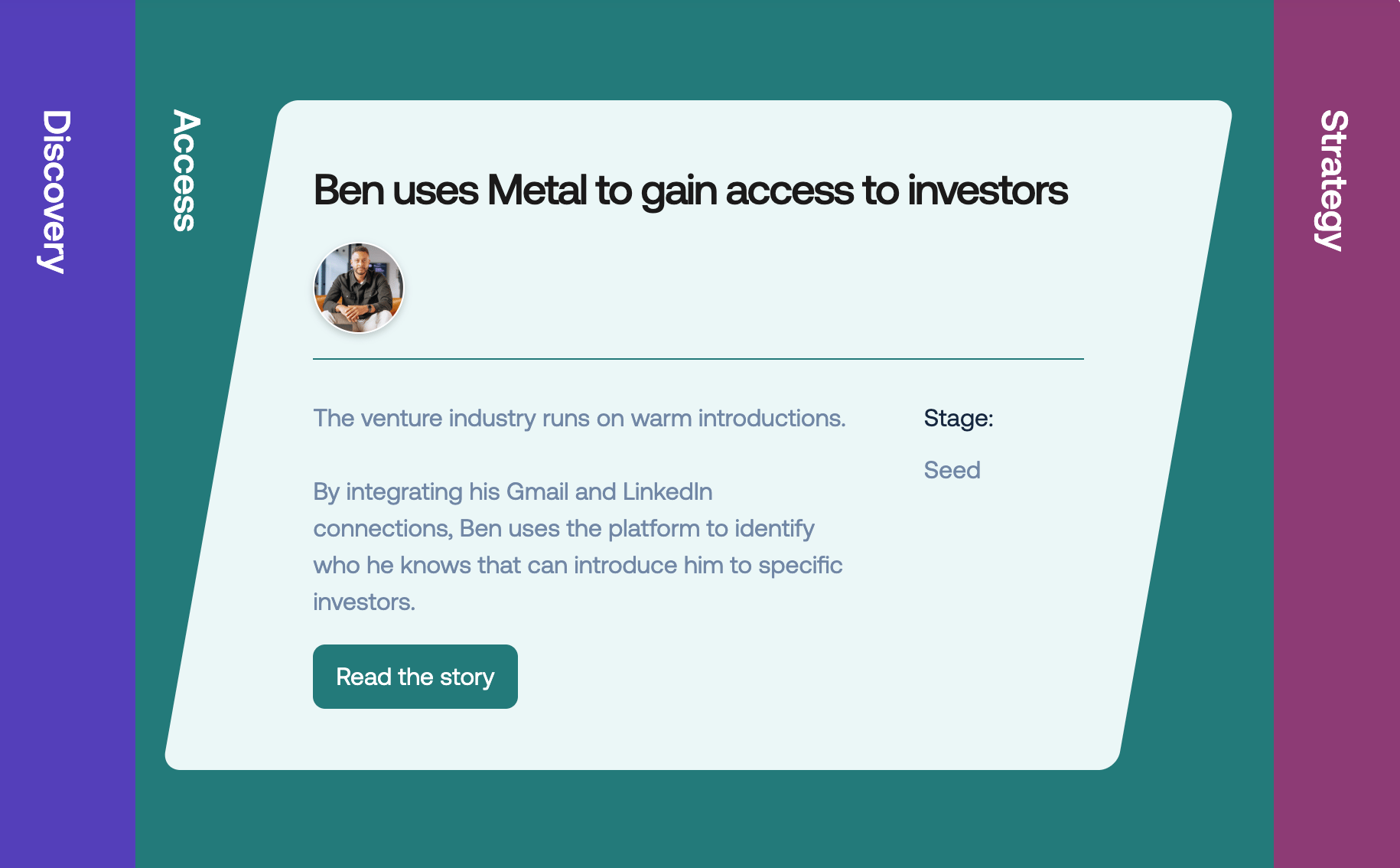
Every week, we highlight tools we like and those we actually use inside our business and give them an honest review. Today, we are highlighting Metal*—a smarter way to search for investors, match by fit, and skip the endless cold-outreach guesswork.
 |
See the full set of tools we use inside of Athyna & Open Source CEO here.
HOW I CAN HELP 🥳
P.S. Want to work together?
Hiring global talent: If you’re hiring tech, business or ops talent and want to do it 80% less, check out my startup, Athyna. 🌏
See my tech stack: Find our suite of tools & resources for both this newsletter and Athyna here. 🧰
Reach an audience of tech leaders: Advertise with us if you want to get in front of founders, investors and leaders in tech. 👀
 |
Reply