- Open Source CEO by Bill Kerr
- Posts
- Unfiltered: Tracksuit Put Brand Back On The Map
Unfiltered: Tracksuit Put Brand Back On The Map
The unpolished conversations, early chaos, and brand decisions that shaped the company. 🎊

Bill Kerr
February 24, 2026

👋 Howdy to the 2,341 new legends who joined this week! You are now part of a 266,664 strong tribe outperforming the competition together.
LATEST POSTS 📚
If you’re new, not yet a subscriber, or just plain missed it, here are some of our recent editions.
🧠 Inference Engineering, Open Models & Shipping AI At Scale. An interview with Philip Kiely, Head of Developer Relations at Baseten.
🧱 LinkedIn Just Voluntarily Tanked Their Algorithm (+ How To Win). We get down and dirty on the tactics to build your brand.
🥄 Neighbors Feeding Neighbors, At Scale. An interview with Joey Grassia, Co-Founder & CEO at Shef.

PARTNERS 💫

We recommend joining Outskill, the world’s first AI learning platform, where over 10+ million learners have learnt from top industry leaders like Microsoft, NVIDIA, and Google.
They are hosting a 2-day LIVE AI Mastermind where you'll build automations, create personalized agents, and learn to turn AI into your ultimate competitive edge.

Framer is the design-first, no-code website builder that lets anyone ship a production-ready site in minutes. Whether you're starting with a template or a blank canvas, Framer gives you total creative control with no coding required.
Add animations, localise with one click, and collaborate in real-time with your whole team. You can even A/B test and track clicks with built-in analytics.
Interested in sponsoring these emails? See our partnership options here.

HOUSEKEEPING 📨
Did you know there is a way to link your Twitter so you can have a big, fat pop-up for people to subscribe? I learned this, just this month. For example, my unique link is https://twitter.com/intent/user?screen_name=bill_kerrrrr. If you use the first half of the link and finish with your handle, where I have ‘bill_kerrrrr’, you can do it yourself. I am telling you this 1) because it’s cool and 2) because I have literally no followers on Twitter, so go follow me!

Also, this is another great piece from the cutting room floor of our recent Tracksuit zero-to-one. I love these pieces. And they are just too good not to share. I actually had to cut one full interview from this, so we may use that in the future, too. Anyway, I hope you enjoy it!

ZERO TO ONE 🌱
Connor Archbold, CEO & Co-Founder at Tracksuit
Connor Archbold is the Co-Founder and Co-CEO of Tracksuit. Before building the company, he spent time across corporate law, fundraising, and early-stage startups, experiences that shaped how he thinks about scale, incentives, and building durable businesses.
At Tracksuit, Connor has been instrumental in taking the product from a local New Zealand launch to a global brand tracking platform, with a sharp focus on culture, long-term thinking, and doing brand properly in a performance-obsessed world.

Why are you and Matt well-suited to build this product?
Matt and I come from very different backgrounds, which ended up being a real strength. Matt helped launch Uber in New Zealand, while I started out as a corporate lawyer. After that, I ran a surfing and yoga retreat in Nicaragua for a year with my now wife, and later launched New Zealand’s first accelerator program in Auckland. I’ve taken a pretty non-linear path, and that gave me a broad perspective on how businesses actually work.
What really brought us together was a shared first-principles approach to brand tracking. We kept asking basic questions that no one in the market seemed to challenge: why isn’t brand tracking standardized, why don’t market research firms share benchmarks, and why is brand data still delivered as a managed service in hundred-page slide decks six weeks after the research is done? How is a modern marketer supposed to make decisions with data that old. Those questions formed our initial hypothesis. We then partnered with James Hurman, one of the world’s most respected brand strategists, and the team at TRA, a highly regarded market research agency. |  Couldn't think of a better compliment. |
Combining Matt’s and my first-principles thinking with their deep brand strategy and research expertise allowed us to create the first version of Tracksuit in a way that challenged the status quo from day one.
What has changed most since the first days?
In the very beginning, the product was actually called Daylight, not Tracksuit. The idea was that we were ‘bringing brand data into the daylight.’ The branding was completely different, too: it was blue and yellow instead of purple and green. In hindsight, we were taking ourselves a bit too seriously back then.
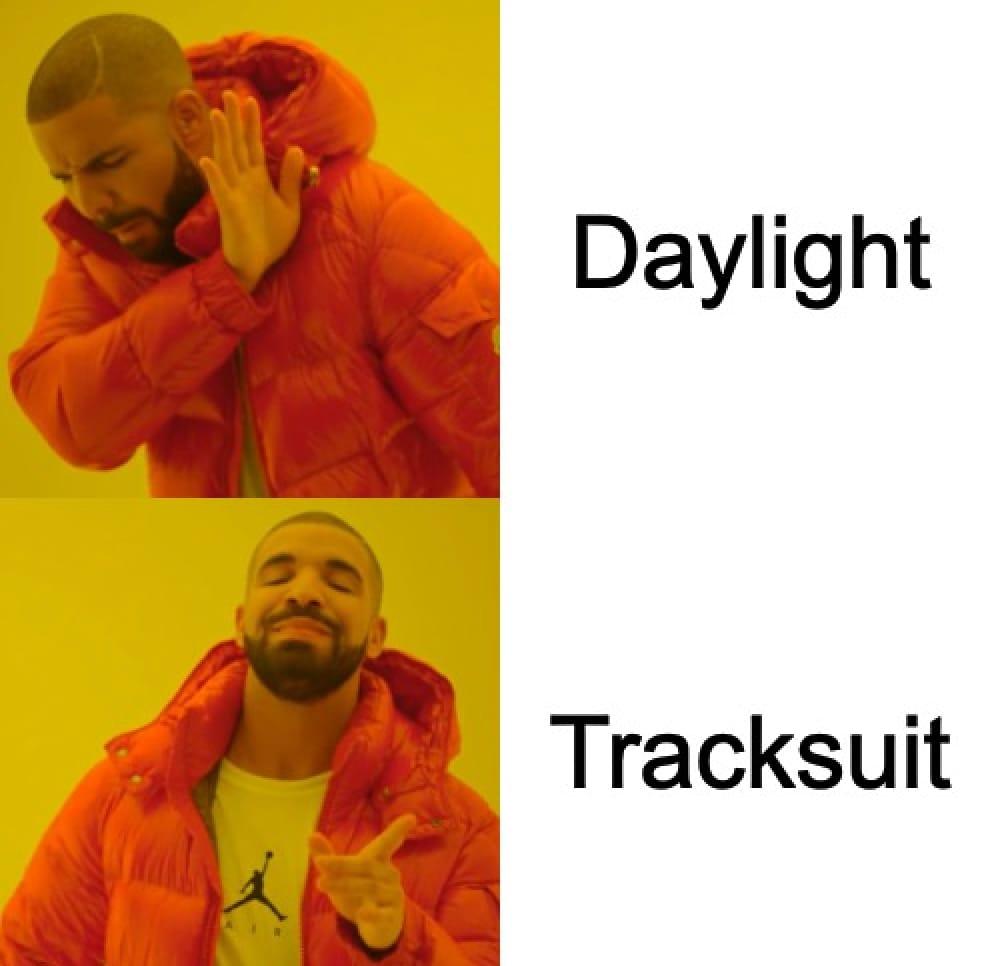
Changing the name to Tracksuit was a big moment. It fit our personalities much better and reflected how we wanted to show up in the world. It was lighter, more approachable, and more aligned with the counter-positioning we were aiming for. The name Tracksuit came from how we wanted to position ourselves against traditional market research firms. They’re the suits, we’re the tracksuits. We’re built for speed and comfort, and everything we did early on was intentionally counter to the slow, heavyweight, ‘dinosaur’ market research model. It also helped that the word ‘track’ is literally in the name, and we do brand tracking. We wanted something fun, memorable, and a little bit cheeky. From the start, we were thinking about how the brand could be engaging beyond just the product; things like doing an annual ‘Tracksuit drop’ with a fashion brand and leaning into that flywheel of creativity.

Also, what's better than working in Tracksuits?
One of my favorite early memories is our second employee, Mikayla, turning up on her first day, probably expecting a slick startup experience. Instead, we were packing gray Tracksuit sweatsets into bags and personally delivering them to our first 50 customers around Auckland. I even ran out of petrol at one point. It was completely unglamorous, but it perfectly captured what the name Tracksuit was all about.
Were there any major product changes from v1 to the product today?
Yes, the product has changed a lot. In fact, at the very beginning, there was no product at all. We started with a hypothesis about what was broken in the brand tracking and market research industry. Matt mocked up what a good dashboard could look like using a simple slide deck, and we worked out the rough economics, like the cost of running surveys and what we might be able to charge. The first version was very scrappy. We ran the surveys ourselves and pushed the data into a white-label data visualization tool, essentially a Power BI setup. We launched in quarterly cohorts, which gave us the ability to completely rebuild the product every three months. We’d launch a cohort, learn from their experience, rebuild, and then bring in the next group. Within nine months, we had around 75 customers and roughly $1 million in ARR across three cohorts.

Source: Tracksuit.
As the product matured, it evolved from ‘nice dashboards’ into something much more insight-driven. Instead of expecting marketers to dig through charts, the focus shifted to helping them quickly understand what the data is telling them and why it matters. From there, we’ve continued moving toward more natural ways of interacting with data: asking questions, surfacing insights, and supporting strategic decision-making rather than just presenting raw metrics.
How did you validate the idea before building the product?
We validated the idea entirely through conversations before building anything. At the start, there was no product. Just a clear hypothesis about what was broken in brand tracking and how it could be done better. We listed around 100 marketers and agency people who regularly interacted with brand tracking and started talking to them one by one.
We were very strict about validation. We told ourselves we wouldn’t build the product unless we could get at least 10 people to commit in advance and effectively sign on as beta customers. In the first 20 conversations, people were polite but non-committal, so we kept refining how we explained the problem and the solution. By the 68th conversation, we had our 11th customer sign up for a full year of brand tracking. Only then did we build anything. We delivered the first version within 30 days, launched those customers as a cohort, and learned directly from how they used it. That customer-led approach shaped everything (from the product itself to how we priced it), and it set the foundation for how Tracksuit has been built ever since.
At what point did you move from low-code, no-code tools to a fully in-house platform?
We ran three quarterly cohorts using low-code tools before moving fully in-house. In those early days, the product was essentially a white-label data visualization setup—Power BI being the main example—with the right design and structure, but not our own native app. Around the 12-month mark, we brought the product team in-house and finished building our own platform.
By that point, we’d already rebuilt the product multiple times through those early cohorts, so moving in-house was more about taking ownership and polishing what we’d learned rather than starting from scratch. |  |
We’re now several versions beyond that initial build, but the core experience still looks and feels surprisingly similar to today’s Tracksuit.
Who were the first employees, and why did you choose them?
Our first two employees were Hamish and Mikayla, who both joined in the same month. They were employees one and two, and we hired them very intentionally. Hamish fits what I think of as a ‘unicorn’ profile. He had recently been selling himself and had only fairly recently stepped into a sales manager role, so he was still very close to the work while also learning how to lead a team. He was also returning to New Zealand from the U.K. during COVID, which worked in our favor. That period brought a lot of high-quality talent back home, and we were able to take advantage of that timing. Mikayla came from a different angle. She was a CMO at a consumer brand and had tried to bring Tracksuit into her own boardroom.
When that didn’t work out, it actually became a moment of clarity for her: if Tracksuit existed to give CMOs credibility in the boardroom, and she couldn’t get it adopted internally, then maybe she should be building it instead. That insight opened the door to a conversation about her joining the company. |  Working with swag. |
She initially joined across customer and marketing, working closely with me on customer success while also shaping our early marketing. Over time, she took full ownership of marketing and eventually moved to New York. Hamish has since grown into our CRO. Both have scaled their roles significantly alongside the company, which has been incredibly rewarding to see.
What was the best thing you did in the early stages?
The best thing we did was hiring. We hired our first employees at the end of 2021. That’s when Hamish and Mikayla joined the company as employees one and two, right at the early zero-to-one stage. Matt and I couldn’t have built Tracksuit on our own, and the people we brought in early are what really made the company what it is today. Seeing those same people grow from a bootstrapped, pre-seed stage all the way through to Series B—often staying in the same leadership seats—is pretty rare, and it’s something I’m incredibly grateful for. That kind of growth is hard, and all the credit goes to them.

You wish your team was this cool.
Bootstrapping also forced a level of focus that helped us immensely. Bootstrapping can go two ways: you either chase any revenue you can find and accidentally become a services business, or you stay disciplined. We chose the second path. We committed to a clear hypothesis, only did the thing we believed in, and kept iterating on that one idea. That maniacal focus, combined with strong early hiring and the timing advantage of great people returning to New Zealand during COVID, played a huge role in Tracksuit’s early success.
How do you think about team structure and geography as you scale?
We’re an in-office company, and that’s a deliberate cultural choice rather than a productivity one. Matt and I genuinely enjoy being in the office with people, and we think it really helps with idea sharing and cross-pollination, especially in the early stages. So instead of being fully remote, we’ve opened offices intentionally when it made sense for the business.
We started in Auckland, where most of our product and engineering team is still based. From there, we opened Sydney. I then moved to New York for four months with my family to launch the U.S. office, and Matt went to London to open the U.K. office. In each case, we made sure the founders were physically there to hire the first group of people and set the tone. |  |
A big part of that strategy was seeding new offices with ‘culture carriers’ from the early days. We brought over people who naturally embodied Tracksuit’s values and way of working, then hired locally around them. That approach helped each new office feel like a true extension of the company, rather than a disconnected satellite team.
What do you mean by ‘culture carriers,’ and why are they important?
A culture carrier is someone who embodies the company’s values without having to think about it. It just comes naturally to them. Early on, when it was just the four of us—Matt, Mikayla, Hamish, and me—we sat down and wrote out everything that would inevitably come out of our personalities if we built a billion-dollar business together. The good, the bad, and everything in between, because building something like that is hard and you experience all of it.

You can't fake this.
From that exercise, we distilled things down into about six core values, which became Tracksuit’s values. Over time, you realize that most people align with those values to some degree, but some people live them so naturally that it feels effortless. Those are culture carriers. They’re important because culture scales through people, not documents. When you bring culture carriers into new teams or new offices, they set the standard by how they behave, make decisions, and work with others. That’s far more powerful than trying to enforce values top-down, especially as the company grows.
How did you seed new offices with these culture carriers?
When we opened new offices, we made a point of physically being there as founders and surrounding ourselves with culture carriers from the early team. In New York, for example, I moved over for several months to launch the office, and Matt did the same in London. That hands-on presence helped us set the tone from day one.
Alongside that, we invited people from the existing team to move overseas and help establish those offices. It wasn’t forced; people raised their hands when they were ready. |  |
That approach ensured the new offices didn’t feel disconnected. They inherited the same values, behaviors, and energy as the original team, which made scaling across geographies feel much more cohesive.
What was the most stressful period so far?
The most stressful periods came from bootstrapping while growing very quickly. We were hiring ahead of revenue, closing lots of deals, but invoices don’t always get paid on time. There were a couple of moments where Matt and I were staring down payroll with almost nothing in the bank, despite having hundreds of thousands in receivables that simply hadn’t landed yet.
In one of those situations, we ended up taking what I’d call a very ‘spicy’ loan, not something I’d generally recommend. Our credit cards were maxed out, there was no cash available, and we needed to make payroll that week. It worked out in the end because the receivables came through shortly after, but those were definitely nights where we lost a lot of sleep.
Product-wise, expanding into the U.S. was also harder than expected. Tracksuit was initially built for the New Zealand market, which is relatively simple. When we launched in the US, marketers cared deeply about regional tracking (cities like Seattle or entire states like Texas), and we didn’t support that at first. Product–market fit in the U.S. took real effort until we made significant changes. To manage that risk, we treated every new region and product launch as its own bootstrap: it had to be cashflow positive on its own, even after we’d raised capital.
Why raise capital instead of continuing to bootstrap?
We decided to raise capital primarily to bring in great partners and give ourselves more breathing room for the next stage of growth. Matt and I hadn’t built a company at that scale before, so having investors who had been there and could add real value, not just money, was important to us. Being part of those communities and learning from people with more experience helped us think differently about what came next.
It also meant we didn’t have to keep putting ourselves in situations where we were relying on ‘spicy’ loans to make payroll. While we probably could have continued bootstrapping and even raised more than we did, we were intentional about raising a reasonable amount relative to our growth. That gave us comfort and the ability to take some calculated bets without constantly stressing about cash.
Matthew Herbert, Co-Founder & CCO at Tracksuit
Matthew is the co-founder and Chief Commercial Officer of Tracksuit, the brand tracking platform built for modern growth teams. Before starting Tracksuit, he helped launch Uber in New Zealand and later worked at Mish Guru, advising global brands on how to reach younger audiences through emerging platforms.

Matt and Connor.
At Tracksuit, he brings that operating mindset to brand measurement, focused on making it practical, accessible, and actually useful day to day. His work sits at the intersection of growth, brand, and data, helping teams understand what’s really driving long-term demand, not just short-term clicks.
What is the initial idea behind Tracksuit?
The initial idea came from looking at how modern businesses were growing and realizing marketing had become almost entirely performance-driven. For the past decade or so, teams poured money into channels like Meta and Google because the returns were easy to measure. Put a dollar in, get three back. Finance teams, investors, and marketers could all understand it. But over time, those returns started to decline. Brands hit a ceiling once they’d exhausted existing demand.
 Source: Tracksuit. |  Source: Tracksuit. |

Source: Tracksuit.
What we saw was that marketing really has two jobs: harvesting existing demand and creating future demand. Performance marketing is great at first, but brand marketing is what brings new people into the category and builds familiarity over time. The challenge was that brand measurement was expensive, slow, and mostly reserved for the biggest companies in the world, paying large research consultancies. So the core idea behind Tracksuit was to make brand tracking accessible, affordable, and understandable for modern growth-stage businesses, and to put brand back on the agenda alongside performance metrics.
In the early days, we focused on stripping brand tracking back to what actually mattered. We spoke to dozens of CMOs and marketing leaders and found they mostly relied on a small set of core insights: category size, brand awareness, brand perceptions, and competitor benchmarks. We built the first version of the product around those fundamentals, validated demand by securing upfront subscriptions from early customers, and used that to build the initial platform. Since then, Tracksuit has evolved into an always-on, easy-to-use brand tracking tool that sits alongside other business metrics and helps teams make faster, more informed decisions as they grow.
What unique insight does Tracksuit deliver that platforms like Meta can’t?
Platforms like Meta are great at showing what’s happening within their own ecosystems, but they only tell part of the story. What Tracksuit delivers is an independent, category-level view of brand performance—the kind of insight that has traditionally only been available to the world’s largest companies through expensive research consultancies.

We looked at how enterprise brands use tools from providers like Kantar or Nielsen and saw that, in practice, most teams rely on a small set of core insights: how big the category is, how well the brand is known, what people think and feel about it, and how it compares to competitors. Tracksuit takes those fundamentals and makes them accessible, affordable, and always on.
Instead of one-off reports or channel-specific metrics, teams get a live view of brand health across the entire market, which they can use to guide strategy, investment, and long-term growth decisions.
What are the biggest product benefits you saw early on, beyond cost reduction?
Beyond cost, the biggest early benefit was simplicity and accessibility. From the start, Tracksuit was designed to create a common language around brand, so marketers, executives, finance teams, and investors could all understand what was happening without it turning into marketing jargon or a black box. The goal was to strip brand measurement back to its essentials and make it easy for everyone in the business to see where the brand stood and where it needed to go.
The other major benefit was being always on. Most businesses only measured brand once or twice a year, which meant they were making decisions based on outdated information. Tracksuit gave teams a live, up-to-date view of their category, competitors, and brand performance.
That speed to insight meant brand data could actually be used in board meetings, agency reviews, and strategy decisions, rather than sitting in a report from months earlier. | 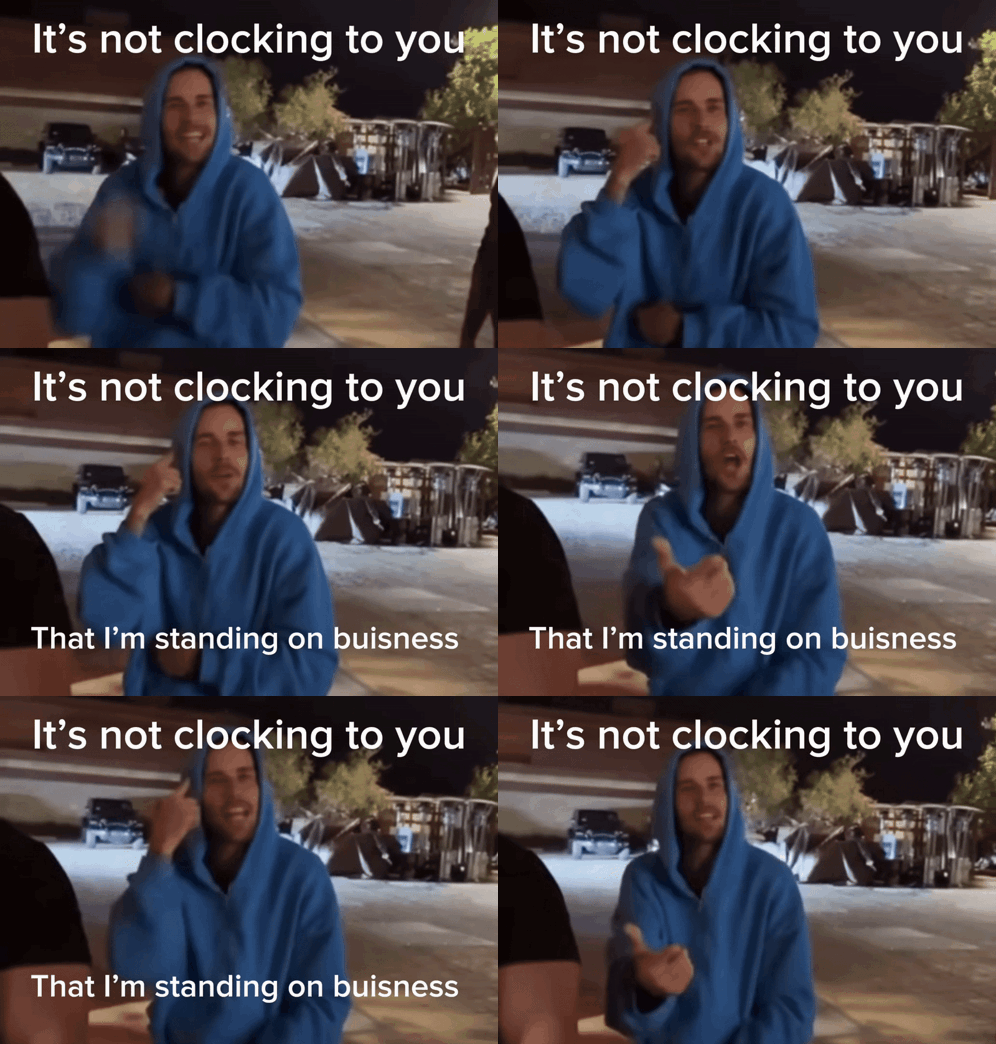 |
Why did you decide on a co-leadership structure, and how did your role evolve?
Things moved very quickly in the early days. We set an initial goal of reaching one million in recurring revenue in about 18 months, and we hit that in nine. As the business scaled, Connor and I were very intentional about leaning into our respective strengths and working as a joint force, which naturally led to a co-CEO structure. I focused more on growth, while Connor focused on operations and customers, and having two people sharing that responsibility made it easier to move fast and make better decisions.

As the company grew further and we began preparing for international expansion and raising capital, our roles started to diverge. Connor spent more time leading fundraising and investor relationships, while I stayed closer to the day-to-day business. When I moved to the U.K. to help launch our U.S. and U.K. operations, my role evolved into Chief Commercial Officer. That shift allowed me to focus on strategic partnerships and ensuring our brand data and insights were embedded into the tools and workflows marketers, strategists, and investors already use, while we continued to review and adjust the leadership structure as the business scaled.
What was the most successful thing you did in the zero-to-one stage?
Three things made the biggest difference in the zero-to-one stage. First, we got very clear on why we were building the business. Early on, we brought the core team into a room and aligned on what success meant, both tangibly and intangibly. That clarity gave us a shared reference point for decision-making as we grew and helped people understand how their work contributed to where we were going.
Second, we defined our core values early. We treated the company as a blank canvas and were deliberate about the culture we wanted to build. Those values became the foundation for how we hired, rewarded people, and held ourselves accountable, and they’ve stayed consistent as the team has grown.

Source: Tracksuit.
Third, we spoke to the market constantly. We made the number of conversations we were having with customers, advisors, and partners a key metric. That ongoing feedback helped us validate ideas early, avoid building in a vacuum, and stay tightly aligned with what the market actually needed.
The exercise helped us find common ground across what people wanted, both personally and professionally. On the intangible side, we aligned on wanting to make a meaningful, long-term impact on how businesses grow by connecting a strong brand strategy with better business outcomes. We also cared deeply about building a team and a place of work people were genuinely proud of, where they felt like ambassadors for what we were building.

Celebrating, the tracksuit way.
On the tangible side, we set clear early goalposts. We wanted to build a globally recognized technology company out of Australia and New Zealand, create opportunities for local talent, and prove we could scale through the difficult early stages of growth. We aligned on getting to around ten million in recurring revenue, serving a thousand customers, and building a business with real long-term value. That shared clarity gave us direction and helped guide decisions as the company evolved.
What has been the most difficult period in the company’s journey so far?
One of the toughest moments came about 18 months in, when we had a team of around 15 people and came very close to not making payroll. Cash was tight, company cards were maxed out, and the responsibility of supporting the team weighed heavily. We ultimately bridged the gap with a short-term loan while outstanding invoices were paid, but at the time, it was extremely stressful.
Beyond that, staying focused has been an ongoing challenge. There are constant temptations to chase bigger contracts or expand into adjacent areas, especially in a broad industry like market research. We made a deliberate decision to stay narrowly focused on brand tracking and do it better than anyone else. |  |
International expansion has also been difficult, particularly managing teams across multiple time zones. Aligning communication, context, and cadence across regions remains one of the hardest parts of scaling the business.
Was raising capital tied to the cash-flow stress?
No, raising capital wasn’t driven by cash-flow stress. At the time, we had customers, revenue, and invoices out; the issue was timing, not the fundamentals of the business. We were very intentional about building a sustainable, bootstrapped company from the start.
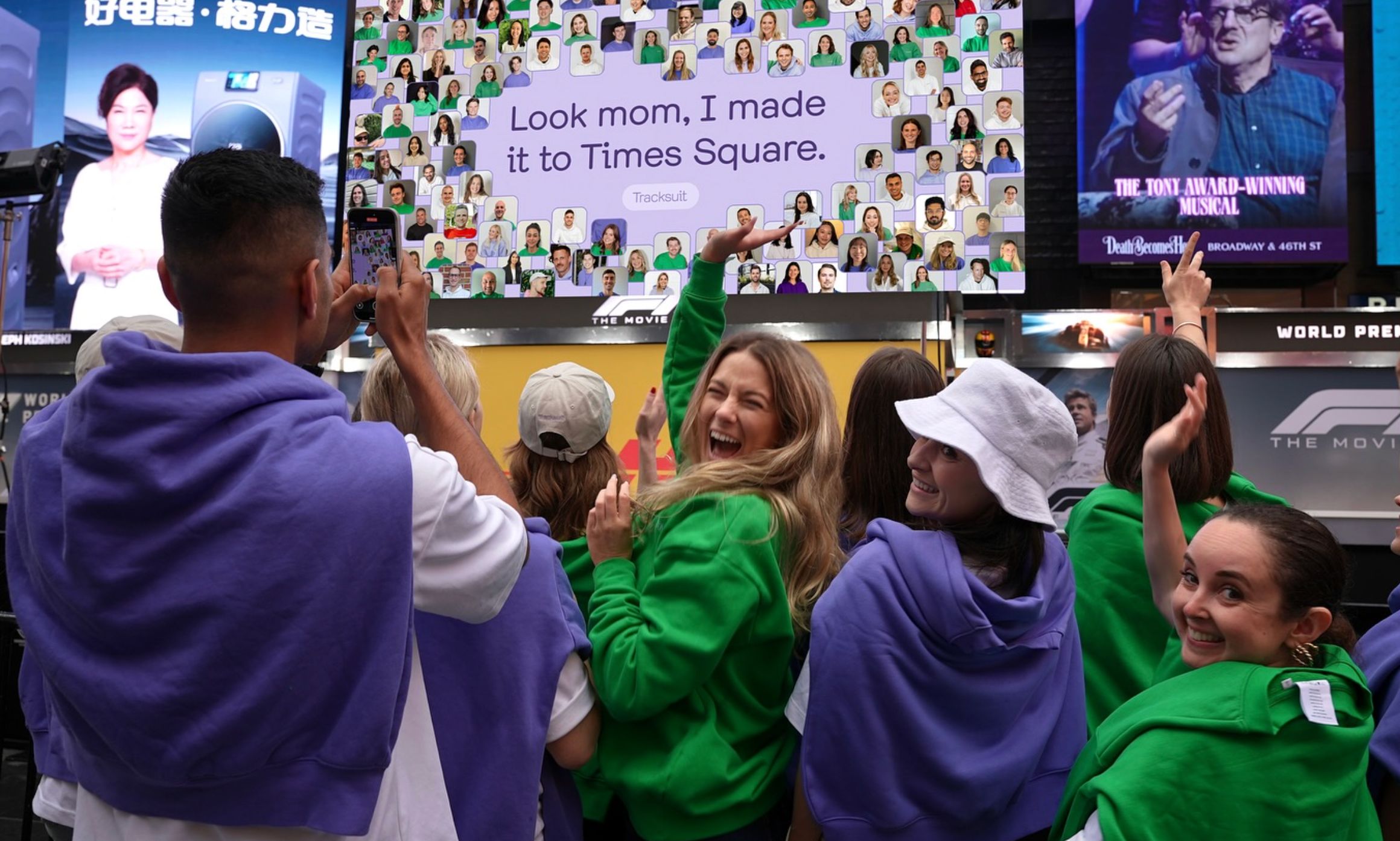
A pack of happy tracksuiters.
When we did raise capital, it was about fueling the next phase of growth rather than staying alive. Coming out of the pandemic, investors were focused on profitability and strong fundamentals, which played to our strengths. Raising allowed us to invest in product, go-to-market, and international expansion, and to bring on partners who could add credibility and help us scale. Timing in the market and the growing focus on brand also worked in our favor.
How were you personally feeling during that period?
The period around the cash-flow stress was intense, but relatively short. It was stressful seeing accounts and credit cards stretched, but we knew we had customers, revenue, and a clear path out of it, so that pressure didn’t drag on for long. The heavier personal toll came later. After several years with the foot on the accelerator, moving from Auckland to London, getting married, managing multiple markets, constant travel, and working across time zones, it caught up with me. I hit burnout hard and fast in early 2024 and had to take time off because I wasn’t looking after myself. It was a real wake-up call. It wasn’t easy to go through, but it forced me to step back, reset, and make changes before things got worse.
Mikayla Hopkins, Head of Marketing at Tracksuit
Mik joined Tracksuit in late 2021 as one of the very first team members and helped shape its early strategy, culture, and global growth trajectory. Under her leadership, the marketing team has expanded significantly while maintaining a focus on blending B2B utility with the energy and creativity more typical of consumer brands.

Mik.
Her career path includes multiple industries and roles, giving her a unique perspective on brand building. Mik started in a big beer company and then moved into beauty as CMO of The Face Place, a luxury cosmedicine business. Today, at Tracksuit, Mikayla champions a marketing philosophy that balances short-term demand conversion with long-term brand building, arguing that both are essential to sustainable growth. Her voice also extends into industry conversations on the evolving role of creativity and brand leadership in the modern marketing landscape.
When and why did you join Tracksuit?
I joined Tracksuit as employee number four, after the two co-founders and our Head of Sales, back in 2021. I joined early on because I was personally experiencing the problem that Tracksuit set out to solve. My background is deep in the world of brand. Over time, I noticed that when I was having conversations with the board, my seat at the table was getting smaller and smaller because I couldn’t confidently articulate the power of brand.
I had a group of girlfriends who were all brilliant marketers, and we met for coffee every month. One day, someone in that group said, “Guys, you have to hear about Tracksuit.” It wasn’t even what she was saying; it was how she was saying it. There was such deep enthusiasm. I remember thinking, ‘we’re just talking about software. Why is she so excited? Nobody talks about SaaS like this.’ She said it was finally a way for marketers to prove their value without spending $200k+. That got me really, really excited. |  Two legends. |
At that point, Tracksuit had seven customers. It had just been Matt and Connor swinging wireframes and selling the dream. They were at about $100k ARR, roughly six months into the journey. Now we’re at $42 million ARR, and I’ve been with the crew since day one.
What role did you play early on?
At Tracksuit, we believe marketers have two jobs. The first is to harvest demand in the short term with conversion activity. The second is to build future demand for the brand among a much wider group of people who haven’t even entered the category yet. Both jobs are equally important. But digital analytics have only ever told us how we’re doing with the short-term conversion piece. Companies fail time and time again because they over-exhaust that small group of people who are ready to buy right now. The challenge is that analytics only tell us how well we’re doing in the short term. They don’t tell us how we’re building future demand or how we’re actually building the commercial engine. I came into Tracksuit to link that theory with the product.
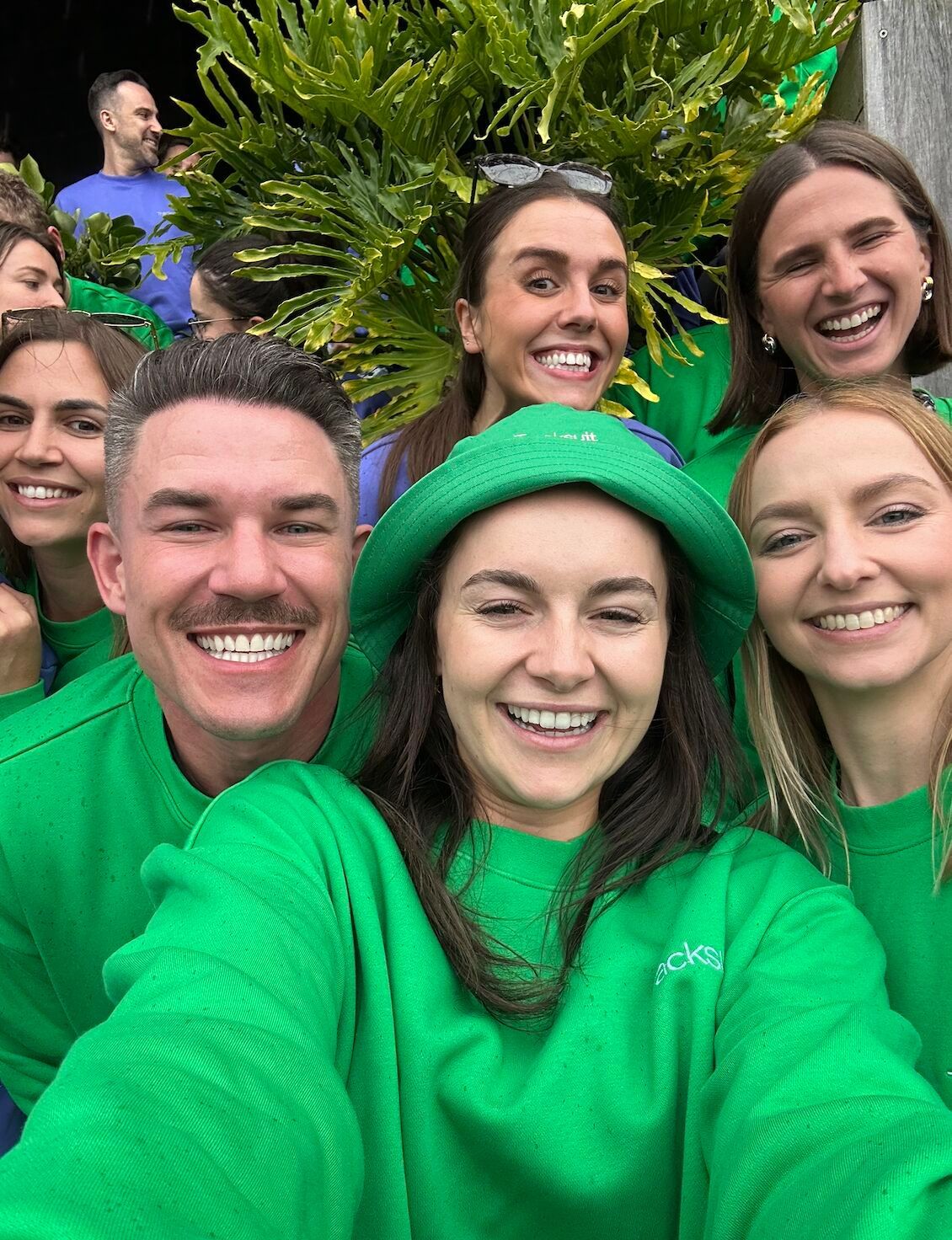
In the beginning, I was leading both Customer Success and Marketing. My job was to understand the pains, fears, and dreams of our customers and figure out how to tell the commercial story of Tracksuit and brand building at large. Day to day, that meant everything: product development, doing demos, building out positioning, running events; basically the full gamut of a generalist who could look after CS and marketing.
My role today is very, very different. We now have a marketing team of 20, with people across New Zealand, Australia, the US, and the UK. My job has shifted from being the person on the ground doing everything to leading leaders and scaling a global team.
What was the single most important thing you did in the zero-to-one?
One of the best things we did was show up differently in the market. B2B is usually stodgy and boring. It’s not playful. We didn’t want to be that. We wanted to be a B2B brand that walked and talked like a consumer brand. A really effective example of that was the tracksuits, the actual apparel.
Yes, our company was called ‘Tracksuit,’ and we sold a technical dashboard, but we wanted to show up in a way that felt built for speed and comfort. And what better way to do that than with real tracksuits? When it was just the four of us, we were literally driving around town dropping them off to early customers and supporters. Those customers would post photos of themselves wearing the tracksuits on LinkedIn. It was amazing. People started fighting over them. Everyone wanted a piece of the merch. It created this real community moment where people felt: they’ve got a great product, and I want to be part of this. It was a really effective way for us to stand out in the noise early on. |  Love, Tracksuit. |
What was something that bombed in the early years?
Looking back on the last four years, it was definitely a challenging ride, but we also had a lot of wins behind us. In some ways, we became a bit of a unicorn overnight. And when you’re in that position, so much gets handed to you on a silver platter. The challenge with that is that it becomes really hard to know explicitly what you need to focus on.
We had moments where we got excited by lots of different opportunities. There was this path over here, another path over there, and we didn’t always know which one to prioritize. We’ve had to get much better at saying no to 99.9% of opportunities instead of getting shiny object syndrome and chasing everything. You can realistically go out and do anything, but if you try to be everything to everyone, you end up being nobody. Where we could have moved even faster was by getting stronger earlier at flexing that ‘no’ muscle.
What did the go-to-market look like in the very beginning?
In the first year, we measured success by the number of conversations we were having. Our entire go-to-market motion was go out and speak to every single person who we believed had this problem: not being able to build, communicate, and measure the impact of their brand marketing. We were constantly asking: “Are we starting to see patterns in the pain points? Is the solution we’ve created actually matching those problems?” That helped us refine our positioning really early on. When you’re moving people from problem-aware to solution-aware to product-aware, we had a very clear idea because we had had so many conversations about exactly what we needed to say and what promise we needed to make to bring people in the door.

Those initial conversations were a mix of user interviews and actual sales pipeline. We have a very charismatic group of people at Tracksuit, so people were really open to jumping on calls. Even if they hadn’t seen the product, they were happy to talk about their problems. At the same time, once we had customers, onboarding them was very white-glove and hands-on. So we were having frequent conversations on both sides: with prospects who were helping us shape the product, and with real users giving feedback in real time about what made sense and what didn’t. A lot of those early calls were framed as learning conversations and problem discovery rather than formal sales meetings. The focus was on understanding what hurt and what they were trying to achieve, more than trying to push a product.
How did that go-to-market evolve once you raised money and started scaling?
As you can imagine, with a team of 200 across the world now, our GTM motion is a lot more sophisticated. We have a strong group of AEs, SDRs, and a really great inbound motion. A big part of it today is telling stories with our data—finding great proof points, case studies, and heroes who believe in the product and getting them to tell our story for us.
Something else that was really effective in year one was building out a flagship event series called Building Brands of the Future. We wanted to be elite but not elitist, so we would hand-pick the people we wanted in the room. Those people would go on to tell our story for us. They would post on LinkedIn and let their network know they were invited into a room of some of the best brand minds in the country. That helped us very quickly create broad awareness of Tracksuit. |  |
Which channels worked best as you’ve scaled? And which have been hard to crack?
In that first year, we didn’t really have a marketing budget, so everything was focused on how we could tell great stories organically. The channel that had the best channel-message fit was LinkedIn. It’s where our customers hang out. It’s where marketers spend their time, honestly, more than Instagram. I know I open LinkedIn 20,000 times a day and probably only open Instagram a couple of times.
We understood that people care about career and social currency. And that was really the crux of Tracksuit. We weren’t just selling brand tracking, we were selling career and social currency. If you use Tracksuit, it makes you a better marketer. That leads to promotions, more marketing budget, bigger teams, more resources, and exponential growth within a company. LinkedIn was the perfect channel to tell those stories. As we expanded, one of the channels that ended up being really effective—but took a lot of experimentation to get right—was our B2B creator network: primarily LinkedIn, and to some extent Instagram.
When it comes to underperformance, the creator strategy is a good example. It eventually became effective, but it was one of the hardest channels to get right. The challenge with creators is that you’re going out to a large volume of people and hoping they have enough ICP overlap with their audience. It’s extremely hard to attribute, and there’s often a lot of bloat in those audiences because creators sometimes grow them in ways that don’t perfectly match your target market.
Early on, we definitely noticed too much wastage when it came to deploying capital into creator partnerships. We’ve refined that now. It’s much more about quality over quantity rather than just going out and seeing who wants to tell our story.
There isn’t one specific channel or campaign I would call a total failure. The bigger challenge was more strategic than tactical. Because things were going well and momentum was strong, we had a lot of exciting opportunities. The risk was saying yes to too many of them at once. The lesson wasn’t that one particular launch bombed. It was that we could have been more disciplined earlier about focus and saying no. |

Can you describe the sales motion today?
Our sales motion is particularly effective because we have very strong AEs who deeply understand the problem we’re trying to solve. More broadly, it’s a really beautiful mix of inbound, outbound, and partnerships. The partnership channel has been a complete game-changer for Tracksuit. Instead of selling one-to-one, we can sell one-to-many. These incredible agencies—usually in the creative space—become our best sellers. They advocate for the work they’re doing, and if an agency has ten customers, all ten can end up using Tracksuit. That channel has been especially important in markets where we don’t yet have as much influence, and we’re very lucky to work with some of the best agencies in the world.
Agencies at the moment honestly deliver about one-third of our revenue at the company. They’re a fantastic channel. We actually have a dedicated partnerships team that holds those relationships and helps those agencies do the best work of their lives, because they have a tool that allows them to demonstrate and communicate what’s happening with brand.
Something we’re finding really interesting is that there will be a time when every single person is using Tracksuit. When that happens, it becomes less about just having the data and more about the ‘so what.’ What are you going to do with that data? How are you going to use it to diagnose and drive strategy? That’s going to be the delta that sets people apart in the agency and creative world.
Have you modeled your go-to-market or partnership strategy on any other companies?
There are definitely strong parallels between Tracksuit and Xero. Initially, when we went out into the world, we weren’t really focused on agencies. Those first ten customers were primarily marketers at CPG and mid-market brands. But then we started to see agencies coming inbound who were really interested in what we were offering. | 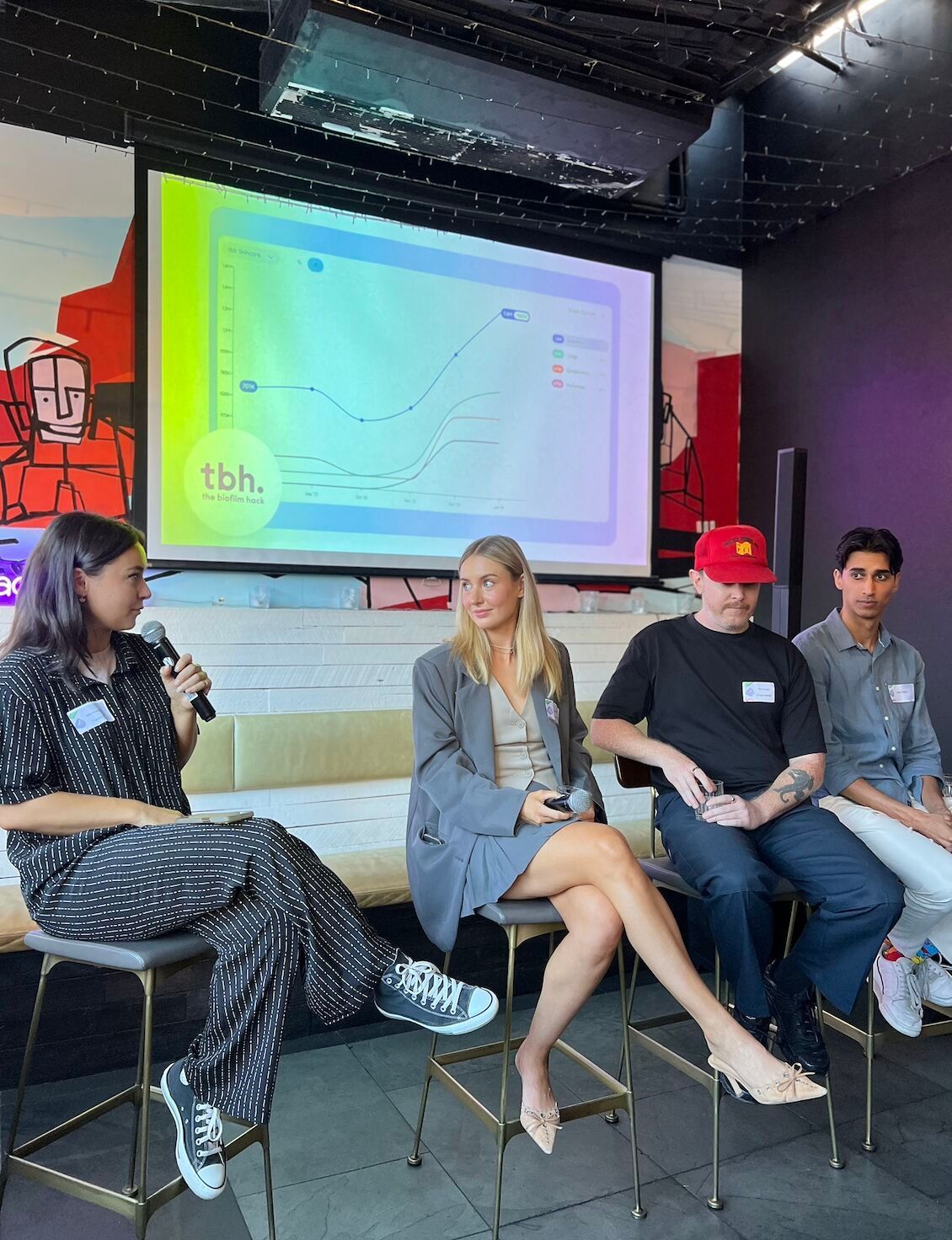 |
Tracksuit shows up in a way that is playful and spirited, but underpinned with an incredibly strong intelligence system, and that hadn’t really been done before in ANZ. So product-market fit with agencies happened almost immediately, and that channel has been instrumental to our growth.
There is a slightly different pricing structure for agencies. We do it in a way that allows them either to pass on those cost savings directly to their customers or to absorb it themselves. Most often, they choose to pass it on to the customer, which I think actually shows the deep care of the agency network. There are also additional co-marketing opportunities. If we can tell a compelling story about an agency because they’re doing great work, that enhances the value of Tracksuit for them as well. So it’s not just about price, it’s also about the partnership and visibility that comes with it.
How and why did the geo expansion decisions happen?
Year one was really about building and establishing product-market fit in New Zealand, and leaning on our founder network to make sure that happened with strong momentum. Very quickly, we found that a lot of New Zealand customers were also trying to grow their businesses in Australia; so instead of going cold into Australia, we went directly to our top 20 or 30 customers and asked whether there was appetite for brand tracking there as well. That gave us enough momentum to really go hard into Australia in year two, set up a team and an office.

Source: Tracksuit.
By the end of year two and the start of year three, we were having very similar expansion conversations about both the U.S. and the U.K. One of the challenges we hit was that we originally only tracked brands in a small number of markets. Particularly in Europe, customers didn’t just want U.K. data; they wanted to understand awareness and consideration across many countries. So last year we made a big shift and went from tracking in seven markets to tracking in 27 markets within a couple of months. That created another ramp for us to continue expanding globally.
What core capabilities do you need on the ground to successfully launch a new geography?
We’ve really rinsed and repeated the same setup market after market. What we’ve found is that once there’s enough traction in a region, and you actually need to start servicing customers there, you need a few core pieces in place. You need a Customer Success person on the ground, a Sales person, and ideally, Marketing support. That combination creates the foundation for a go-to-market team that can service, acquire, engage, and drive value for customers. From there, you just build it up over time.
One thing we found particularly in the U.K. is that it can feel like its own little island because of time zones. In those cases, having a strong generalist—almost a GM-type hire—who can own the market end-to-end has been really effective. That’s something we deployed in the early years of the U.K., and it worked really well.
As for reporting, we operate with global functional leadership, so we have a global executive team. I look after the marketing function; we have a CRO who looks after Customer Success, Sales, and Partnerships; we have a Chief Product Officer who looks after product and insights; and we have our CEO who looks after a lot of the operational side. Those functional leaders are responsible for the people in each region.
Local teams report through functional leaders. So the marketer in a region sits within the global marketing org, the salesperson sits within the global sales org, and customer success sits within the global CS org. I really like that global structure. It means you have consistent standards and support across all markets, rather than everyone operating as separate little silos.
Was the tracksuit apparel idea modeled off anything you’d seen from other brands?
Not really. We had a very small budget in the early days, so we asked ourselves: how can we spend this in the most creative, silly way possible that creates some noise? The idea wasn’t copied from another SaaS company. It was more about creating what I call the ‘t-shirt effect.’ I think about brands like Bumble in its early days. People were proud to walk down the street wearing a Bumble t-shirt because it signaled something about them and what they believed in.
I wanted the same thing for Tracksuit. I wanted people to wear their tracksuits and let their world know: I care about building great businesses. It was about giving people a way to flex their career and social currency, and feel like they were part of something important. We didn’t send those tracksuits out explicitly to get UGC. The intention was to create pride and community. The UGC happened as a consequence of that, not as the main objective. |  A friend of a dog is a friend of mine. |
Extra reading / learning
Tracksuit’s Bootstrap To Series B - February, 2026
Throwing out the Mad Men suits and putting on Tracksuits - April, 2024
Tracksuit’s $25 Million Raise Shows How Brand Metrics Drive Growth - June, 2025
BRAIN FOOD 🧠



TOOLS WE RECOMMEND 🛠️
Every week, we highlight tools we like and those we actually use inside our business and give them an honest review. Today, we are highlighting Attio—powerful, flexible and data-driven, the exact CRM your business needs.
 |
See the full set of tools we use inside of Athyna & Open Source CEO here.
HOW I CAN HELP 🥳
P.S. Want to work together?
Hiring global talent: If you’re hiring tech, business or ops talent and want to do it 80% less, check out my startup, Athyna. 🌏
See my tech stack: Find our suite of tools & resources for both this newsletter and Athyna here. 🧰
Reach an audience of tech leaders: Advertise with us if you want to get in front of founders, investors and leaders in tech. 👀
 |
Reply