- Open Source CEO by Bill Kerr
- Posts
- Investing In The Intelligence Age
Investing In The Intelligence Age
An interview with Mercedes Bent, VC Partner. 💰

Bill Kerr
April 02, 2026

👋 Howdy to the 7,498 new legends who joined since our last edition! You are now part of a 320,809 strong tribe outperforming the competition together.
LATEST POSTS 📚
If you’re new, not yet a subscriber, or just plain missed it, here are some of our recent editions.
⚡️ The World’s Hottest Industry: Post-Training. A look at the new industry taking the world by storm.
🎤 The Speaking Skills Every Leader Needs. An interview with Tristan de Montebello & Michael Gendler, Founders of Ultraspeaking.
👏🏻 The Invisible Layer Separating Good AI From Great AI. An interview with Tyler Phillips, AI Product Lead at Apollo.io.

PARTNERS 💫

Meetings aren’t the problem. The challenge is everything that comes after them. With Granola, the AI Notepad for people with back-to-back meetings, it's no longer about scrambling to keep up.
Take notes the way you always have. Granola works in the background, turning conversations into clear summaries, action items, and next steps.
Before, during, or after a meeting, you can chat with your notes to quickly understand what needs to happen, write follow-ups, or share context with others.

From the inventors of AI sales roleplays. Training only matters if it shows up on real calls. Hyperbound gives reps a safe place to practice tough conversations and gives leaders visibility into the skills that actually move pipeline.
No guessing. No extra meetings. Just sharper reps, better calls, and more confident forecasts. Want to check it out yourself?
Interested in sponsoring these emails? See our partnership options here.

HOUSEKEEPING 📨
One of our most recent and super-active sponsors, Framer, just dropped their State of Sites ‘26 report. If you are like me, you are probably a total nerd for anything that you think can unearth an insight or two to help you grow.

And now that half of the internet is shipping epic sites on Framer at lightning speed, this report does just that. Honestly, though, I’m a sucker for a gradient, so it’s worth downloading the report for the design alone. Now, let’s dive into today’s piece. I hope you like it!

INTERVIEW 🎙️
Mercedes Bent, Co-Founder at Premise
Mercedes Bent is the Co-Founder of Premise, a new VC firm. She was most recently a partner at Lightspeed for 6 years, leading investments in AI, consumer, fintech, and saas. She was named one of 9 Rising Stars in Venture Capital by the Wall Street Journal and has invested in multiple early-stage companies. Prior to joining Lightspeed, she was a GM at General Assembly, where she helped grow its revenue from $2M to $100M in 4 years, and worked as an analyst at Goldman Sachs. She has an MBA and a Master's in Education from Stanford University, and an AB in Economics (Behavioral Economics) from Harvard University.

Today at Premise, she invests in products that feel magical on first use, spread bottom-up, and become defensible through system design (networks, platforms) or embedded workflows and their accumulated data advantage (like a system of record). These founders obsess over product craft and ship fast. In this conversation, she shares her unfiltered take on where we are in the AI cycle, what creates real competitive advantage in a world of cheap models, and why the quality of the founder is everything.
Where do you think we are in the AI cycle?
I think we're in a period where there has been a ton of excitement about what can be created. We get to experience amazing products like ChatGPT or Claude, and people can see the possibility. At the same time, we haven't had a lot of truly revolutionary experiences created yet, and there is also tons of fear from the mainstream public around job and income loss.
We're also still figuring out what the right unit economics look like, and whether there's a way to make this economy work affordably. Right now, there's a lot of cost structure going into debt to service CapEx investments, and we're not yet sure if the unit economics work. |  |
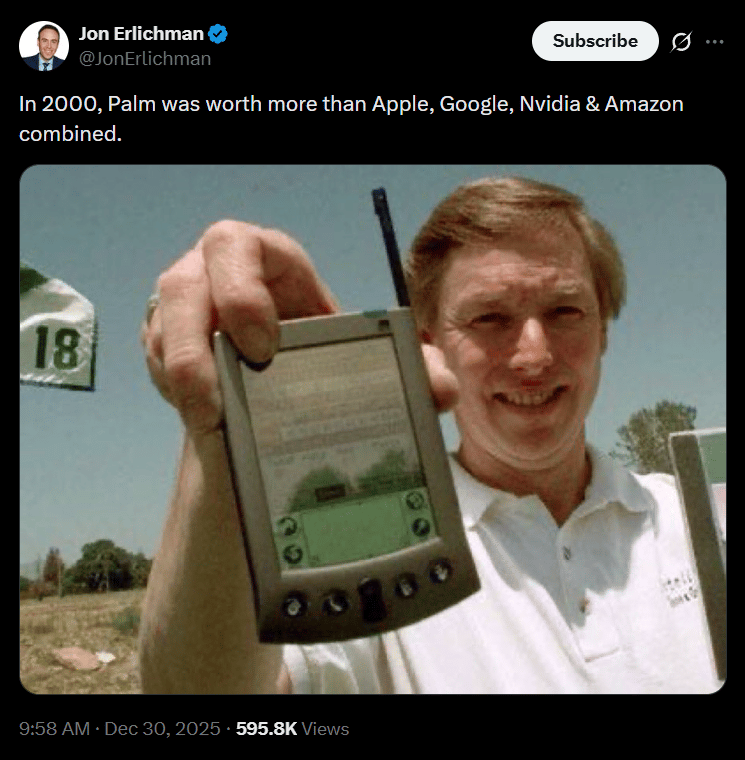
I think we're in a pre-security phase of AI, where AI is writing a great deal of code, but we aren't yet fully aware of the security vulnerabilities we're being exposed to as a result. Another way I would characterize where we're at is by drawing a parallel to the dot-com boom: are we heading toward a bubble? I think we're still in the 90s and haven't hit 2000 yet.
There's a lot of promise, but also a lot of potential risks we don't fully understand, and the economics remain unclear. I think we're in the hubris part of the adoption cycle, and I worry that we're not going to get a lot of these answers figured out soon. We'll just keep piling on more and more investment. Maybe that's actually a good thing, that we'll invest through the uncertainties, but there is immense uncertainty right now: hubris and uncertainty.
What's the biggest shift you're seeing in AI startups that actually matters?
One big shift I've seen recently is that AI startups are increasingly focusing on distribution much earlier than before. Because the cost of production and building great products has come down so low, you can now use tools like Lovable, Cursor, GitHub, Claude Code, V0, or Gamma to create great experiences. Builders are dedicating a lot more attention to how to get distribution quicker. There used to be a saying that ‘first-time founders focus on product, while second-time founders focus on distribution’. The idea was that it took an entire second company before you realized that distribution is actually the hard part of building a business. I'm now seeing that change, with people figuring out distribution much earlier in the process.

I think this also dovetails with the fact that we have a chronically online, influencer-first generation that grew up with YouTube. These are the same people who are now entering the workforce, building companies, and who, ten years ago, said the number one job they wanted when they grew up was to be a YouTube influencer. So I think it's a confluence of things: a social media generation that grew up understanding how important it is to have a brand and a following, combined with the fact that the cost of making products has gotten so much cheaper and faster, freeing up more time to dedicate toward distribution.
That's one of the biggest shifts I've seen across the spectrum. I do still worry that there is a lot more depth that needs to go into building products that are being a little underappreciated. And circling back to something I mentioned earlier, another shift that hasn't happened yet but needs to is that there isn't enough focus on security going into the building of these products.
What are the most common mistakes you see in founders when pitching AI companies?
I believe a lot of founders are not architecting their business model to be long-term defensible from day one. In the beginning, I do think what you need to do is ship as fast as humanly possible: create a lot of output, and really, the only moat early on is the speed at which you ship features. But that phase is increasingly giving way to the next one, where you have to build a durable, defensible business model.
The most defensible business models are networks, platforms, and systems of record. A network, like a marketplace, is one where each additional person added makes the product stickier and more valuable for everyone. A platform is something like Apple's App Store, Steam, Unity, or even Roblox, where third parties monetize and get distribution through your platform—they gain access to a new set of users, but have to conform to your tools and ecosystem to make it work. A system of record is where critical data lives, like Flo for period tracking, or larger companies like SAP, Oracle, and QuickBooks. These are the businesses people can't leave because their most important data is stored there.
One of the mistakes I see is that founders don't put enough intentionality from day one into architecting a business model that compounds over time (one that gets better and more defensible the more you build and invest in it). Many times, you build based purely on what customers want, or a problem you felt yourself, which is valid. But increasingly, I think you have to start thinking four to five years ahead and asking: what is the business model that will perform best in the long run?
What creates competitive advantage for AI firms as models get cheaper and powerful?
I think your competitive advantage always has to do with what the founders' greatest strengths are. Everyone is good at something different, and what you want to do is find the thing you're best in the world at and go really deep there. It could be something technical in the architecture of the product, it could be a new go-to-market approach you've invented, or it could be your ability to tell stories and craft a narrative that is stronger and more compelling than anyone else's. Those are the right areas to focus on.


The way to think about it is: what am I best in the world at? Find that atomic unit of competitive advantage and draw concentric circles around it; meaning, deepen your advantage over and over again until it starts to compound. That, to me, is how you find and build a true competitive advantage. To get there, you almost have to take stock of yourself, and sometimes that means asking other people what is uniquely special about you relative to everything else they've seen. Often, you're not fully aware of what it is yourself, but other people can usually see it quite clearly.
How has AI changed what you look for in founding teams?
I've actually started looking a lot more for technical founders. This might seem counterintuitive, but even though we have so many more tools available to create products, I think that also means a lot more people can make bad products.
So I'm even more interested in people who truly understand how things work—down to the computer science level, down to the zeros and ones, the rails and the bits—and who know how to build elegant, secure computer systems. Having that technical depth is extremely important to me. That's probably something I flipped on in the last two to three years: I won't invest in a team anymore unless I believe they have real technical prowess and depth. |
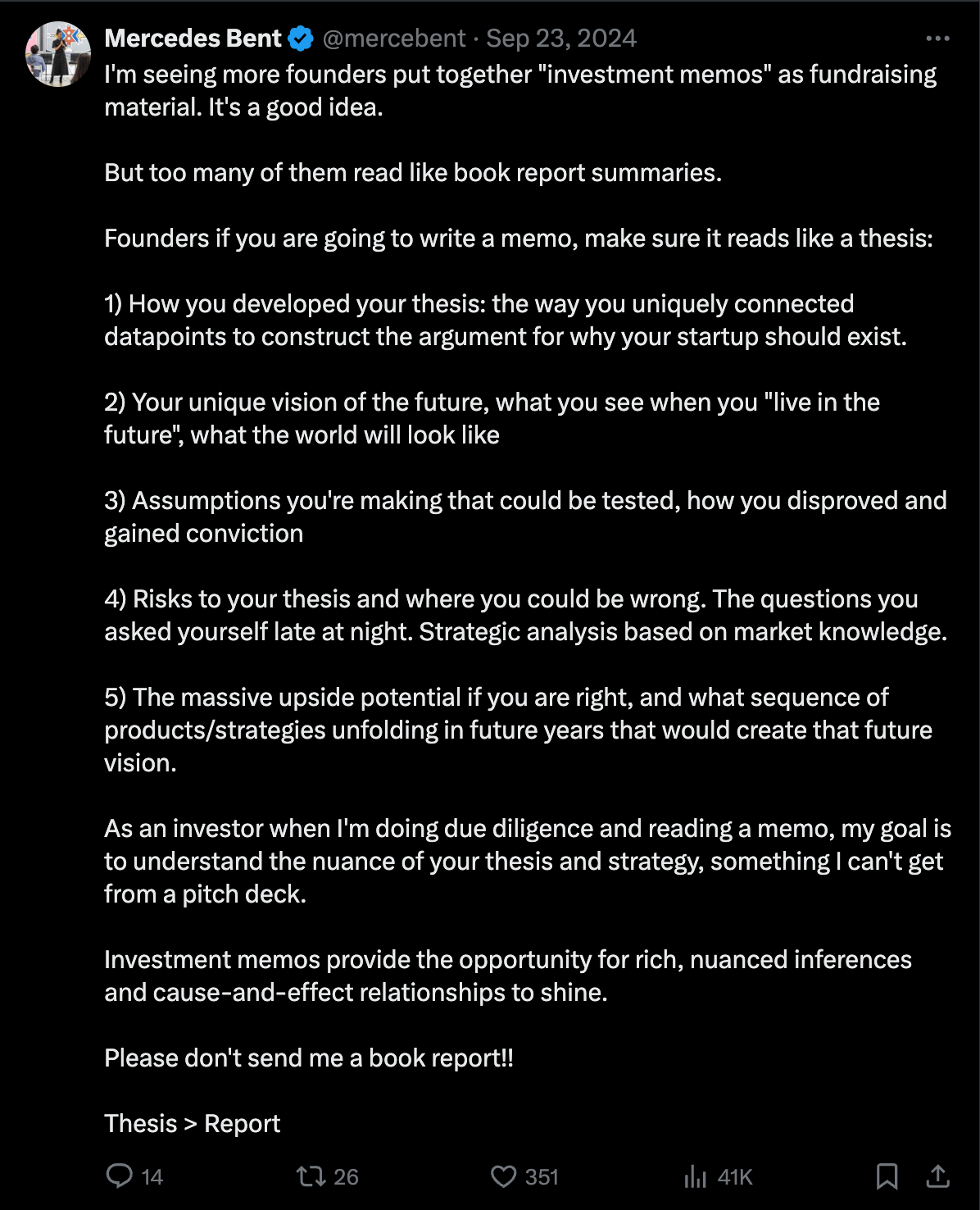
The other shift is more a reflection of where I am in my own investing journey. I started a new venture firm, and I'm now investing at the pre-seed and seed stages, which means I'm going in earlier than before. At that stage, it really comes down to the quality of the founder. It's not that I didn't invest in quality founders before, but the shift is that I now place roughly 90% of my investment thesis on the quality of the founders themselves.
How has your experience shaped the way you evaluate companies?
A lot of what goes into evaluating companies is knowledge you gain from being an institutional venture capitalist—I actually think institutional VCs are much better at evaluating companies than operators. It's not necessarily a skill set you learn from operating. That said, one thing I would point to on the evaluation side is that from operating, you learn to better understand what's real versus what isn't when a company delivers materials from a data room perspective. You develop a sense for what systems and data they might actually have access to, and what the fidelity of that data looks like. A lot of founders are not nearly as clean in their tracking of data systems as they should be, and if you ask for a lot of data, they simply can't produce it. That's something I know from being on the operating side.

But the bigger lesson I took from operating is really about how I run my venture firm. When I was an operator, the way you stayed at the edge of your field and at the forefront was by following and having access to the people who were also experts at the forefront of their fields. That requires having a community and being able to learn and trade notes with one another. So what we built for our new venture firm is a series of communities focused on technical founders, engineers, researchers, product managers, and designers. We run a monthly event series called Surreal, and we created a WhatsApp group where people can discuss things like the efficiencies between Claude Code versus Cursor, or how to set up a multi-agent MCP system.
Creating that kind of space and community is something I learned most from operating, because I know how vital it is when you're building on your own to have access to the right people. Operating is actually a very siloed game; you are focused entirely on your own problem, and it's really hard to pick your head up. Venture, on the other hand, gives you an incredibly wide breadth and access to a vast network of people. I wanted to create a place where founders could pick their heads up and have access to the best people around them.
How do you get the best out of yourself personally and professionally?
If I had the answer to this, I would be winning at life! I do think that mastery of self is one of the hardest things we have to conquer—that's the whole point of life in a way, isn't it?
On a practical level, I try to get eight to nine hours of sleep, exercise regularly, drink water, eat healthy, and talk to friends. Those are the basics of maintaining good mental health and sanity. Honestly, though, I work way too much to be doing great on all of those factors all the time. But if I had to give a real answer, I think it comes down to this: you are truly a product of the five people you spend the most time with. |  |
The best way to get the best out of yourself is to make sure that those people are the highest quality people you could surround yourself with. It's almost an outward approach to self-improvement: bettering yourself by being intentional about who you let into your inner circle. I think we have to be really conscientious about who we spend time with and how those relationships shape and improve who we are.
Extra reading / learning
VC Mercedes Bent says it took a year of meetings to land a job at Lightspeed - January, 2021
How learning velocity can make or break a startup - May, 2024
The Mindset of a Top-Tier VC with Mercedes Bent - September, 2025
BRAIN FOOD 🧠


TOOLS WE RECOMMEND 🛠️
Every week, we highlight tools we like and those we actually use inside our business and give them an honest review. Today, we are highlighting Framer*—the site builder trusted by startups to Fortune 500.

See the full set of tools we use inside of Athyna & Open Source CEO here.
HOW I CAN HELP 🥳
P.S. Want to work together?
Hiring global talent: If you’re hiring tech, business or ops talent and want to do it 80% less, check out my startup, Athyna. 🌏
See my tech stack: Find our suite of tools & resources for both this newsletter and Athyna here. 🧰
Reach an audience of tech leaders: Advertise with us if you want to get in front of founders, investors and leaders in tech. 👀
 |
Reply