- Open Source CEO by Bill Kerr
- Posts
- Ship Faster: AI Review & Crafting The Culture
Ship Faster: AI Review & Crafting The Culture
An interview with Merrill Lutsky, Co-Founder & CEO at Graphite. 🎱

Bill Kerr
January 08, 2026

👋 Howdy to the 1,486 new legends who joined this week! You are now part of a 231,605 strong tribe outperforming the competition together.
LATEST POSTS 📚
If you’re new, not yet a subscriber, or just plain missed it, here are some of our recent editions.
🌱 Collection: Getting The Best Out Of Yourself. A collection of thoughts from a collection of leaders.
❤️🩹 Dust Yourself Off & Try Again: Famous Founder Failures. If at first you don't succeed, try, try again.
🪄 Dark & Full Of Terrors (2026 Predictions). Pulling out the crystal ball and taking a stab at what's to come.

PARTNERS 💫
Attio is the AI-native CRM for your team.

Connect your email and calendar, and Attio instantly builds a CRM that matches your business model—with all your companies, contacts, and interactions enriched with actionable insights.
With Attio, AI isn’t just a feature - it’s the foundation. You can do things like:
Instantly prospect and route leads with research agents
Get real-time insights from AI during customer conversations
And build powerful AI automations for your most complex workflows
Industry leaders like TaskRabbit, Granola, Flatfile, and more are already experiencing what’s next.
Interested in sponsoring these emails? See our partnership options here.

HOUSEKEEPING 📨
Social media, prediction markets, OnlyFans; all these trends really have me wondering where culture will be another 10-20 years. I will turn 40 next week. Maybe I am just turning into my dad, his father before him, and my grandfather before that. Every generation sees things they are not comfortable with—comic books, Elvis Presley’s swinging hips, Black Sabbath, wacky tabacky—and deem it the devil reincarnate.

This week, the Financial Times reported that the U.S. is opening its doors to OnlyFans creators from across the globe. Honestly, it’s kinda weird that sex is so taboo. Maybe that will change. Maybe that’s a good thing. But as of right now, with all the ‘all immigrants bad’ rhetoric going on right now, seeing this just made me think we have hit an even lower low point culturally speaking. Enjoy today’s piece!

INTERVIEW 🎙️
Merrill Lutsky, Co-Founder & CEO at Graphite
Merrill Lutsky is the Co-Founder and CEO of Graphite, an AI-driven platform designed to streamline code review and development workflows for engineering teams. With a focus on both efficiency and quality, he has positioned Graphite at the intersection of modern tooling, developer experience, and machine-assisted collaboration.
Prior to founding Graphite, Lutsky built his technical and product leadership chops in the startup world, including founding a company during his time in Y Combinator. His background in applied mathematics and hands-on engineering experience inform his leadership style, product vision, and the cultural direction of Graphite as a company.

Big Merrill.
Tell us about the problem you’re trying to solve, and why this?
Graphite’s mission is to accelerate software development by focusing on the part that comes after writing code. Anyone who’s built software with a team knows that code is just the first step. What follows that step, like peer review, testing, validation, merging, and deployment, matters just as much.
Over the past few years, engineers have gained incredible tools to generate code quickly. But the ‘outer loop’ of software development—code review, testing, and deployments—hasn’t evolved much. As an industry, we’re still doing it largely the way we did 10 years ago. |
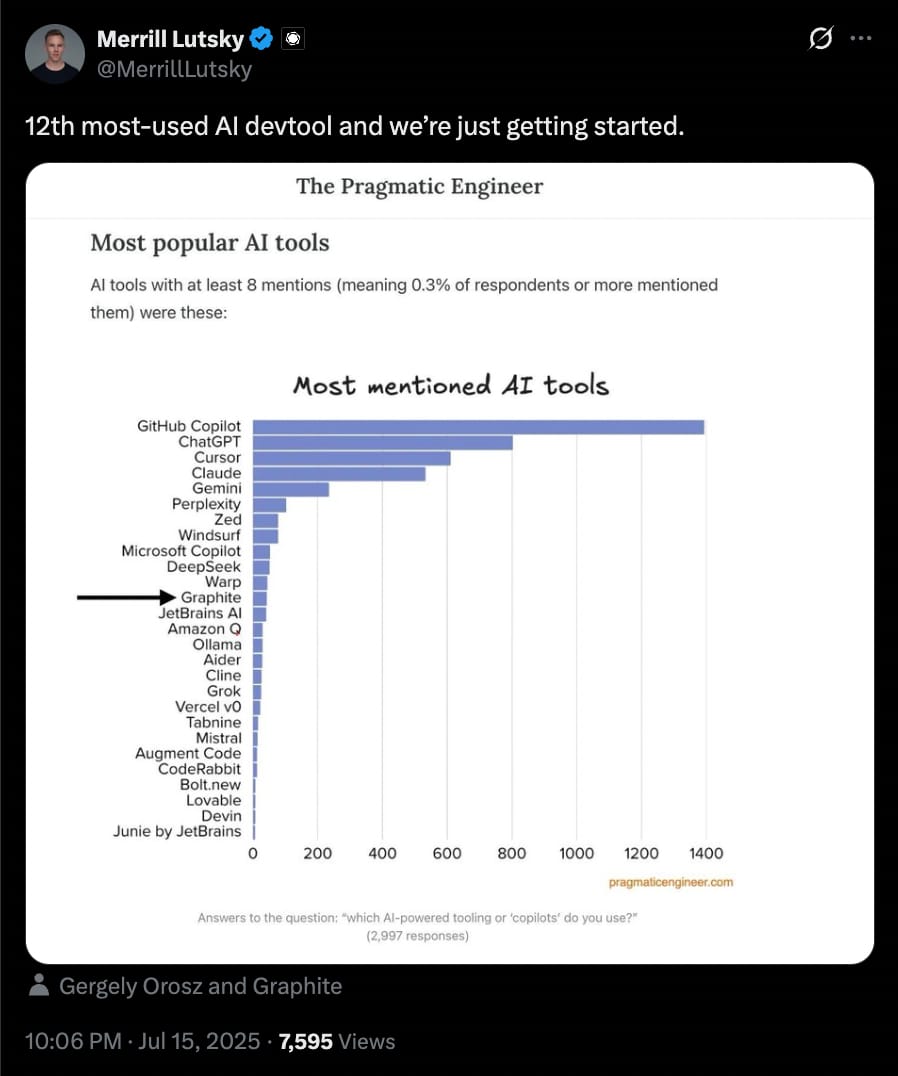
At Graphite, our goal is to provide tooling that keeps pace with how fast you can now generate code. We cover everything from how engineers create pull requests to a more modern, AI-first review interface with a companion that helps you review and modify PRs, plus a merge queue to merge quickly and efficiently. It’s end-to-end tooling for teams that want to ship code as fast as they can generate it.
What was the hardest part of going from zero to one?
The first year and a half was brutal. My co-founders, Tomas and Greg, and I were just three people with seed funding, pivoting around to find product-market fit. The first version of Graphite was actually a tool we built for our own team after hiring a few engineers, many of whom were from Meta and other companies with better internal code-review tooling.
They wanted to replicate those workflows on top of GitHub, so we hacked together what became the first version of Graphite—all while we were working on a totally different idea to help companies building native iOS apps roll back quickly when something goes wrong. Still DevTools, but a different space.
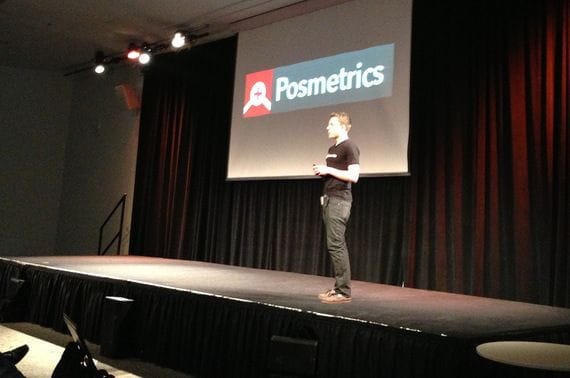
By the time Graphite started to click, we had about six months of runway left. We launched, got traction, and subsequently raised our Series A off that momentum. Since then, it’s been a crazy ride, with customers helping us identify the next pain points to tackle. That initial wandering through the forest was the hardest part.
What did your first startup teach you about what not to do?
Well, a lot. It taught me to build interesting technology in a large, expanding market for a customer I care about. I did none of those in the first company. We built software for hotels and restaurants to collect customer feedback.
I later worked at Square on customer-feedback tools, so I stayed in that small-business SaaS world for a while. Ultimately, it wasn’t a customer I understood or empathized with deeply, the technology wasn’t that novel, and the market wasn’t rapidly growing. |
Now that I'm in DevTools, it’s probably the most exciting space to work in. AI is having a huge impact. The market was already massive and is accelerating. There are more software companies and engineers than ever, and the tech is interesting and constantly evolving. All three founders are technical; we’ve all built software. Many of our friends are engineers at big companies. We personally use the product every day. It’s a much more fun and engaging problem.

How have you made a three-founder dynamic actually work?
I would say trust, since we knew each other from Harvard. Tomas and Greg were project partners through some of the hardest CS courses.
I was a couple of years ahead, took a year off to build my first company, then came back and met them. We’d discussed ideas and worked on side projects for years. Even when at different companies, Tomas and I would work from each other’s offices on weekends in New York. We had a lot of trust and history going in. |  Founding team. |
It was still incredibly hard during that product-market-fit year and a half, but it taught us how to work together. Over time, carving out clear ownership and finding the right roles helped. With three technical founders, everyone can do a lot, but defining our natural strengths and how we want to divide the work made things much better.
 Founder therapy. | For a while, we went to a ‘founder therapist,’ a licensed therapist we met weekly. It created space to discuss anything on our minds—interpersonal dynamics, worries, frustrations—and it helped us gain a better understanding of each other and how we work. |
We also had to align across different backgrounds and cultures from past companies. I was at Square, Tomas was at Meta, and Greg was at Airbnb. Those companies operate differently and value different things. We worked through trade-offs—where to be more Square-like, Facebook-like, or Airbnb-like—and what should be uniquely Graphite.
Defining culture that way has been challenging and fun. It worked really well. I’d recommend it. We joke that we spend more time with each other than with our significant others, so it makes sense.
Detail your recruitment strategy. How do you hire star talent?
From the beginning, we’ve prioritized talent density. We build DevTools for massive companies like Shopify, Snowflake, and Datadog, among other big players. They depend on us daily. Our engineering quality must be high, and they must trust the people building their tools. So, our mission requires a very talented engineering team and company.
We’ve tried to hold a very high bar. It’s painful sometimes because it slows hiring. When you really need a hire, and someone is on the margin, you have to be disciplined and say no. The moment you say yes, you chip away at talent density, and it’s hard to come back. We’ve made that mistake, and it’s bitten us every time. We’ve learned to stick to this.

Source: Graphite.
We source from many places, from incredible new grads to folks with 15+ years at great companies. We want a wide range of experience, but all must be high-slope, high-craft individuals who care deeply about their work and want to do the best work of their lives here. The nice thing is that it becomes self-perpetuating. People see the team’s quality. Great people want to work with people who inspire them. That’s started to snowball.
How has AI changed your product and the way teams use it?
When we started Graphite, AI code generation wasn’t even good yet. Then everything changed overnight. Engineers now generate about 70% more lines of code per week than at the end of 2023. That flood of code has shifted the bottleneck to reviews.
Teams tell us AI has made individuals faster—but slowed teams down. Mountains of pull requests pile up. That’s why we built Graphite Agent, our AI code review tool. It reviews every PR in seconds, flags bugs, performance issues, security risks, and even style inconsistencies.

Source: Graphite's AI agent.
You get actionable feedback instantly, instead of waiting hours or days for a human reviewer. Graphite Agent even suggests fixes for failing tests and will soon resolve merge conflicts automatically. You can also chat with Graphite Agent to better understand the context of changes or suggestions. It’s like giving every engineer an AI collaborator to get code from creation to production faster.
How do you get the best out of yourself personally and professionally?
Being a founder is all-consuming, so it’s important to have outlets. I’m a big runner and have been training for marathons for the past few years. I train with a running group in Williamsburg. Regular exercise is great for mental health. I also love climbing.
I’m into contemporary art and electronic music, too. I used to DJ on the side. Having something totally outside tech helps me unplug and think about something else. It's grounding.
Is there anything I should have asked you—something you do uniquely well?
People often ask, ‘Why New York? Why in person?’ It’s an atypical configuration. There’s a lot of energy in SF, and we’re there often, but building an AI company in New York has advantages. We think we can be one of the defining DevTools companies built here. In the Bay, it’s hard to differentiate; there’s intense competition and big AI labs. Hiring is more competitive, and many engineers don’t want to come into the office.
New York has incredible engineering talent. Historically, options were FAANG, fintech, or traditional industries. Now it’s us and a few others doing interesting, fast-growing AI work, which helps us hire the best talent in the city. Building in person in New York is easier—great public transportation, a city built for in-person work. |  Pack of legends. |
Remote work works for some teams and some people, but for building something truly innovative, quickly, in a rapidly evolving space, nothing beats a highly motivated, deeply technical group in one room collaborating. That’s the best way I’ve found to build amazing things.
And that’s it! You can keep up and connect with Merrill on his LinkedIn and check out Graphite’s website for more!
HIRING ZONE 👀
Today we are highlighting AI talent available through, Athyna. If you are looking for the best bespoke tech talent, these stars are ready to work with you—today! Reach out here if we can make an introduction to these talents and get $1,000 discount on behalf of us.

BRAIN FOOD 🧠


TOOLS WE RECOMMEND 🛠️
Every week, we highlight tools we like and those we actually use inside our business and give them an honest review. Today, we are highlighting Vanta*—the security and compliance platform companies rely on to stay audit-ready without losing their sanity.

See the full set of tools we use inside of Athyna & Open Source CEO here.
HOW I CAN HELP 🥳
P.S. Want to work together?
Hiring global talent: If you’re hiring tech, business or ops talent and want to do it 80% less, check out my startup, Athyna. 🌏
See my tech stack: Find our suite of tools & resources for both this newsletter and Athyna here. 🧰
Reach an audience of tech leaders: Advertise with us if you want to get in front of founders, investors and leaders in tech. 👀
 |
Reply