- Open Source CEO by Bill Kerr
- Posts
- Hyperbound Goes Hyperdrive: A Zero To One
Hyperbound Goes Hyperdrive: A Zero To One
Creating the AI-sales training industry and taking names along the way. 🚀

Bill Kerr
February 01, 2026

👋 Howdy to the 2,237 new legends who joined this week! You are now part of a 247,612 strong tribe outperforming the competition together.
LATEST POSTS 📚
If you’re new, not yet a subscriber, or just plain missed it, here are some of our recent editions.
⚡️ Launching Athyna Intelligence. An interview with Bill Kerr, Founder & CEO at Athyna.
😩 Your First Product Will Be A Dumpster Fire. Teething problems of world leading companies.
🏭 From eBay To Scaling Language AI. An interview with Bryan Murphy, CEO at Smartling.

PARTNERS 💫

Join Vanta for a session on how to make compliance work at your pace, without slowing momentum, stalling deals, or putting revenue at risk.
We’ll cover essential steps you can take now to prepare for your first audit in 2026—and enter the new year ready to earn customer trust (and deals).
Tips on identifying the right framework(s) for your startup
Advice on how to work security into your budget
Security best practices to implement now so you’re audit-ready next year

Attio is the CRM for the AI era. Connect your email, and instantly build your CRM with enriched, actionable data.
Then unleash the full power of the platform — from AI-powered automations to research agents, Attio can handle some of your most complex operational processes like finding key decision makers and triaging leads.
Join industry leaders like Flatfile, Replicate, Modal, and more.
Interested in sponsoring these emails? See our partnership options here.

HOUSEKEEPING 📨
We launched an update to our brand with my startup, Athyna, last week. I’m super happy with how it came out. It feels fresh, positive, future-forward, and uniquely us. I think it’s a great spiritual reset to take a brand, and inject some new life into it.

I plan to produce a piece alongside one of our investors, Aerolab, which actually handled the brand work. They are phenomenal. I plan to spruce up the brand of this newsletter in the next month or two with them, also. Very exciting stuff. I love brand. Brand brand brand brand brand. Anyway, enjoy today’s piece! It’s a cracker.

ZERO TO ONE 🌱
Hyperbound To Hyperdrive: A Zero To One
Some companies come into the market with all guns blazing. Others come in with more smoke and mirrors than substance. And every so often, a new entrant hits the ground running at such a speed that one could only identify them as a startup in hyperdrive. Today, we are looking at one of those companies. An initial idea from a pair of young, fresh-faced grads would become Hyperbound, the AI sales coach used by over 7,000 customers.
I met the founders of Hyperbound, Sriharsha and Atul, a couple of years back when they were in the very first iteration of their product. Since then, I’ve seen them crush YC, enter the market like a bat out of hell, and shortly after become an enterprise-only mini-SaaS powerhouse. Most recently, they capped off their zero-to-one phase with their $15M Series A led by Peak XV.
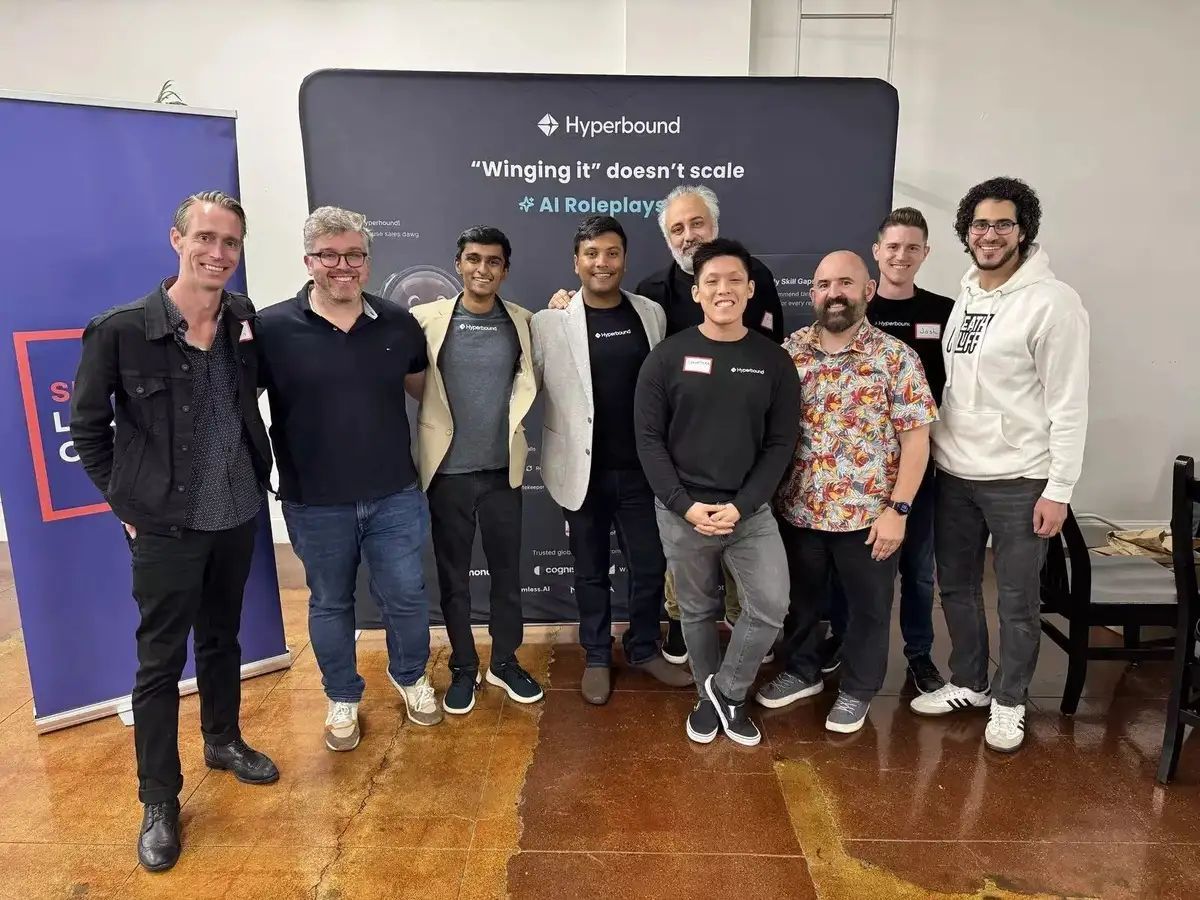
What I aim to do throughout this piece, though, is tell the story of Hyperbound and frame it with learnings you can take home. To find these nuggets of early-stage wisdom, I interview both founders, Sriharsha and Atul, along with Jonathan, who was the team’s founding AI / ML engineer, and finally, the wonderful Mia Kosoglow, who not only acted as my right hand in preparing this piece, but also as my ‘culturally relevant’ interviewee. So, without further ado, my lovelies, please enjoy the story. Hyperbound, a hyperspeed company, moving at hyperdrive, bound for hyperspace. Enjoy!
A little backstory (mine + theirs)
Firstly, let me begin by saying that I was lucky enough to participate in the Series A as an angel, so please be prepared for the world's greatest puff piece on these two founders. If by the completion of this piece you are not utterly drenched by your own salavation (is that a word?), then I have failed in my role as ‘helpful angel.’
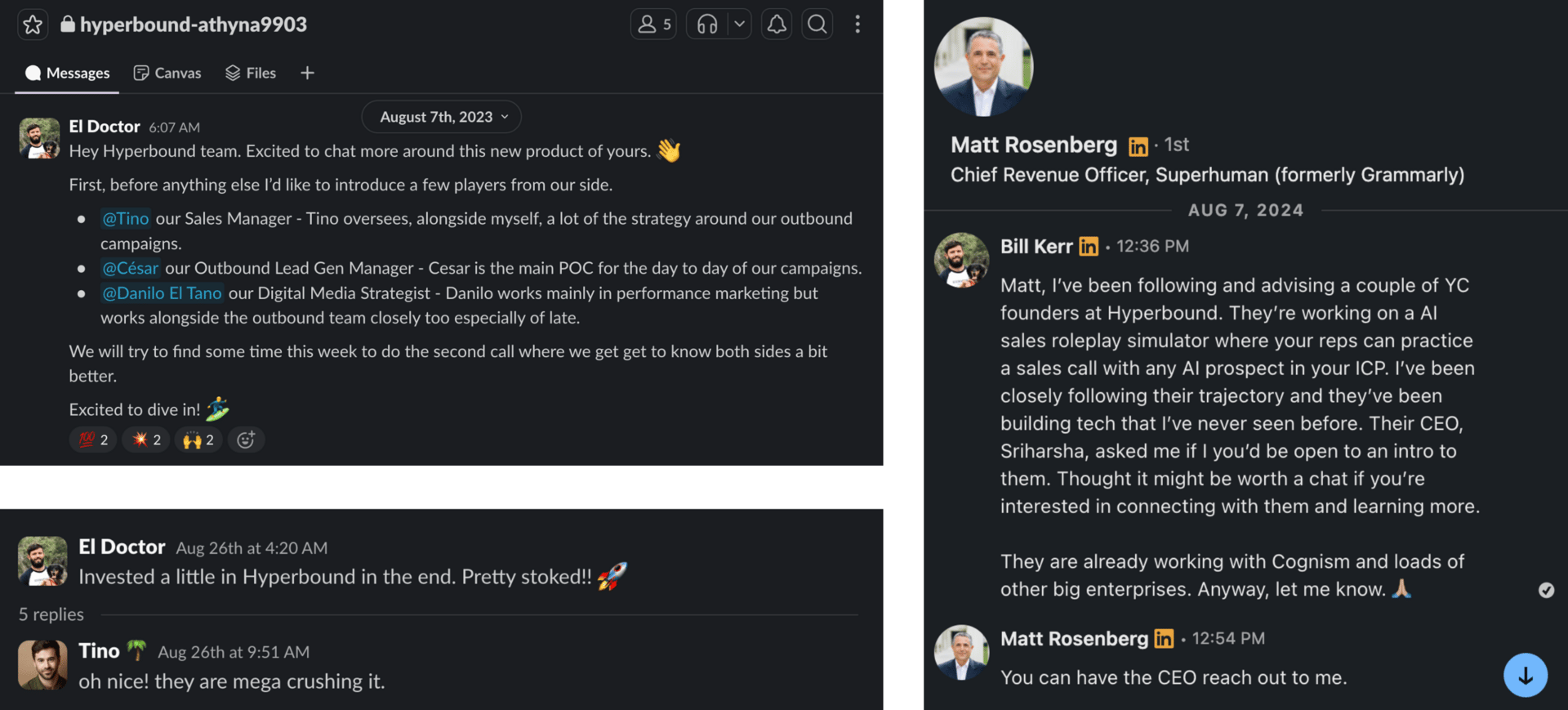
On a personal note, I think I was only actually offered a small allocation in this round because I’d already been somewhat helpful. About a year ago, Sriharsha reached out to me and asked if I’d be open to making a few introductions to enterprise sales leaders in my network, which I agreed to. What happened next was hilarious: within the blink of an eye, Sriharsha had ‘mapped’ my entire LinkedIn network and highlighted exactly who he wanted as introductions. I didn’t know any of the leaders personally, but I DM’d them anyway, which led to several intros, including one with the CRO at Superhuman.
*Note: For anyone thinking about intros, forget the idea that the intros need to be warm. When people ask me for an intro to someone I am a first degree connect with, but do not know at all, I still make the ask (see image below and have a massive cut through.
Now that we have the backstory behind the team and me, I can tell you a very small snippet about how Sriharsha and Atul know one another. Sriharsha and Atul, you see, were high schoolers whose enjoyment of theatre led them to meet on their production of Phantom of the Opera seven years hence, at Cupertino High School. Atul seems to have moved on somewhat from his artistic career, but when I was interviewing founding engineer Jonathan recently, I asked him if there were any interesting points I should ask the team; “Sriharsha’s singing,” he replied immediately, “It’s a real thing.”
So without further ado, I give you the English cover of ‘Hey There Delilah’ by Sriharsha and his pal Abhinav Gopal. See you in 2:44 seconds when I will jump into the actual non-musical substance of this post. Enjoy!
The road to Y Combinator
Like a lot of great YC application stories, Sriharsha and Atul applied for the world’s leading accelerator with nothing but a one-week-old company and a simply fleshed-out idea. That original idea was “a totally different customer support automation concept,” Sriharsha would tell me. It wasn’t even something the nascent founders were sure that they wanted to work on.
We didn’t really know what we wanted to work on yet—we had just gotten into Y Combinator, raised a little funding, and knew we wanted to build a startup. We actually had around 17 different ideas.
It seemed to me like one of the cases where the backing goes to the founders, not the idea. “There’s also a question on the YC application that asks if you have any other ideas. We listed 16 more,” Sriharsha would explain, “I’m pretty sure that’s a major reason YC accepted us; they like founders who aren’t attached to one idea and are open to exploring many.”
For first-time founders like Sriharsha and Atul, Y Combinator provided something invaluable: a platform with access to every imaginable resource. There's an internal founder manual that's essentially the bible for startups—any question you have about running a business is in that document. On top of that, you get access to more than 7,000 founders who've been through the program. You have their emails and phone numbers. Pipeline anyone?
They took advantage of it. In the early days, Sriharsha literally emailed the Dropbox founder through the YC network. He didn't expect a response, but the founder replied and offered to answer questions asynchronously.
"That's the type of community YC builds—personal, accessible, exclusive," Sriharsha told me. This level of access is genuinely rare, and for founders who'd never built a company before, it was transformative. Then there's the brand itself. Telling prospects you're a YC company gets you a certain level of respect. It also makes the earliest investor conversations easier once you show some traction. |  |
The YC badge opened doors that would have otherwise required months of credibility-building. But here's what most people get wrong about Y Combinator: it's not school. They don't give you assignments or a rigid curriculum. YC doesn't make investors suddenly want to talk to you automatically. What they do is give you the tools, the network, and the credibility—then it's up to you to execute. And execute they did.
During the YC batch, Sriharsha and Atul went into full discovery mode. They weren't just trying to validate one idea; they were on a mission to find the biggest, most valuable problem they could solve. What came next was one of the most aggressive customer research efforts I've heard of from any early-stage company.
2,000 user interviews and nineteen (1-9) pivots later
What I am about to tell you next may seem unbelievable, and you may lose all respect for me and this newsletter. You’ll likely think it’s made up; a bald-faced lie. During their YC batch, Sriharsha and Atul reached out to 35,000 people and conducted 2,000+ interviews in the short space of about 3 months…
(pause for astonishment)
(waiting, waiting, waiting some more for it to sink in)
Yes, you read that right. It’s not a typo. “We would get on LinkedIn every day—seven days a week—and max out our connection requests," Atul would tell me. Blunt force outbound. "Ah, you think outbound is your ally?” Atul would go on. “You merely adopted the outbound. I was born in it, molded by it.” Okay, that last part was actually Bane from The Dark Knight Rises, but definitely similar vibes.
We approached it like a machine learning engineer doing feature analysis. We had a massive Excel spreadsheet: on one side, everyone we interviewed; on the other, around 200 checkboxes representing potential pain points."
With this approach, Sriharsha and Atul weren’t exactly wanting to read their own fan mail; they were looking for truth. “One of the first things we did was read The Mom Test. The idea was not to confirm what we already believed but to collect a set of pain points that could inform the ideas we should test next,” says Atul.
Effectively, what these young machine learning engineers were doing was acting just like that; as engineers, looking for clusters and patterns, not just volume, but WHO the pain points were coming from, and which market segments had overlap in these ICP patterns.
If you’re wondering exactly what they tested and pivoted from during this period, here are (most of) the 19 ideas, why they built them, and why they pivoted away.
What was it? | Why were they building it? | Why did it fail? |
|---|---|---|
CleverCall: Voice CX to reduce call times, eliminate phone trees, add real-time translation | Make phone support faster for high-volume orgs | No moat—easy add-on; slow adoption; phone support declining |
Knowledge Graph for codebases: Visual repo map, auto-docs, dependency graphs | Help developers understand complex codebases faster | Not daily-use; low engagement; GitHub looming threat |
idea they forgot | ||
Predictive Customer Support: Detect frustration, recommend articles, UI tours | Improve CX proactively and boost adoption | CS tools often not valuable; Gainsight took forever, no IPO; Pendo dominant |
CS/CX Data Pipelines: Fix incomplete CS data, unify sources | Fix data issues from improper field entry | Too hard to generalize; can't fix missing data |
idea they forgot | ||
idea they forgot | ||
Real-time language support: Voice chatbot replacing human interpreters | Replace third-party interpreters with AI | Not defensible—Google expected to offer free/better |
CS Analytics Dashboard: Gainsight-lite with less bloat | Offer CS analytics without enterprise bloat | Low-growth category; Gainsight dominates; limited upside |
idea they forgot | ||
Labeling Tool Builder: Multi-modal labeling across formats | Build better dataset labeling workflows | Overcrowded; incumbents have scale; pain addressed |
Data Ethics Toolkit: ‘Vanta for ethical ML’ | Help teams comply with ML ethics requirements | Tough sell; very low urgency—only ~2 cared |
idea they forgot | ||
idea they forgot | ||
‘Retool for Churn Prediction’: Let CX teams build churn models | Automate so non-technical teams can predict churn | Consulting-heavy; doesn't scale; precedent hit $3.5M wall |
Workplace Search: Glean competitor for healthcare/law | Clear pain for finding info across tools | Hard adoption; ‘nice-to-have’; low usage; bundling threat |
Sales Navigator-style tool: Personalized outreach, meeting tracking | ‘Why now’ with gen AI; personalization edge | Crowded space; unclear winners; fit concerns |
Hyperbound (AI role-play coach): Practice sales calls with real-time AI bots | Build confidence for Gen Z reps intimidated by phone; close performance gaps at scale | It didn't fail—it’s crushing |
*For the longer, unedited version of the document the team used with more context, see my copied version here.
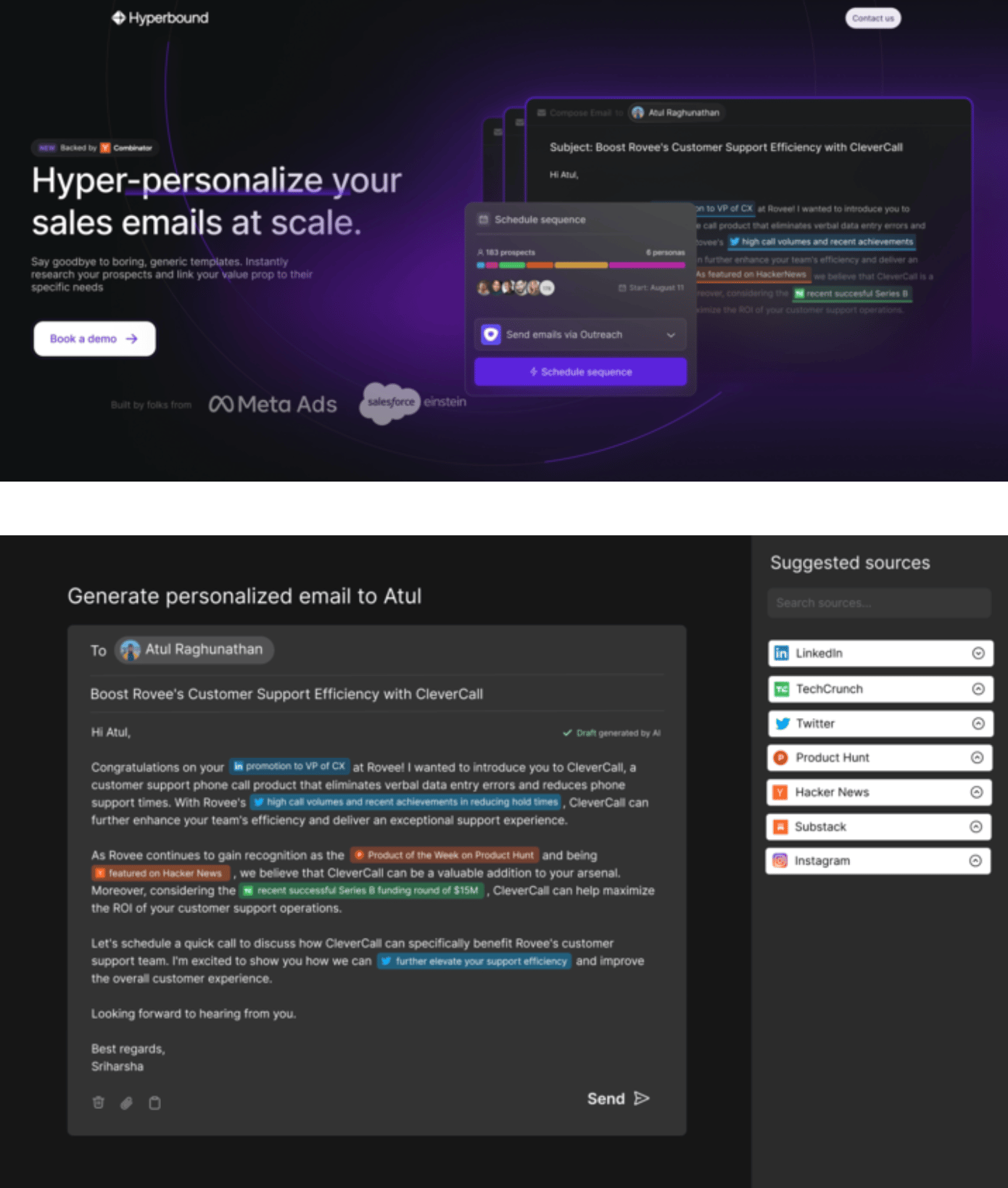
The first real product to gain traction was an AI-powered email personalization tool for SDRs. The name Hyperbound came from the idea that the product was ‘hyper-personalized outbound.’ This was Hyperbound’s product when I met the team, and it was a scratch-your-own-itch offering, given that they hated writing 30,000-35,000 cold emails manually for their own customer research.
“Even though we were testing those 17 ideas, the one thing we realized through the process was that sending emails really sucked," Sriharsha explained. "So we did what technical founders do: we built a script to write the emails for us and send them automatically.” Sriharsha was initially skeptical of using AI vs. hand-personalizing, so they decided that Atul would use the script, while Sriharsha wrote every outbound message by hand, turning the whole thing into a head-to-head, founder-to-founder competition. And Atul won. The script worked. The AI-generated emails performed just as well (or better) than Sriharsha's hand-written, personalized ones.
Shortly after, the guys knew they were onto something, and their YC founder cohort wanted in. And before they knew it, this script became their first actual product: the AI-powered email personalization tool for SDRs. It's what got them to $250K ARR with 10 customers in three months. And it's also the product they soon pivoted away from to build the newest and most impactful version of Hyperbound.
The pivot that lands our founders closest to where Hyperbound is today happened, as many things in life do, by chance. At a roundtable with several CROs, one asked Sriharsha how two engineers with zero sales experience had gotten 10 customers and $250K in ARR so quickly.
The secret, he revealed, was practicing talk tracks and objection handling on an AI bot they'd built for themselves. The bot was clunky (it had a 15-second response time), but the concept shocked the CRO. "Are you selling this?” the CRO asked. “The email idea is fine, but reps still need to get on calls, and nothing can replace that. Coaching reps is way more valuable." This was the ‘oh shit’ moment that redirected everything.
Landing on what works
After spending time interrogating the CRO about the real pain point, it became clear. Email response rates were dropping across the industry, forcing reps to get back on the phone. Cold calling has always been difficult, but younger reps—the ‘iPhone generation’— were less comfortable making calls than ever before.
Imagine a young college grad who has never asked for the opposite sex’s number and does most of their chatting online, calling an enterprise CISO to sell a cybersecurity product. It’s genuinely intimidating for the rep and carries a low likelihood of success for the company.
Building confidence for this new generation of sellers became the bigger, more valuable problem. Hyperbound as it exists today came naturally once we put those puzzle pieces together.
Three clear pain points began to emerge: 1) closing performance gaps between top/bottom reps, 2) selling technical products requiring both business and technical acumen, and 3) maximizing platform revenue through better cross-selling and upselling ability.
As is their nature, Sriharsha and Atul went on a customer discovery rampage, trying to understand more deeply where the value lay, but the core value was clear: they were building conversational AI role-play for sales training. After a short while building, the team made their first engineering hire, Jonathan, in March of 2024. Jonathan’s job was to take the framework and build upon it.
"One memorable customer conversation was someone telling us, 'Your bots just aren't mean enough.’ Jonathan told me. ‘I want it to feel like someone is slamming the table and cussing me out.'” Emotional states were among the first major upgrades the team made to the role plays. ‘Nice,’ ‘less rude,’ ‘rude’ were the first, followed by ‘sassy’ after customers wanted meaner buyers. |
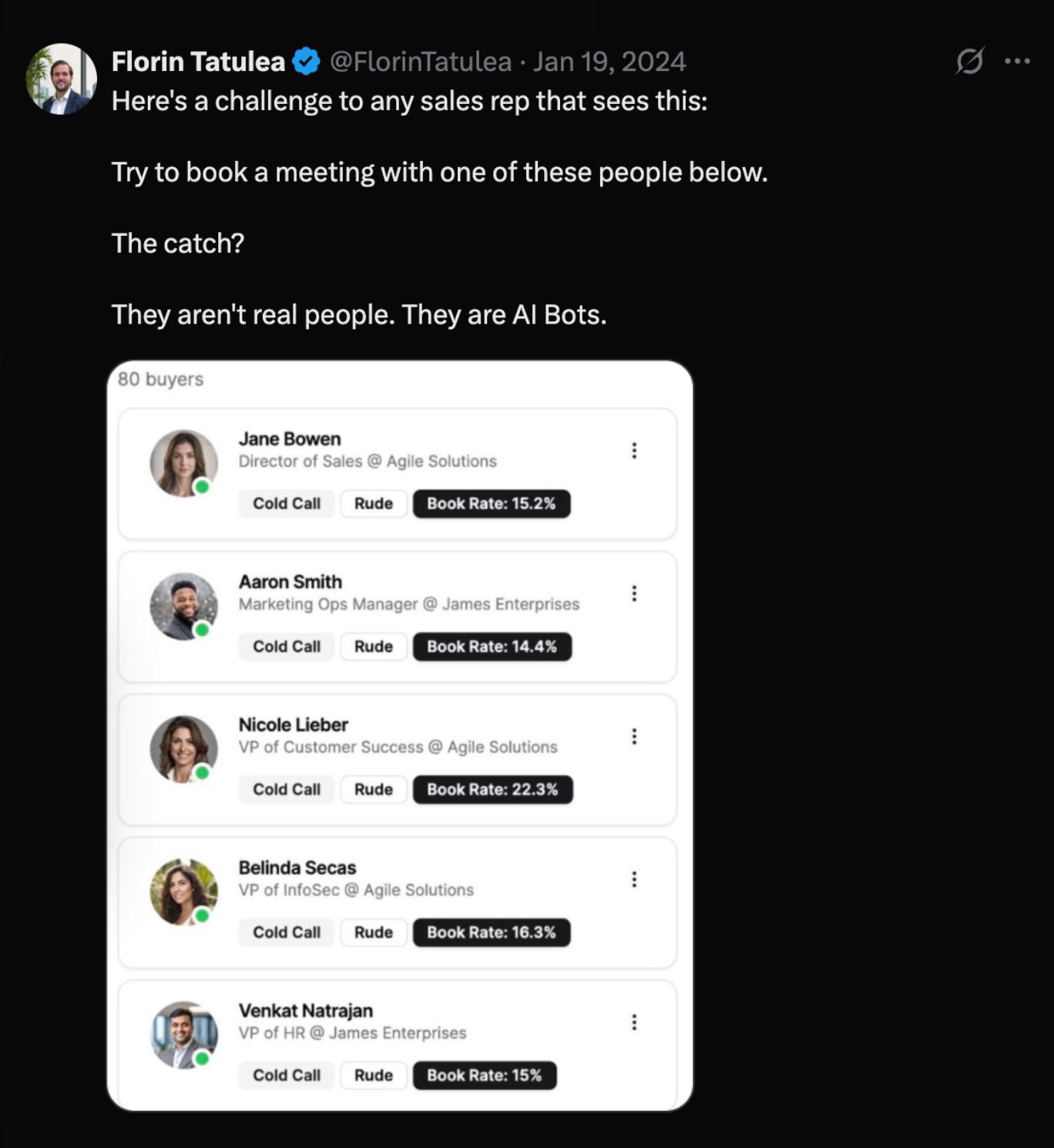
Next came multi-party calls with multiple stakeholders simultaneously; talking to the procurement head and VP of sales, while getting a champion to push the deal through. Priceless training for young reps.
One of the next biggest features to drop was the AI scorecard builder. One of the biggest bottlenecks was customers not knowing how to build effective scorecards, so the team built a feature that lets users upload sales materials and get a baseline of 10-15 criteria to customize and build upon. An idiot's guide to sales scorecards (my words, not theirs).

Source: Hyperbound.
For their next act, the team would expand beyond cold calling to discovery, demo, renewals, and more. They even built a ‘bot on-the-spot’ Chrome extension, that would scour any prospect's LinkedIn page, using their job title and info to create a realistic practice version before the actual call. All their features were stack-ranked by customer urgency. Five customers asking for the same thing automatically goes to the top of the priorities. It’s no wonder they build a product that VPs of sales love across the technology ecosystem.
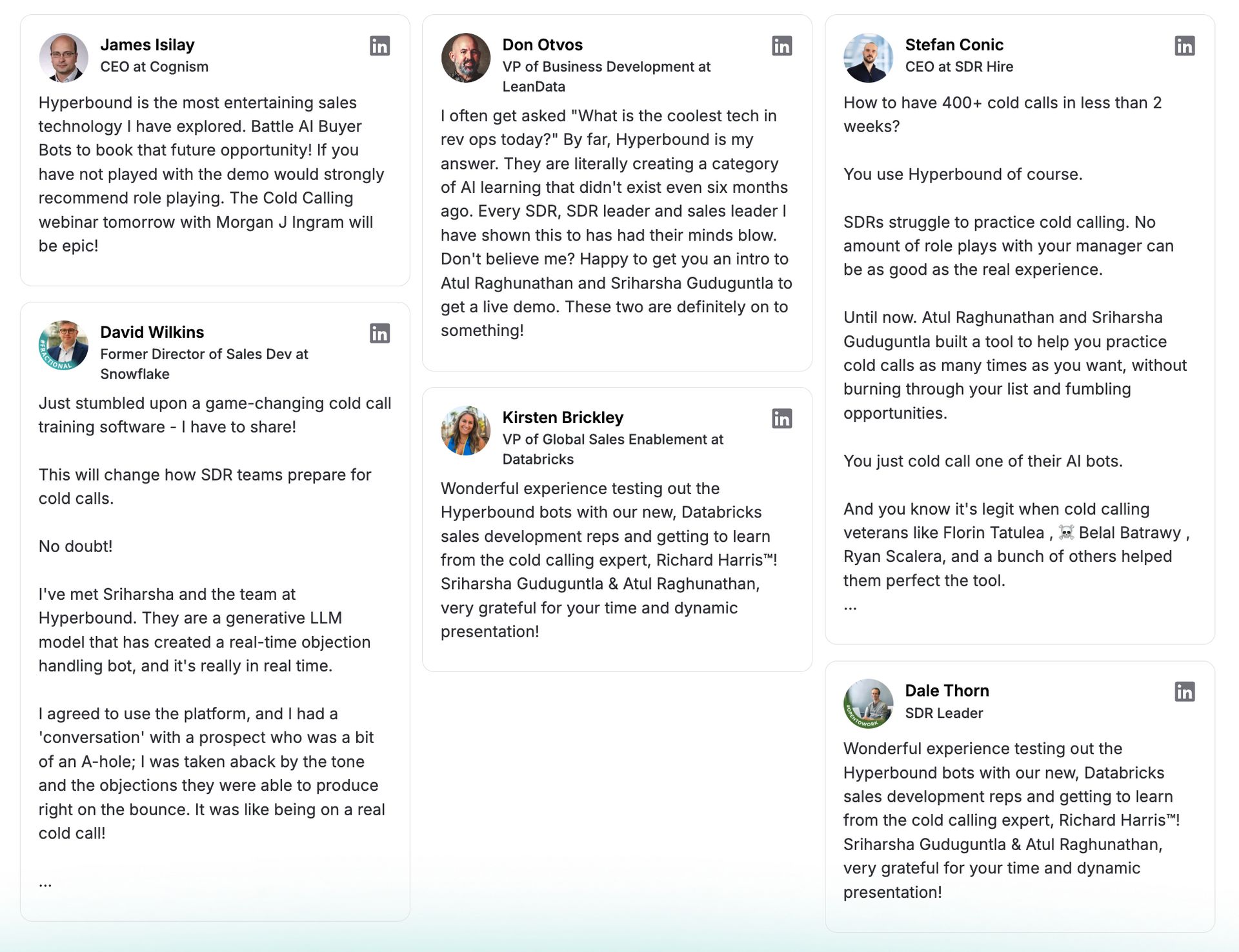
Source: Hyperbound.
The most interesting tweak to the product came in the form of making it actually worse. Yes, you read that correctly. The product was too good, too polished. “Sometimes a slightly muffled voice or one with pronunciation quirks feels more human. Like someone you'd really talk to on the phone," Jonathan shared. A fascinating insight.
Mia, the one-woman marketing departing
What I love about early-stage teams is how scrappy and unconventional things are. Mia, with whom I worked closely on this piece, is a perfect example of unconventionality at play. Mia joined Hyperbound as employee #5—in the coveted #5 slot, apparently sparking internal debate between her and other members—in August of 2024. She had transitioned from SDR at Outreach to a never-having-done-marketing-before founding marketer at Hyperbound.
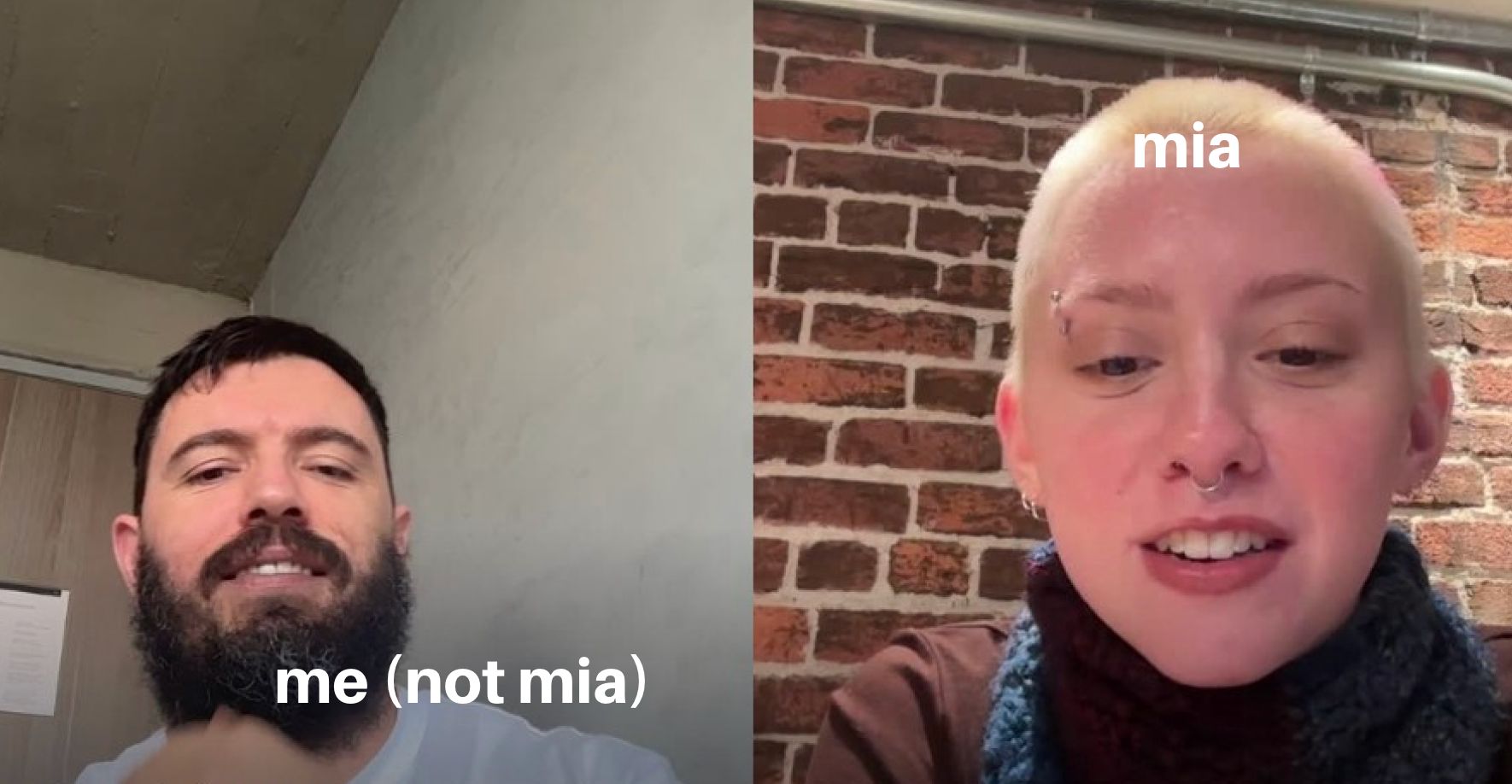
This came through an advisor Mia knew by the name of Josh Norris. "I think you're exactly what these guys are looking for," claimed Josh, and Sriharsha and Atul agree. And for what it’s worth, I also agree. Early hires are as much about grit, determination, energy, and pizzazz as about resumes. And Mia had all four buzzwords in droves.
Mia explained to me that she started on a Thursday with one initial question for the team: What’s the strategy? “Yeah, we don't really have that," Sriharsha would reply, “Oh, and by the way, we have a call competition next week and no promo for it, so we need you to do all of that too if you can."
It was at that moment that Mia knew she’d fucked up.

Kidding. Mia loved it: "It felt exciting to be somewhere I knew I'd be able to fail forward, learn, and try new things—and they were in the same boat. Their confidence in me, even though I hadn't done this before, was really reassuring."
Mia called the early stage of her time at Hyperbound the “Let's throw shit at the wall and see what sticks" stage. So, that’s what they did. Mia and Sriharsha would test and trial, fail, learn, and try again. Over and over and over, across many channels: competitions, company-page content, co-founder-page content, events, SEO through blogs, ads. The good news was that there was such an appetite for the product that, unlike most companies' best laid plans, the majority of what they tried actually worked! The trick now was to refine which channels worked best and for which audiences.
The road to scale (what worked)
In a story like this, there are usually more than a few things that are working. Especially with Hyperbound. For context, when the team was going through their Series A, they opened the round at one number in ARR, closed it two weeks later at that number + 50%, and announced it a month later at that number +100%. For those who didn’t pass grade three maffs, that’s doubling in a month. Not too bad.
The team structure their marketing in what is commonly known as the ‘Mullet Allocation’ in which roughly 85% of the budget is business at the front (what works), while 15% goes to the party at the back (testing). The mullet has worked wonders for the team, with one standout channel and a number of other budding up-and-comers. |  Anonymous man with mullet, 2012. |
So what was it exactly that set these two young computer geeks on a rocketship trajectory to startup superstardom? Well, let’s take a look and see.
1/ Event-led growth strategy
With Mia running point on marketing as a one-person department, the team landed on a strategy that defied conventional wisdom: events. Not the soul-crushing booth-at-every-conference approach that drains resources and enthusiasm in equal measure, but a more surgical strategy built around Sriharsha establishing himself and Hyperbound as industry leaders.
The math worked. After proving events consistently delivered, most of the marketing budget flowed there, with an always-on 15% reserved for experimentation. Sometimes they'd run a booth, sometimes just Sriharsha on panels with customers. The enterprise and upper mid-market audiences they were targeting loved the in-person touchpoints, and those interactions moved deals forward in ways you simply can't quantify on a spreadsheet. "Some of our biggest deals were facilitated at events or got a major push from event interactions," Mia explained. The strategy wasn't about spray-and-pray attendance; it was about strategic presence where their ICP (CROs, VPs of Sales, Heads of Enablement) already congregated.
2/ The virality factor
Hyperbound caught lightning in a bottle by being first to market in a category that literally didn't exist before 2024. AI role-play for sales training wasn't just new; it wasn't even technically possible to build until recently. The team recorded sellers' reactions as they tried the platform for the first time, capturing genuine shock and surprise. That authentic amazement fueled early virality in ways manufactured enthusiasm never could.
Excuse my language, but I think you could sell the f*ck out of this dude.
"The space is so new. AI role-play didn't exist before 2024. We hit the perfect wave," Mia said, before hammering home the value proposition, "As an SDR, I saw the value in Hyperbound. I hated role-playing with reps. I hated it. If I had something like Hyperbound, I would've gotten way more comfortable on the phone much faster." The space has gotten more crowded since (which, as Mia noted, “sucks"), but the competition also validates the category they created.
3/ Moving towards the enterprise
The numbers tell a dramatic story of upward mobility. At the end of last year, only 10% of Hyperbound's revenue came from enterprise customers. Today? That figure sits at 70%; a massive shift reflecting how aggressively they moved up-market. The team started by closing tiny startups with a couple of reps or SMBs for some traction. By mid-2024, they introduced a minimum of 20 reps to qualify for a demo request, and recently, bumped that floor to 50 reps, reasoning that larger companies inherently have stronger use cases. Their current customer base includes companies with 20,000+ reps, with major names like IBM, LinkedIn, Coveo, Monday.com, Autodesk, Vanta, and Bloomberg in the fold.
But this aggressive scaling exposed a gap. "Post-sales is critical. Moving fast early meant we didn't prioritize it enough—now it's everything for companies like IBM and LinkedIn," Sriharsha admitted. When everyone's focused on ARR, pipeline, and top-of-funnel metrics, it's easy to de-prioritize what happens after the deal closes. But with massive enterprise rollouts, the team had to invest heavily in account managers, CSMs, implementation specialists, solutions engineers, and support engineers. The payoff for their customer obsession?
At one point, Atul was doing almost 35 hours of weekly check-ins himself. When Peak XV VCs called 30-40 customers for Series A due diligence, the partner told them he'd "never heard of such high NPS from any company they'd invested in." They entered Series A with 177% NRR in a space where you'd normally expect half your customers to churn.
4/ Project ‘Industry Expansion’
The team initially assumed B2B SaaS would be their core market. They were wrong in the best possible way. The product worked just as well—in some cases even better—for non-SaaS industries with high-volume, high-turnover sales teams. Staffing companies saw big traction. Insurance companies with constant rep churn became power users. The customer list expanded to include a 3PL and transportation/logistics company, the world's largest diamond brokerage, the world's largest freight brokerage, and even physical therapy services.
The insight: anywhere you have sellers making calls, managing churn, and needing to ramp quickly, Hyperbound's AI role-play coaching delivered value. The category they'd created turned out to be bigger than they'd initially imagined.
Before we dive into what we did in our playbook and wrap up, I thought it might be fun to quickly discuss one bottleneck and how they are navigating it.
The hiring bottleneck
When speaking with the founders, one pain point that hampered their growth came up on more than one occasion: hiring. These two young founders have consistently found it hard to know who to hire and when to hire them, leaving them perpetually chasing their tail. “We hired far too late across multiple responsibilities. We were actively suffering in growth before we hired our first AE, our first customer success person, and additional engineers," Atul would tell me.
Not only have the founders been slow to hire, but they have also been picky as well. Yes, we heard the story of Mia and the ‘you look like you’ve got the pizzazz’ style hiring, but that seems to be a unique example. The founders are usually very hard on candidates, as Sriharsha calls it: “The hiring process itself is fast, but our rejection rate is very high.”
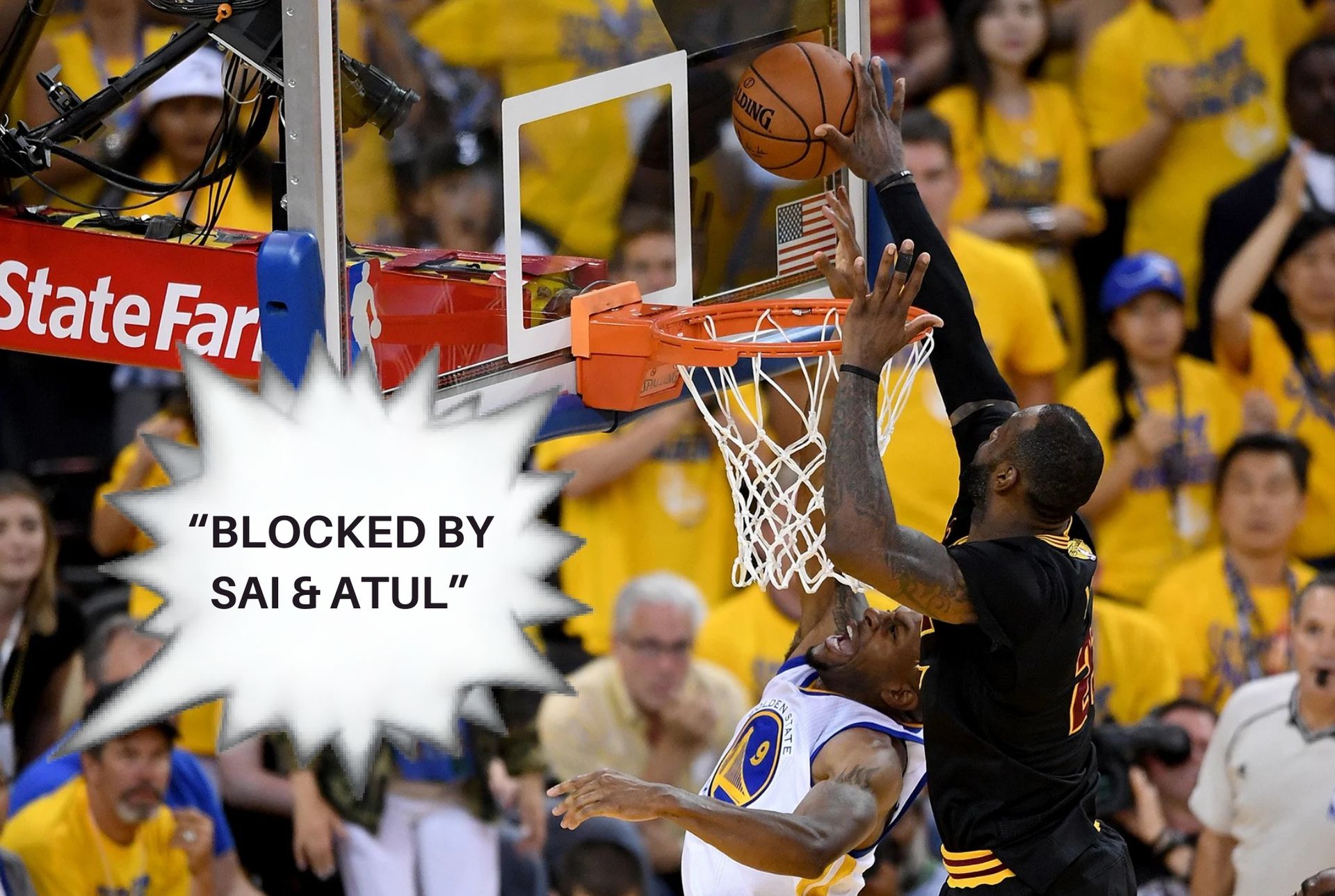
Second time I’ve used ‘Blocked by James’ as a meme.
The problem—and it’s the absolute right problem to have—is that they are trying to find the needle in a haystack; people, like Mia, comfortable with the ‘founding-style’ role. No playbook, no real rule set, defining the job themselves. The type of people who see this level of freedom and autonomy and run through the door, not away from it. “There's a particular type of person who gets even more excited when they hear that. Those are the people we choose," Sriharsha says. Think on it yourself for a moment; you walk into a new job interview only to be aggressively counter-sold on 60-80 hour workweeks, intensely stressful and exhausting work. Oh, but it’s rewarding.
How are they addressing this issue in their hiring process? Well, both founders claim that post-Series A, they spend approximately 80% of their time on hiring. Something I hear more about when speaking with founders at a similar stage of scale-up.
Playbook (for YC success)
Apply with 17 ideas, not one perfect pitch: YC accepted them for having a slew of options and openness to exploration, not for a perfect idea.
Max out the YC network relentlessly during your batch: They emailed 7,000+ YC founders, including Dropbox's founder, who actually replied. The network is YC's most valuable asset; use it aggressively while you have access.
Turn your YC batch into a research bootcamp: During their batch: 35,000 outreach → 2,000 interviews with structured data (200 pain point checkboxes). YC gives you time and permission to talk to everyone.
Adopt ‘sell before you build’ as your YC philosophy: Only build what customers desperately want. Ask ‘Why is this important and who wants it?’ YC pushes this—if enough people want it badly, build it fast.
Failing fast matters: They pivoted 19 times between entering YC and landing on the final product. YC encourages this. Letting go quickly became their pattern for success.
Use the YC brand for social proof: With white-glove onboarding, flying to meet customers, 35 hours/week of founder check-ins. YC credibility gets you in the door—obsession keeps you there.
Leverage YC for hiring the founding team: YC network helps you find people comfortable with no playbook who get more excited at 60-80 hour weeks. Use it to build your core team.
Future
Looking ahead, Hyperbound's roadmap is clear: scale the team, double down on enterprise, and continue shipping features at the same breakneck pace that got them here. They're still only 14 people. With their Series A, they're finally in a position to build the team they need to capture the massive opportunity in front of them.

The irony isn't lost on me that a company helping sales reps build confidence is run by two founders who had zero sales experience when they started. But maybe that's the point. They didn't know what was impossible, so they just built it anyway. If you're a founder, investor, or just someone who loves a good startup story, keep an eye on Hyperbound. Something tells me this zero-to-one is just getting started.
Fun facts
The smartest person test: When Sriharsha decided to start a company and apply to YC, he reached out to Atul, "because I was basically looking for the smartest person I knew. He said yes within three seconds."
The viral launch problem: Their January 2024 product launch went so viral that their calendars were fully booked for six months. At first, it seemed amazing, until they realized a lot of calls were completely unqualified. Taught them a hard lesson about qualifying demand.
‘Ship by Friday’ velocity: Within a couple of weeks of Jonathan joining as first engineer, he witnessed Sriharsha on a sales call saying "Yeah, we'll have this ready by Friday or Monday" when it was Wednesday, and they hadn't even scoped the feature yet. That's when Jonathan realized the true velocity.
Jonathan's interview research: When Jonathan was researching Sriharsha before his interview, he found Sriharsha's entire singing playlist on YouTube before he found any material about Sriharsha and Hyperbound. "It's a real thing—he sings and posts it," Jonathan told me.
The 14-person Series A: Hyperbound raised their $15M Series A with just 14 employees—proof that you don't need a massive team to hit exceptional metrics when you have 177% NRR and enterprise customers like IBM and LinkedIn.
Extra reading / learning
BRAIN FOOD 🧠

TOOLS WE RECOMMEND 🛠️
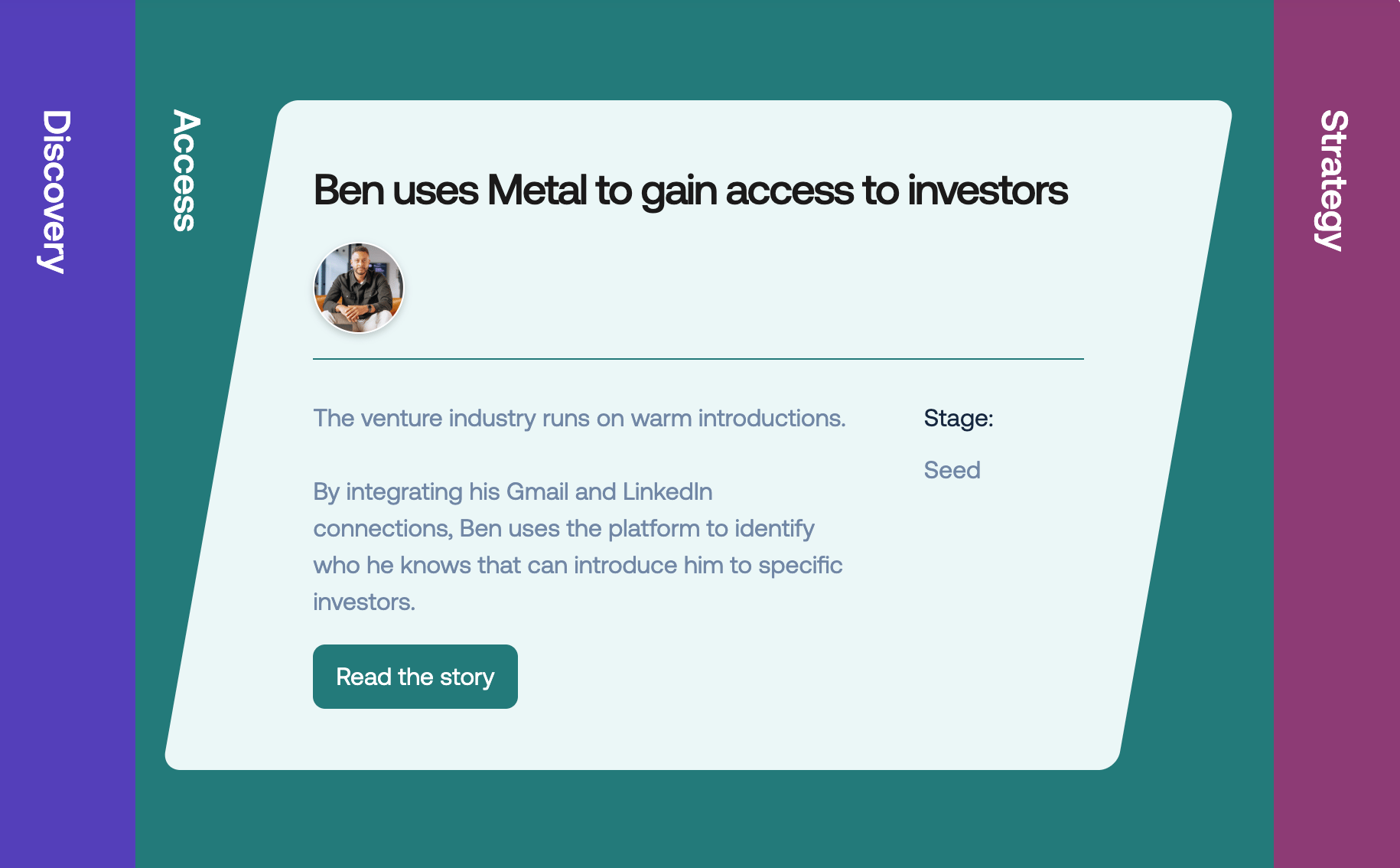
Every week, we highlight tools we like and those we actually use inside our business and give them an honest review. Today, we are highlighting Metal*—a smarter way to search for investors, match by fit, and skip the endless cold-outreach guesswork.
 |
See the full set of tools we use inside of Athyna & Open Source CEO here.
HOW I CAN HELP 🥳
P.S. Want to work together?
Hiring global talent: If you’re hiring tech, business or ops talent and want to do it 80% less, check out my startup, Athyna. 🌏
See my tech stack: Find our suite of tools & resources for both this newsletter and Athyna here. 🧰
Reach an audience of tech leaders: Advertise with us if you want to get in front of founders, investors and leaders in tech. 👀
 |
Reply