- Open Source CEO by Bill Kerr
- Posts
- A Day In The Life Of Ten CEOs
A Day In The Life Of Ten CEOs
A collection of thoughts from a collection of leaders. 🌱

Bill Kerr
April 12, 2026
👋 Howdy to the 7,108 new legends who joined since our last edition! You are now part of a 360,030 strong tribe outperforming the competition together.
LATEST POSTS 📚
If you’re new, not yet a subscriber, or just plain missed it, here are some of our recent editions.
⚙️ Rebuilding Enterprise Operations Software. An interview with Wiley Jones, Co-Founder & CEO at DOSS.
🌊 TBPN, Vibemogging & The Future Of Trust. How technology media is changing and how you can ride the wave.
💰 Investing In The Intelligence Age. An interview with Mercedes Bent, VC Partner at Premise.

PARTNERS 💫

Investors don’t just listen to what you say. They look at how your company operates. The Fundraise-Ready Startup Kit equips founders with the materials investors expect to see, before the pressure is on.
A scalable cap table template
A pitch deck template with a real example
A diligence checklist so nothing catches you off guard
Because confidence in the room doesn’t come from slides. It comes from preparation.

Framer helps teams design, build, and launch their marketing sites lightning fast. With the ability to publish hundreds of CMS pages in a single click, operate at a global scale with seamless localization, and even host unified content across multiple domains, teams have never been able to ship faster. Trusted by companies like Miro, Bilt, and Perplexity.
Ship pages and updates faster without turning the site into a fragile set of one-off hacks.
Shift routine brand and marketing work out of product engineering queues.
Run real marketing systems (CMS, SEO, performance optimization) with governance and collaboration.
Interested in sponsoring these emails? See our partnership options here.

HOUSEKEEPING 📨
Landed in Bali a couple of days ago for a short week-long stay. The first thing I notice is that every time I go out to eat at a cafe, the one emotion running through me is anger. I am angry that I live in Melbourne, a city often praised for its great food culture, yet I can’t actually go out and find protein-dense, calorie-controlled, healthy food. I find it the same everywhere. It’s why, in the U.S., my favorite place to eat is Whole Foods.

This should be everywhere.
It’s honestly just a shame. People either eat a home-cooked meal or they eat poorly. Over here, every spot you stop at has the most nutritious food known to man. It’s a very sad state of affairs. Having said all that, I am excited to be here and to devour every beautifully healthy and wholesome meal in sight while I can.

COLLECTION 🏡
A Day In The Life Of Ten CEOs
There's a question I've asked every single founder and CEO I've interviewed for this newsletter. It's the same one you'd ask a friend if they landed some wild new job: 'So what do you actually do all day?' It sounds simple. It's not. Because the CEO role is the one job on Earth where the job description is whatever's on fire that morning.

How to not be a CEO.
I've collected answers from ten brilliant CEOs—from pre-seed to scale-up, from AI to media to fintech—and the range is genuinely fascinating. Some are deep in product. Some haven't written a line of code in years. Some have five direct reports, others have twenty. But there's a thread running through all of them: the best CEOs aren't optimizing for a perfect calendar. They're optimizing for impact on any given day. Let's get into it.
Des Traynor, Co-Founder & Chief Strategy Officer at Intercom
*Yes, technically, Des is not the CEO, but still interesting, and worth checking out.
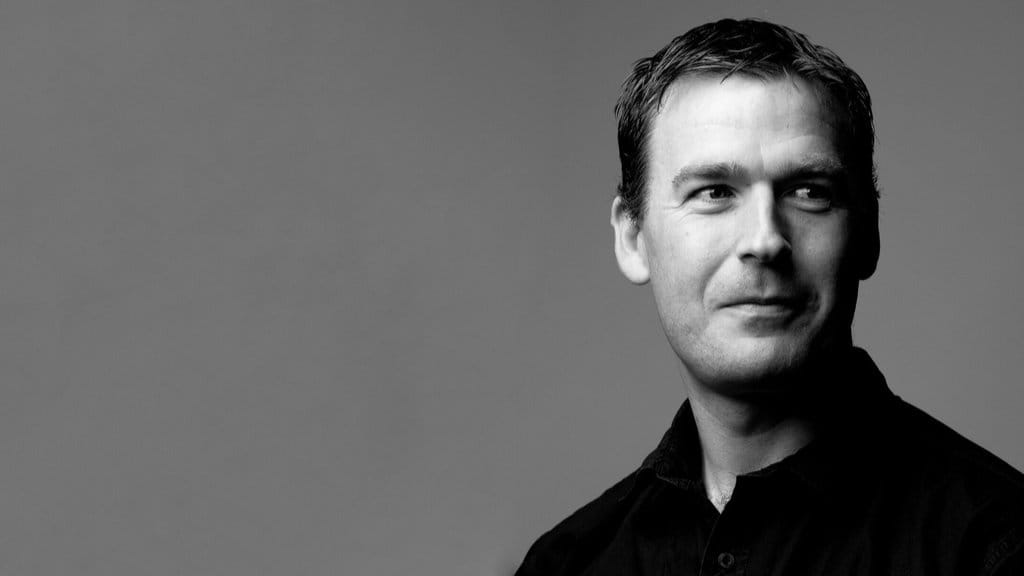
I work from our office about 95% of the time, unless I’m on the road. Most of my focus is on Fin, our AI agent for customer service. Each day starts with a stand-up meeting for the Fin leadership team, where we go over current customer issues, roadmap items, staffing, resourcing, and any key sales deals we need to be aware of or help push forward.
A big part of my day is reviewing Fin product work—new features, improvements, and iterations. Every 12 to 16 weeks, we run an event called Built for You. We had one about three weeks ago, actually, where we announced voice, a new Insights product, and also a replacement for CSAT, which we are calling the CX Score, and there’s always another one coming up.
Our next is in May. A lot of my time is spent figuring out what we’ll ship and announce at those events. The AI space moves so fast that we need to keep pace and meet the market where it is.
Outside of product work, as a founder, board member, and executive, I have a lot of other responsibilities: welcoming new hires, prepping for board meetings, and handling various high-level tasks across the business.
*To see our full interview with Oscar, head over here.
Tim Huelskamp, Co-Founder & CEO at 1440
My day-to-day is constantly evolving, but at its core, it's about learning. I love learning, and so does our entire team. We're a knowledge company, so continuous learning and sharing are at the heart of everything we do. What makes the role exciting is that every quarter, every month, every week brings a new challenge. In the early days, it was about going from 78 to 500 subscribers. Then it became: how do we build a growth engine? How do we get our first dollar of revenue? Then it shifted to hiring the smartest people and building a great culture. Now, it’s about transitioning from a newsletter business—which will always be our core—to a full media platform. That’s a completely different kind of learning curve.
So for me, it's really about two things: staying in a constant learning mindset and making sure I’m focused on the highest-ROI initiatives for the company. I also want the whole team thinking that way. That means saying no to anything that doesn’t drive long-term value. No unnecessary meetings. No fluff. Even as we've grown from 5 to 22 employees, complexity has increased exponentially rather than linearly. So we work hard to keep communication clear, make sure everyone’s aligned, and avoid slipping into the bureaucracy you see at big companies.
We’ve actually taken a lot of inspiration from leaders like Brian Chesky at Airbnb and Jensen Huang at Nvidia; people who’ve built flat, focused, high-performance teams. That’s the kind of culture we’re working to maintain.
*To see our full interview with Tim, head over here.
Patrick Thompson, Co-Founder & CEO at Clarify
Most of my time is spent working with customers and the internal team. A lot of it is about trying to be the voice of the customer. I'm a very external-facing person within the company. I spend a lot of time conducting customer discovery and interviewing people. I try to do the best job I can to relay that feedback back to the engineering team on what they're building.
A bunch of it's spent on hiring, too. A lot of it's been recruiting the best team I've ever worked with. So actively hiring, building the bench for when we want to scale the organization, managing fundraising, and managing investor relations. I think that's all pretty typical. I'd say the vast majority of my time is spent with customers, making sure that they're successful and that we're building the right product for them. | 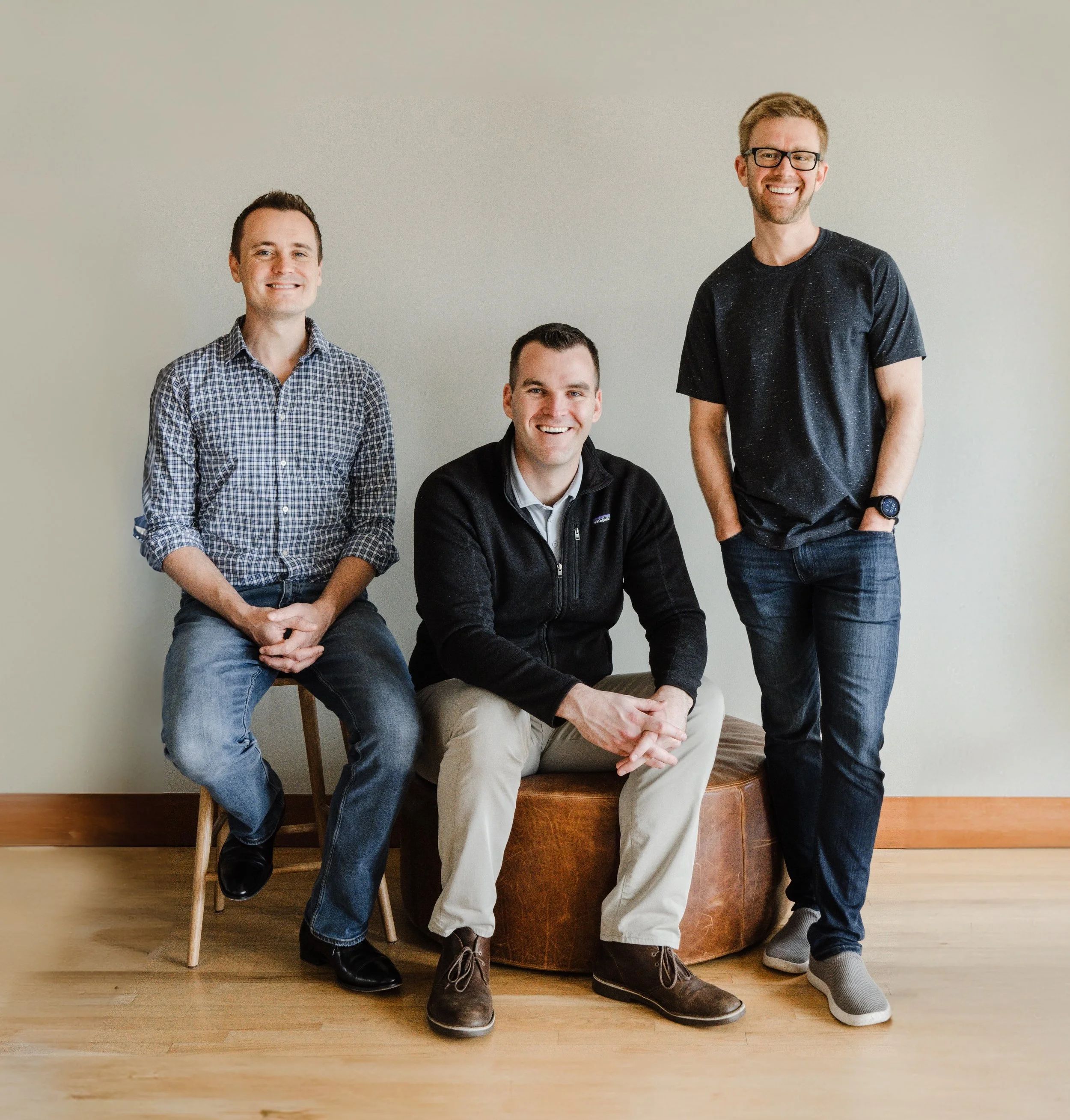 Team Clarify. |
As far as the team goes, I have one other co-founder at the moment, Ondrej Hrebicek, who I worked with previously and who's our CTO. He's amazing. I wouldn't consider him a direct report; he's more of a peer, managing all aspects of the engineering side. Right now, I have five direct reports: one salesperson, a customer success manager, our head of design, a head of marketing, and a support engineer who just joined this past week. In addition, our head of operations reports to me. Looking ahead, I expect marketing and sales will continue to report into me, while product and design will likely be grouped more closely together. That’s probably the structure I see evolving over time.
*To see our full interview with Patrick, head over here.
Oscar Pierre, Co-Founder & CEO at Glovo
Today, most of my time is spent on operations. A large part of that is dedicated to structured business reviews. Every semester, I define around 15 to 20 key topics that act as a proxy for our OKRs, and each one has a clear owner. We run monthly, documentation-first meetings for each topic, with detailed written documents and structured discussion. This cadence creates accountability, speed, and alignment across the organization.
Beyond that, my time is spent communicating with the team, hiring, reviewing performance, and handling ad hoc strategic and operational issues. I also see so much potential for Glovo to expand even now. We're looking towards 10x growth in the future. I see a big part of my role as sustaining a culture that is hard-working and driven. Maintaining that kind of energy and work ethic is vital if we are to successfully build the future of online commerce.
*To see our full interview with Oscar, head over here.
Barbra Gago, Founder & CEO at Pando
As CEO, I’m building a people-focused product, so much of my day revolves around management, feedback, culture, and development. I’m constantly asking whether we’re creating a company that people love and living up to our vision. I dedicate significant time to sales and to product, because as a non-engineering solo founder, I wear many hats.
The product itself reflects my experience in people tech and my background as a CMO, and I spend a lot of time shaping the roadmap and engaging directly with customers.
*To see our full interview with Barbra, head over here.
Bryan Murphy, CEO at Smartling
I like to start by saying that everything is my fault. I mean that both jokingly and seriously, because ultimately, the responsibility for how things go rests on my shoulders. My main job is to work with our stakeholders—our board, customers, and employees—to define our strategy and ensure we execute it effectively. That means setting both our long-term and short-term operating strategies and then ensuring the entire company is aligned around them.
I also spend a lot of time talking with customers. I believe strongly in what Jeff Bezos called ‘the empty chair’ idea, keeping the customer present in every discussion. | 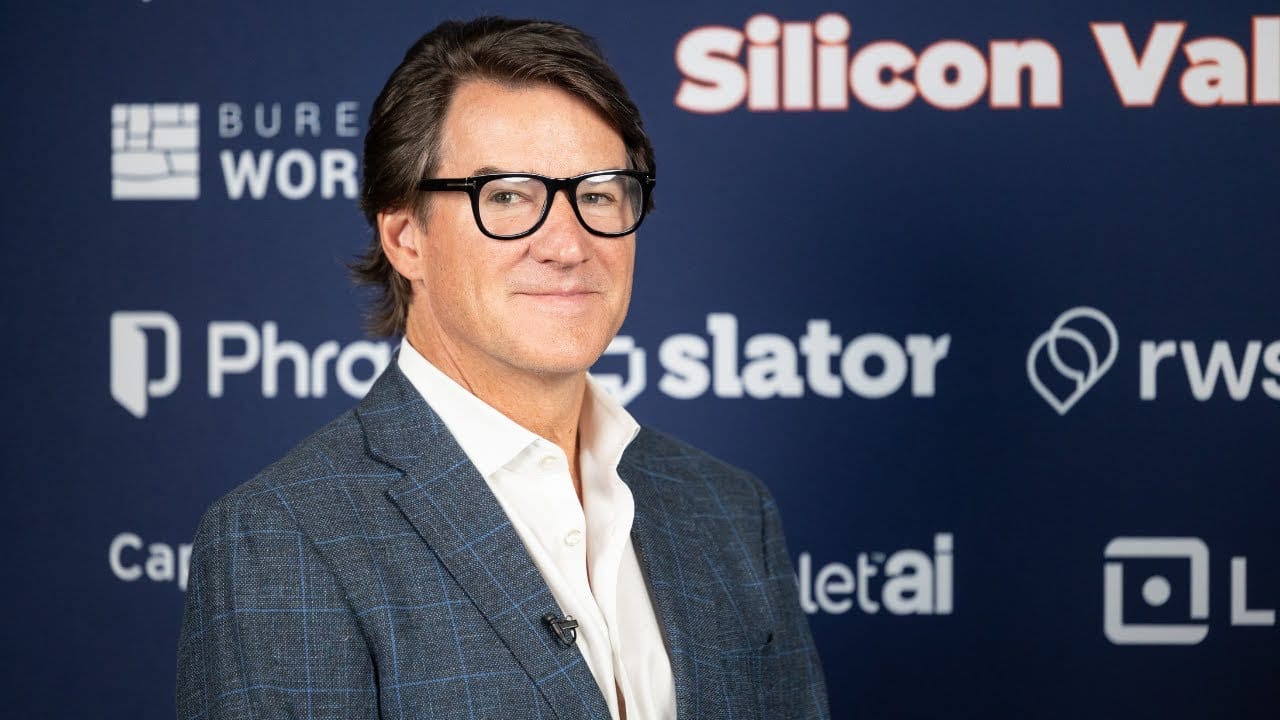 |
I do that both literally and virtually by staying in close contact with clients and with my team. Most of my time goes into making sure we’re focused on the right goals, staying accountable, and executing with consistency.
*To see our full interview with Bryan, head over here.
Zach Lloyd, Founder & CEO at Warp
One of the great parts of being a founder CEO at an early company is that I get to do a bit of everything. What I focus on shifts based on what the company needs. Recently, I have been doing a lot of outward-facing work like podcasts, panels, and helping with sales. I also spend time shaping the product roadmap and vision.
Some days, I even write code or use the product myself. Overall, I look at each day through the lens of where I can have the most impact and do the most to increase the company’s chances of succeeding. What that looks like changes as the company grows and evolves.
*To see our full interview with Zach, head over here.
Hussein Fazal, Co-Founder & CEO at Super.com
My day-to-day role as CEO revolves around a few core responsibilities. First, I set the high-level vision and strategy. With around 220–240 employees now, making sure everyone is aligned—from the exec team to the broader company—is crucial. That alignment starts at the top.
Second, I place a strong emphasis on talent. I’m involved in recruiting, especially when a hiring manager is on the fence about a candidate. I’ll step in and help close the deal because bringing in top talent is one of the most important things I can do. Third, I spend time thinking about the future, not just what we’re doing today, but what we’re building toward in two, five, or ten years. |
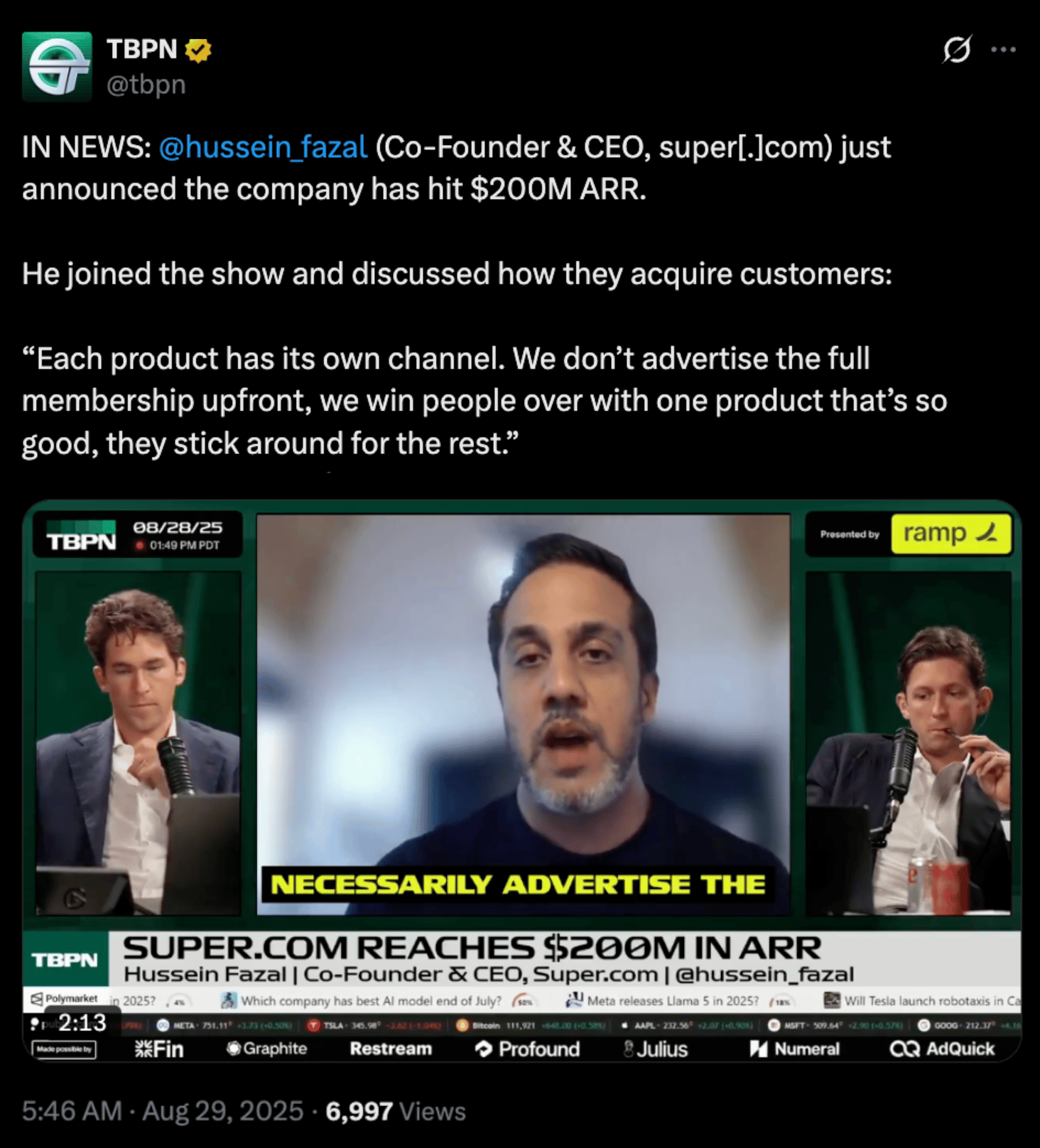
We have a valuable membership program, and I’m always looking for ways we can add more value to it. Lastly, I spend a lot more time externally now. Talking to investors, managing the board, doing interviews, speaking engagements, and generally being the external face of the company.
*To see our full interview with Hussein, head over here.
Jeff Seibert, Co-Founder & CEO at Digits
It’s bouncing between too many things—way too many things. The way I view my role, and this is my third startup, so it’s something I’ve evolved over 17 years of doing startups, is that my goal is to keep everyone unblocked and help anyone in the company who needs support. So I bounce between writing marketing copy, reviewing designs in Figma, and talking through technical architecture with our engineers. I still code a little. I spend a small part of my time fixing bugs in the code.
I try to be involved in everything across the company at what I call the 10% phase and the 90% phase. I want to be part of things early on, helping with the strategy, roadmap, and rough design, and then again at the end, polishing things before we ship. That could be the pixels, the copy, or whatever we’re putting out into the world. So my day is really just bouncing around the company, talking with people, and making sure things move forward.
*To see our full interview with Jeff, head over here.
My day-to-day job at Liner primarily involves two things: setting the strategy and building the team to execute that strategy. In AI, strategic thinking has become even more critical because if you’re just doing everything possible to survive, you might wake up one day and find yourself replaced by OpenAI. So, we’re careful about where we invest our time and focus.
Execution-wise, we constantly need to understand both our customers and the evolving technology. We essentially act as the interface between tech and the customer. Not many people can navigate this fast-moving wave well, so we look for individuals who are not only great at understanding both sides but are also good at learning and unlearning, because what’s true today might not be true tomorrow. |  |
*To see our full interview with Luke, head over here.
In sum
If there's one thing I took away from reading all of these back-to-back, it's that there is no single way to do this job. There's no CEO daily routine template you can download from some LinkedIn guru's Gumroad page (and if there is, don't buy it). Some of these founders are deeply structured: Thursdays for leadership, Tuesdays for one-on-ones, everything mapped to a cadence. Others are proudly reactive, bouncing between Figma, customer calls, and fixing bugs before lunch. Both seem to be working.

Me being proudly reactive.
The common thread isn't the calendar. It's the intentionality. Every one of these leaders has figured out where they specifically can have the most impact, and they've oriented their days around that. Not around what a CEO is supposed to do. Around what their company needs them to do, right now, today. And that's probably the most useful takeaway of all.
Extra reading
Arctic Vaults, AI Agents & The Future Of Dev Tools - June, 2025
Launching Athyna Intelligence - January, 2026
Neighbors Feeding Neighbors, At Scale - February, 2026
And that’s it! You can also find all of our original interviews with all the founders and leaders above here.
BRAIN FOOD 🧠

TOOLS WE RECOMMEND 🛠️
Every week, we highlight tools we like and those we actually use inside our business and give them an honest review. Today, we are highlighting BILL—Your AI-powered financial operations platform.
 |
See the full set of tools we use inside of Athyna & Open Source CEO here.
HOW I CAN HELP 🥳
P.S. Want to work together?
Hiring global talent: If you’re hiring tech, business or ops talent and want to do it 80% less, check out my startup, Athyna. 🌏
See my tech stack: Find our suite of tools & resources for both this newsletter and Athyna here. 🧰
Reach an audience of tech leaders: Advertise with us if you want to get in front of founders, investors and leaders in tech. 👀
 |
Reply